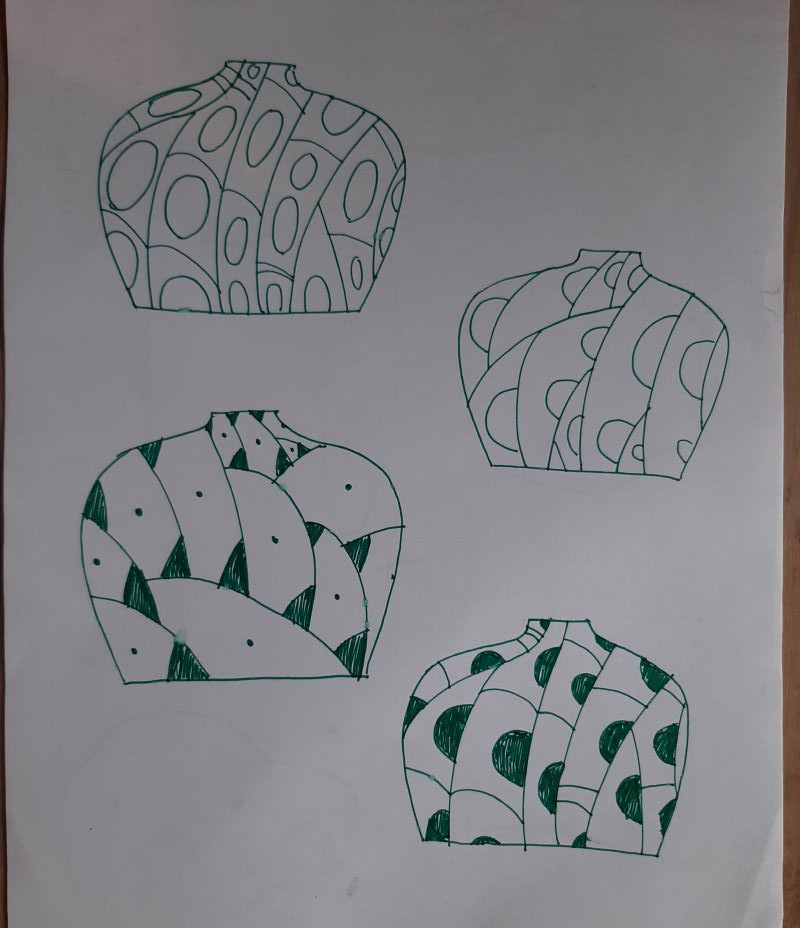
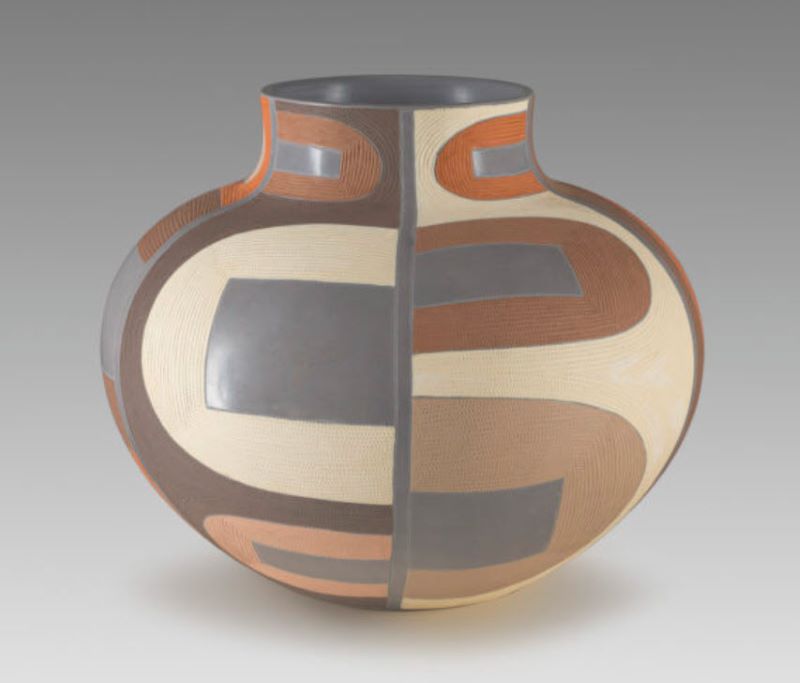
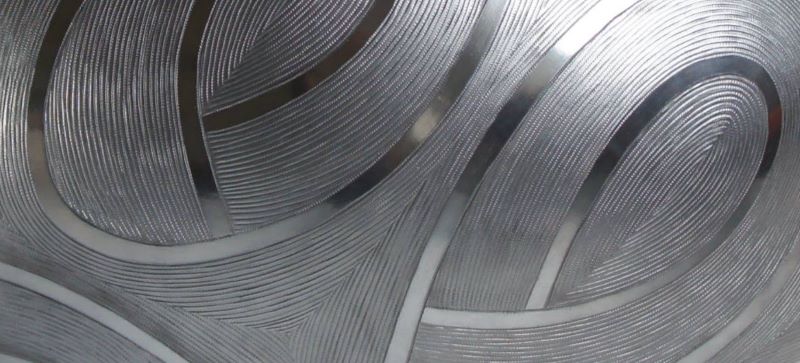
Gail Kendall – Artist Profile

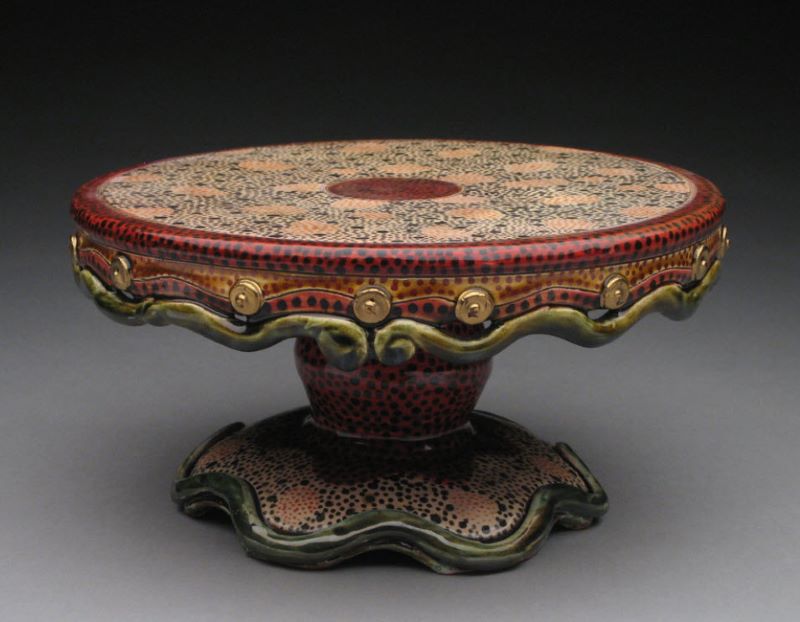
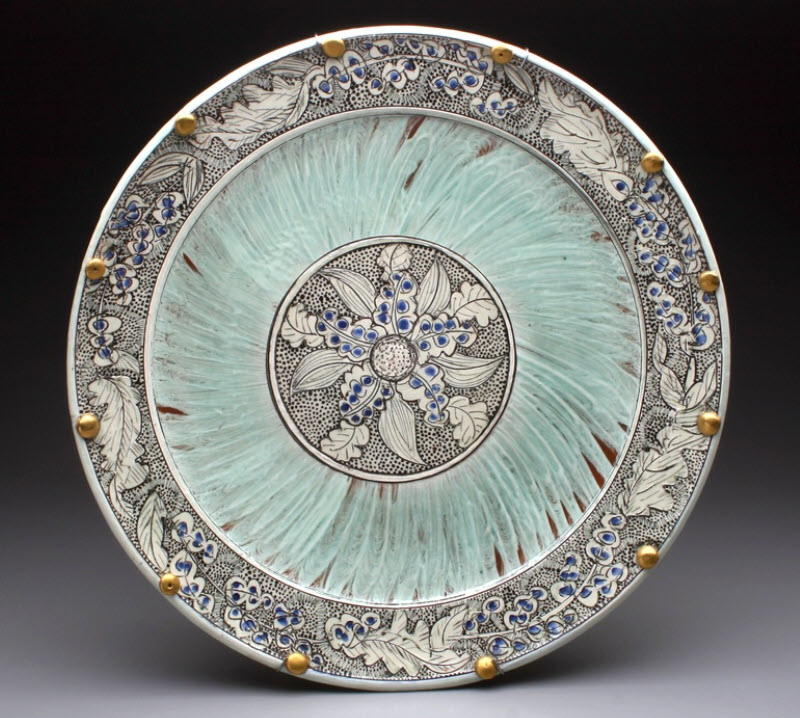
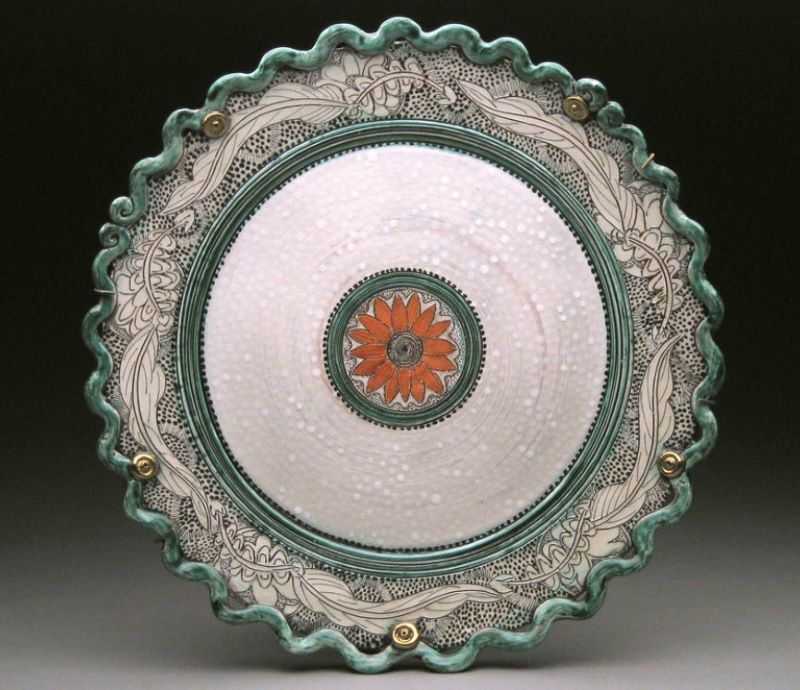
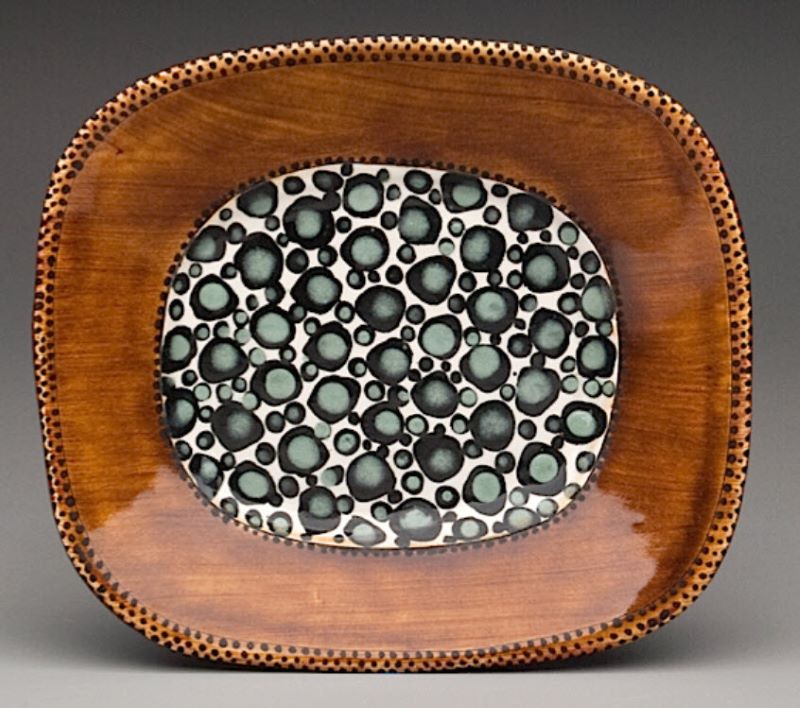
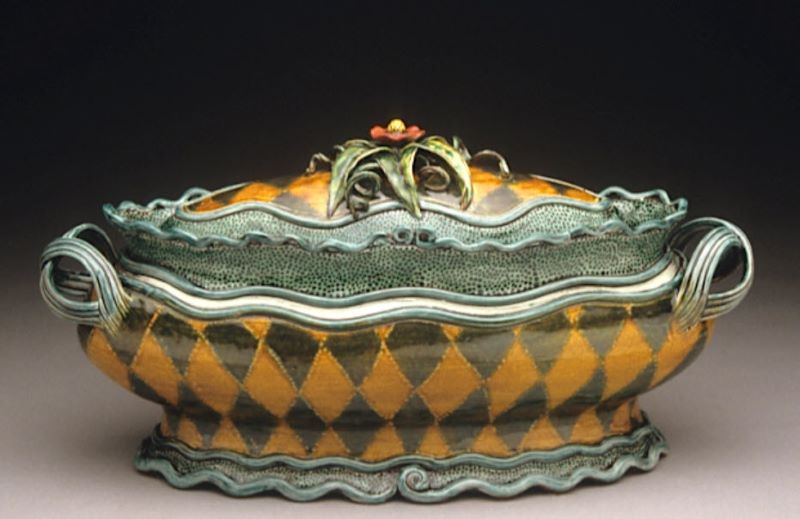
Gail Kendall is a former academic and maker of sumptuous pieces that reflect a deep interest in both form and surface. Her work also reflects a basic creative impulse to create objects of beauty and pleasure that add to our cultural tradition. I respect that impulse – deeply respect that impulse. A life spent adding beauty to the world is a life well spent.
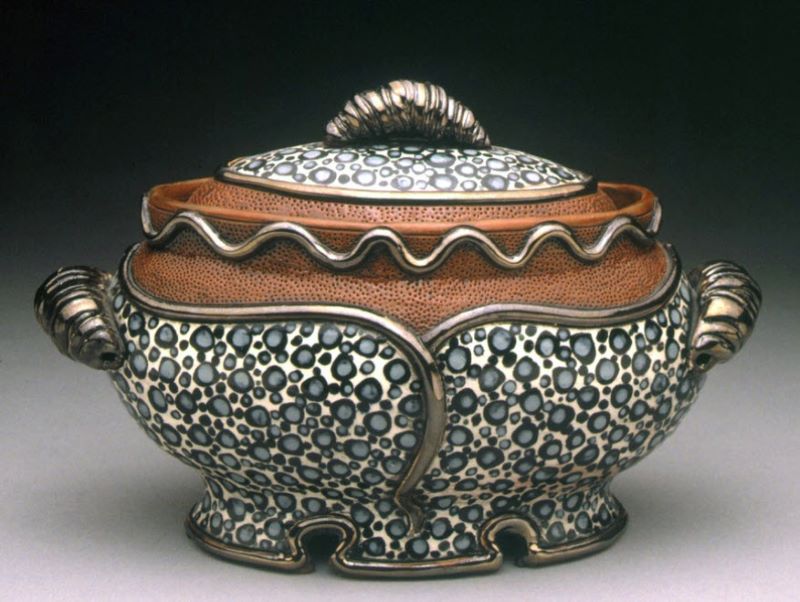
JW: You note influence from 13th – 18th C. European pottery traditions. Where did you first encounter these ceramic traditions and how did you come to incorporate them into your work?

GK: The pots I turn to the most are historical. At one time, it was primarily surface on historical pots that I sought out and perhaps interpreted.  Of late, I am looking at the simple volumetric forms that are to be found in every culture that has produced pottery. I have to admit I sometimes feel I am not stretching or challenging myself with more complex forms:  particularly when I look at the work of my peers. Ultimately, I make what I am impelled to make and what gives me pleasure. If I were forced to defend my love of classic pottery form, I could say that my complex surfaces require them.
I believe that all artists, regardless of medium are made vulnerable in terms of their creative process. We pull original works from our guts and heart and put them out there, one way or another, to be judged, critiqued, talked about, cared about, or not. I think it was this stress that took me out of the studio. During the pandemic I knit four sweaters, baked sour dough bread, and cooked.

I shut down my creative work for the entire lock-downed part of the pandemic. That is 15 months or so. Why? I haven’t exactly figured that out. I can’t explain it especially when my potter pals were happy as clams and working day and night. I was not and still am not fearful or afraid of the virus. I take care but I grocery shop, visit friends who are part of my “quarantine pod” and in February ‘21 traveled to teach a workshop. On some level I must have dealt with enough stress about the lock-down (and let’s not forget the politics) that working in the studio had to take a vacation.

In August 2021 I ventured back into the studio. I had an upcoming exhibition and no inventory to look to. I gave myself permission to make whatever I wished to make and that included urns and other objects of contemplation as well as pots that would live part of their lives in the dish rack.

JW: Will you tell me a little about your creative process? Do you work out the form and decoration of a piece before working on it, or is your creative process more fluid and spontaneous, for example? 

GK: I start a piece by determining whether I am making a plate, a cup, a covered form or something else. I “draw” in the air. I choose my approach: will I start with a mold, a soft slab, or coils? From there I build, examining the shape of a curve, the beginning points, the ending points, the lip edge. Eventually, things are made, bisque fired, glazed and fired, then china painted and possibly lustered and fired again.
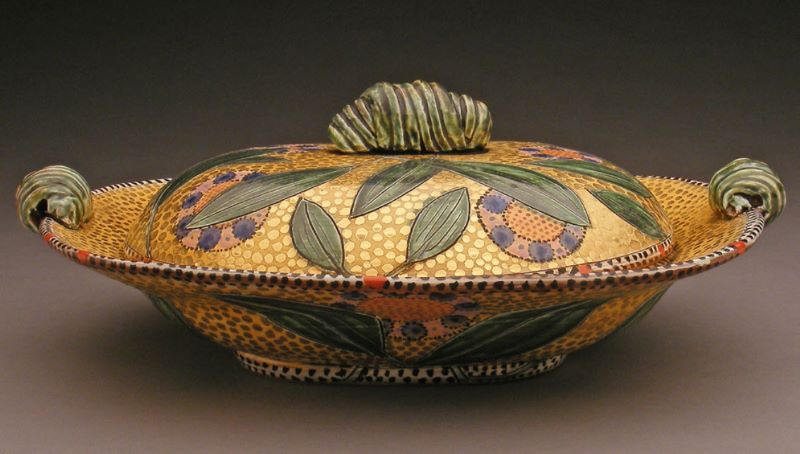
I use red earthenware clay and paint white slip on the leather hard forms in various ways. I am interested in layered surfaces and I achieve them, in part, by applying slips, glazes and the rest in a painterly manner. The surface is unregimented.

JW: How has your ceramic work evolved over time? What have you struggled with?

GK: The struggle I have dealt with in my career was finding my lifework within the medium. I believe it would have happened much sooner had I lived in Minnesota as an art student. There, functional pottery was what was happening. Before I took the plunge into functionality, I was making what I call “hand-built contemporary vessels”. I believe they were successful, but my problem, which I shall express simplistically, was that I became bored “by number seven in a series”. What was I bored with? Sticking with the content.
The magical joy of pottery is that the content is profound and is embedded in the forms. I, as an artist, do not have to explore and investigate any issue. I am a designer. The content is either metaphorical or quotidian depending on what I am making. An urn, a covered form, or the kind of vessel that in the past would have served in a meaningful, often religious ritual, is metaphorical. If I am making a plate, bowl, cup, then I am celebrating the quotidian: those essential needs of people for sustenance and community. I love that.
JW: What would you like people to know about you and your work?

GK: I have been the recipient of generosity from certain individuals in the field at seminal times in my career.  I love teaching and mentoring and ended up with a fabulous academic job here in Nebraska. A job is fabulous if the boss is fabulous and my department chair was behind me all the way. I had two great colleagues, and we found in our separate ways, satisfaction and gratification in building program, facility, and in sharing times of frustration and times of joy.
I am an elder. My energy level is decreasing. My focus has moved from career to a larger canvas: family, pets, friends. I love the clay. I am proud of my work and excited by new developments. I don’t see that ending any time soon. I still have a difficult time taking no for an answer.
See more of Gail’s ceramics on her website.
Ceramics & Environmental Change

I came across two articles about ceramic tiles used in architecture, and how that usage impacts the environment. One article reflected an upbeat note on innovative applications to reduce energy consumption and thereby positively impact the environment. The second article was more sombre. Let’s look at the upbeat topic first.

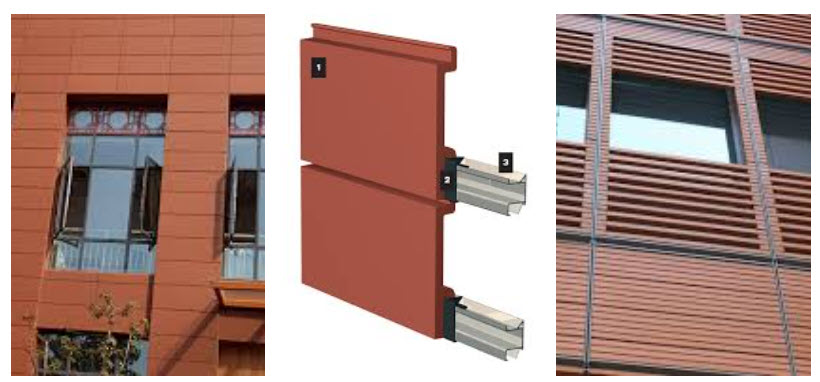
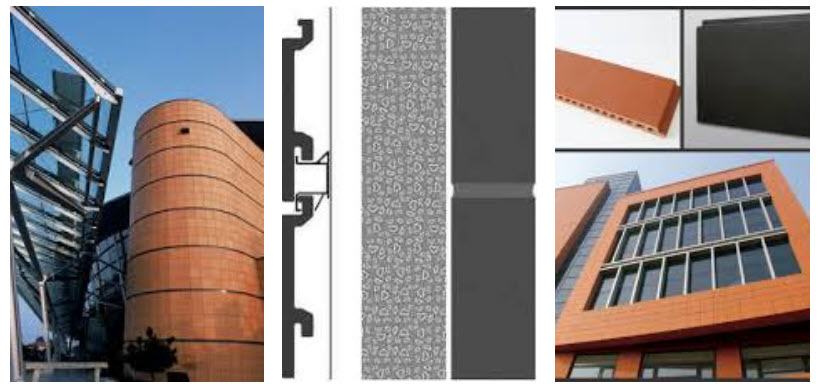
LockClad terracotta tiles, described in a Design and Innovation blog post, are new ceramic materials used in architecture to protect the exterior of building from rain and other environmental elements. The tiles are manufactured in such a way as to easily slide on aluminum rails installed on the exterior of a building. Product photos may help communicate the idea:

From the photos you can get an idea of the applications on flat and curved surfaces. There are 2 main benefits these ceramic tiles. First, they are easily affixed to the exterior of a building. Second, they provide efficient insulation and therefore conserve energy use within the building. Sounds great, right?

Then I read the sombre article. It was published in the New York Times on Dec 3, 2021, and is entitled “A Slow-Motion Climate Disaster: The Spread of Barren Land.” (To be clear, the NYTimes article was NOT about production of LockClad tiles.)

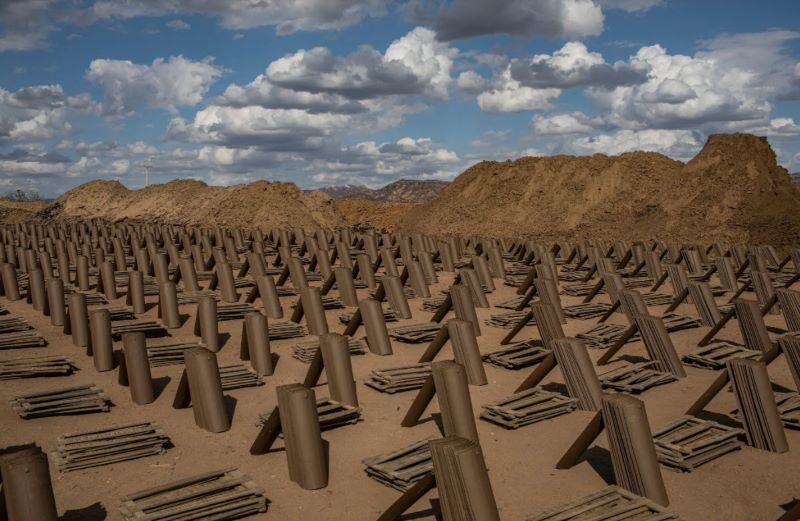
Photo by Victor Moriyama for the New York Times

The NYTimes piece documents the environmental impact of harvesting large amounts of clay for ceramic tiles in northeastern Brazil. Clay from the area is heavily mined, molded into clay roof tiles, and fired in wood-burning stoves. Thousands and thousands of clay tiles are produced and shipped to other areas of Brazil. In the wake of this ceramic production, large land areas are devolving into desert. The clay, holding rich minerals and nutrients, is taken off the land. Large quantities of water are mixed with the clay and then evaporate as the tiles dry. And huge amounts of wood from the area is cut to burn in large kilns.

We all know that the world is facing severe environmental challenges. Many of us are trying, in our small ways, to minimize our adverse effects on the environment. I’m now buying my clay from local Colorado sources rather than purchasing clay that’s been shipped from 600 miles / 1,000 KM away. But as the two articles above illustrate, there’s rarely a perfect solution to any problem. Nevertheless, we can make a difference at the margins. Little things can add up, especially if widely adopted. For example, if each of us exchanges our conventional light bulbs for LED bulbs, it doesn’t impact any one of us a lot but in the aggregate we will save a LOT of energy.

Shae Bishop – Artist Profile

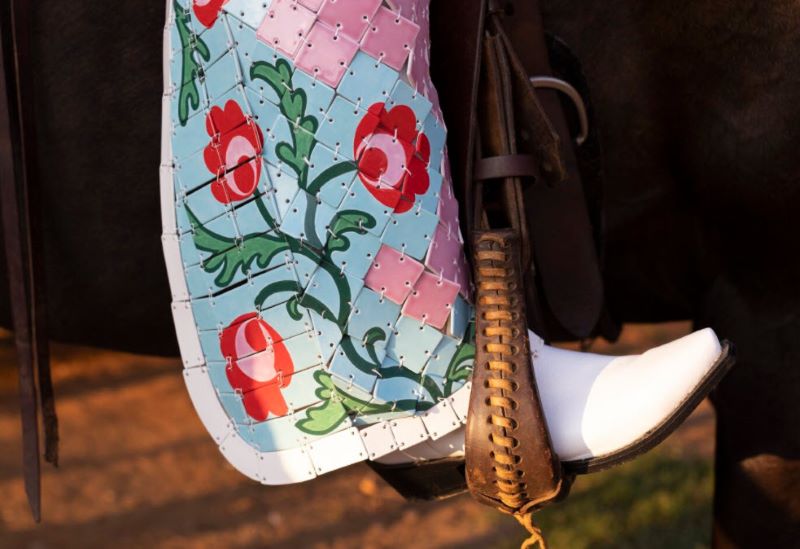
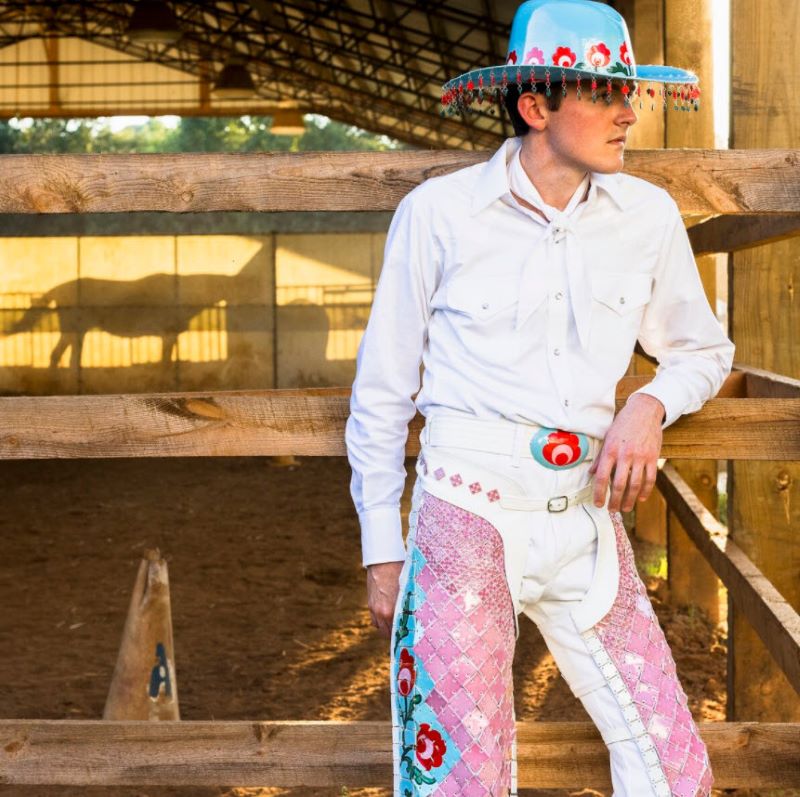
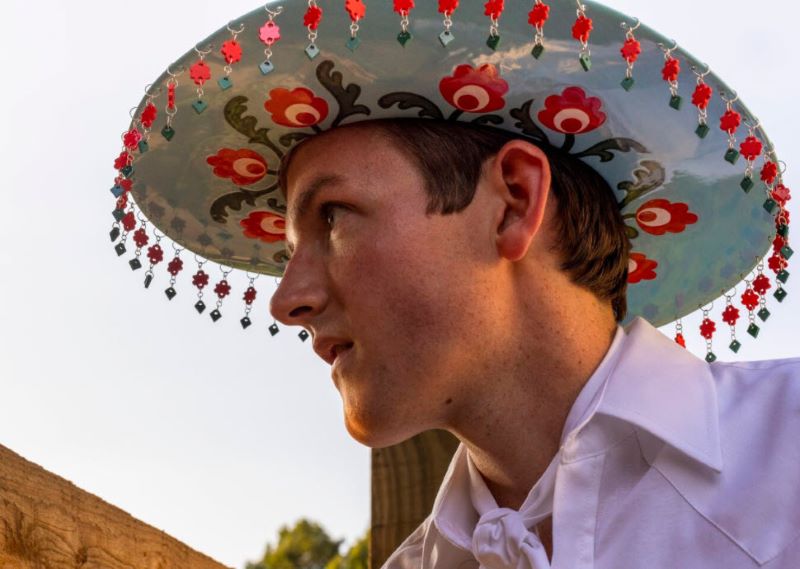
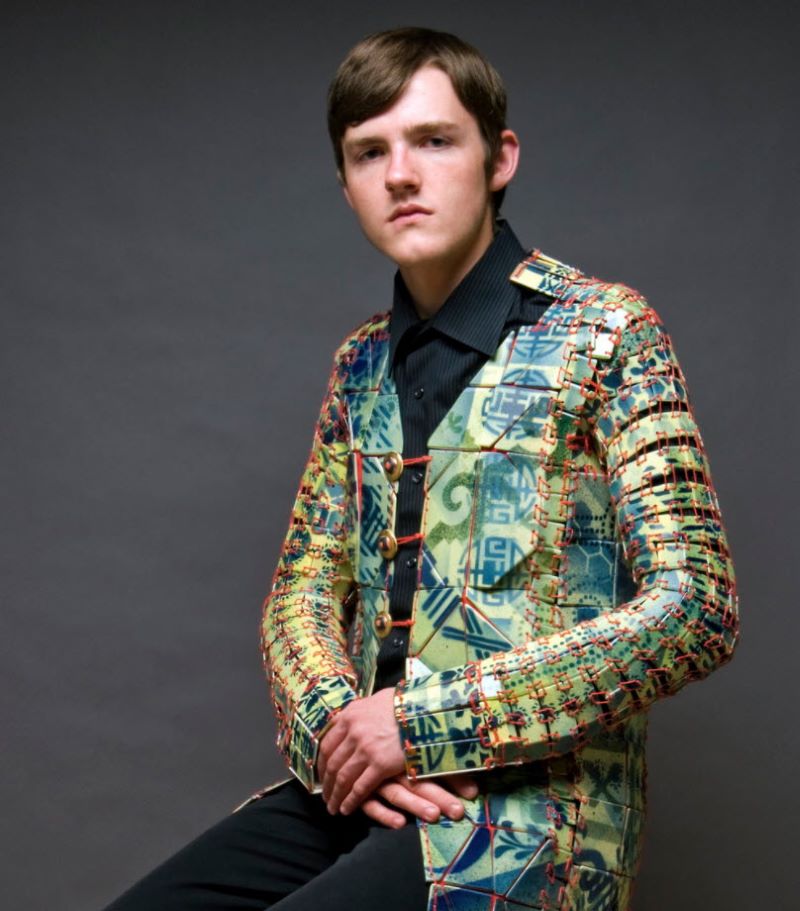
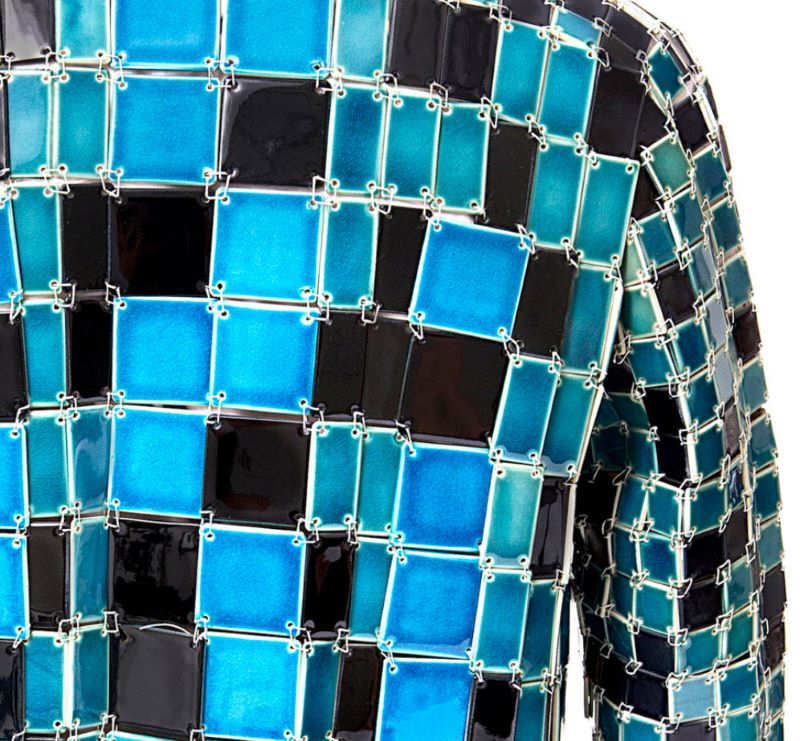
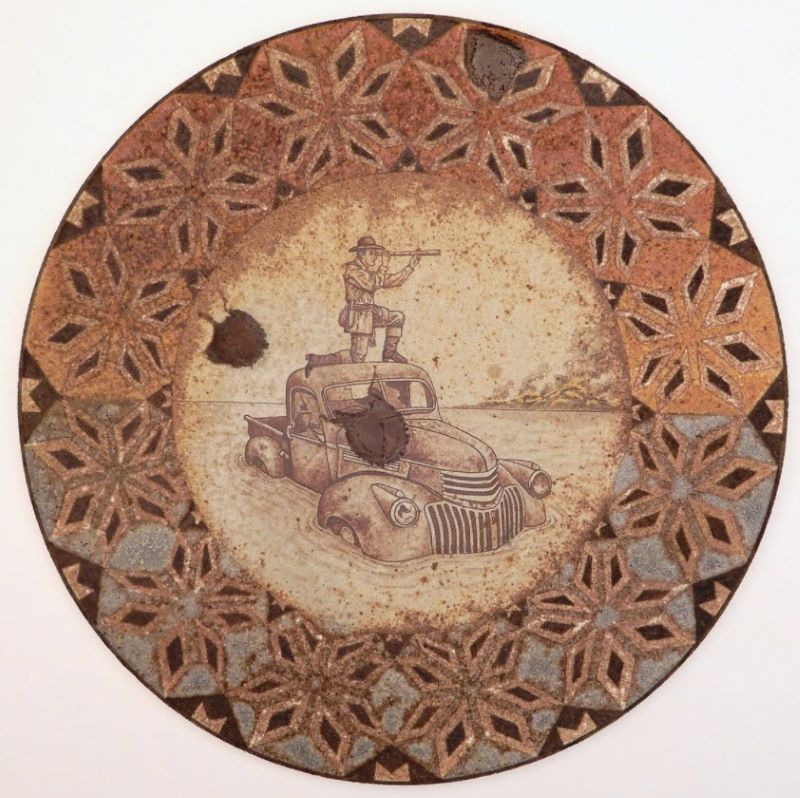
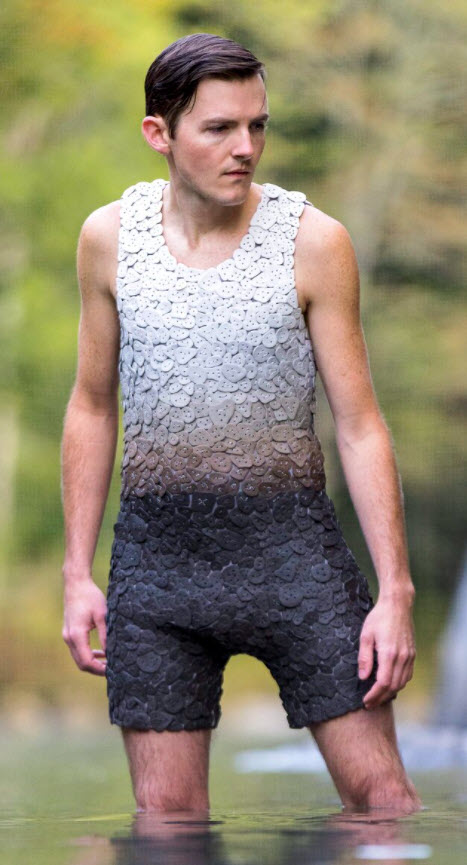
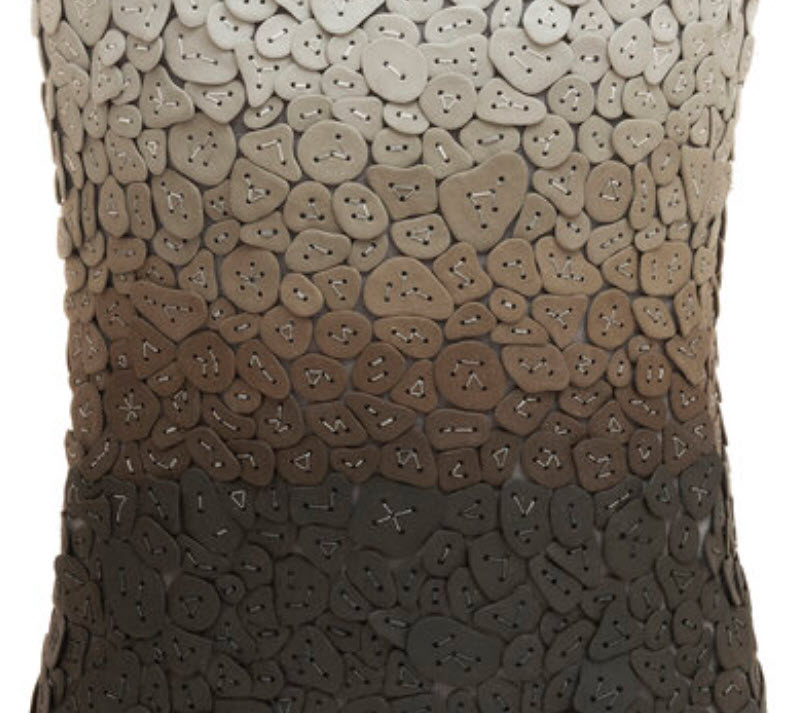
Shae Bishop is a wonderfully creative artist merging disparate art forms (at least in my mind): ceramics and clothing. His stuff is fun, playful, colorful, lighthearted and interesting. As he explained his work, I found some very interesting themes, such as the interplay between the permanence of ceramics and the transience of clothing. Shae also pokes around with what defines masculinity, blurring elements of decoration with iconography of cowboys and the American West.

Eternal Cowboy, photos by Myles Pettengill

JW: What first interested you in exploring the relationship between ceramics and textiles? What do the two mediums offer that lead you into this area?

SB: I’ve been consciously engaging with clothing ever since playing dress-up as a child. The transformative and expressive qualities of clothing never cease to fascinate me. Dress is a visual language and what we wear is always communicating something to the world around us, intentionally or not.

Eternal Cowboy, photos by Myles Pettengill

Whether it’s our daily attire that we don without a thought, or an elaborate outfit for an event or ceremony, we transform our naked forms by dressing. From this perspective all clothing is a costume. Clothing is also very personal, both literally, in the sense that it touches our bodies, and figuratively, in the sense that it can express how we view ourselves and/or how we want to be perceived.

Eternal Cowboy, photos by Myles Pettengill

When I first thought about making ceramic garments, I had a material metaphor in my mind. Ceramic represented history to me, something hard and long-lasting, heavy and also fragile. Textile represented the individual, something flexible, soft, and personal. By using the two in concert I was trying to merge the personal with the historical, to locate myself and my individual narrative within the larger story of human culture.

JW: You mention that you’ve explored the connections between the cultural histories of ceramics and textiles. Can you explain what you mean by “cultural histories”?

SB: Every material has different kinds of history. Ceramic and textile’s natural histories could involve the geological processes that make clay deposits, or the climate in which flax for linen grows best. By “cultural history” I am referring to how human societies have used, traded, decorated, and ascribed meanings to the products of those materials. Some of the earliest archaeological evidence we have for the invention of textiles comes from impressions made on clay vessels. That is part of cultural history. But this history is being written still, so every time a maker uses or thinks about a material in a particular way, it also becomes part of that history.

JW: You also say you’ve explored connections between the “pattern-making systems” of ceramics and textiles. Again, could you elaborate on what you mean by that?

SB: I’m very interested in architectural ceramics, like tile and brick, how these can clad the interior or exterior of buildings like skin or clothing. Any arrangement of tiles or bricks creates a unit-based pattern, from a simple rectangular grid in a suburban bathroom, to the stunningly complex geometric mosaics of some mosques and palaces. Likewise, in creating a textile, any system of interconnecting yarns or threads into cloth creates a pattern, from the over-under grid of plain weave canvas to the elaborate floral brocades made on a jacquard loom. In addition to these base patterns, ceramics and textiles are often further overlaid with patterns through glazing, printing, etc.

Shirt, photo by Mercedes Jelinek

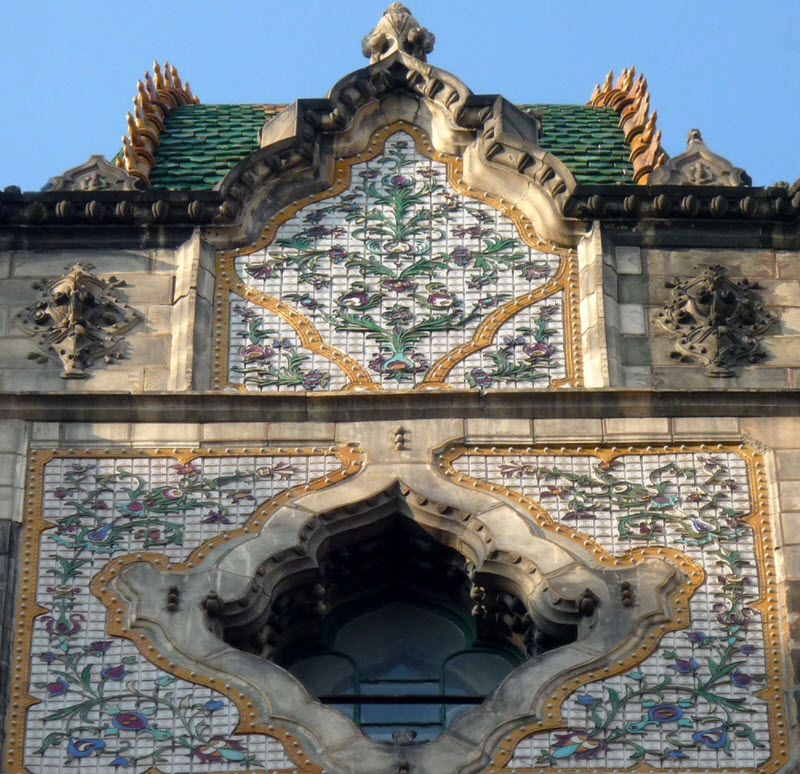
I am particularly intrigued when ceramic and textile patterns influence one another, such as the tilework in Hungarian Secession buildings, influenced by the designs of the region’s folk textiles.

Photo by Nori (Nóra Mészöly)

JW: I notice in your wall tiles that you’re incorporating cordierite tile – is that the commercially available material sometimes used in pizza ovens?

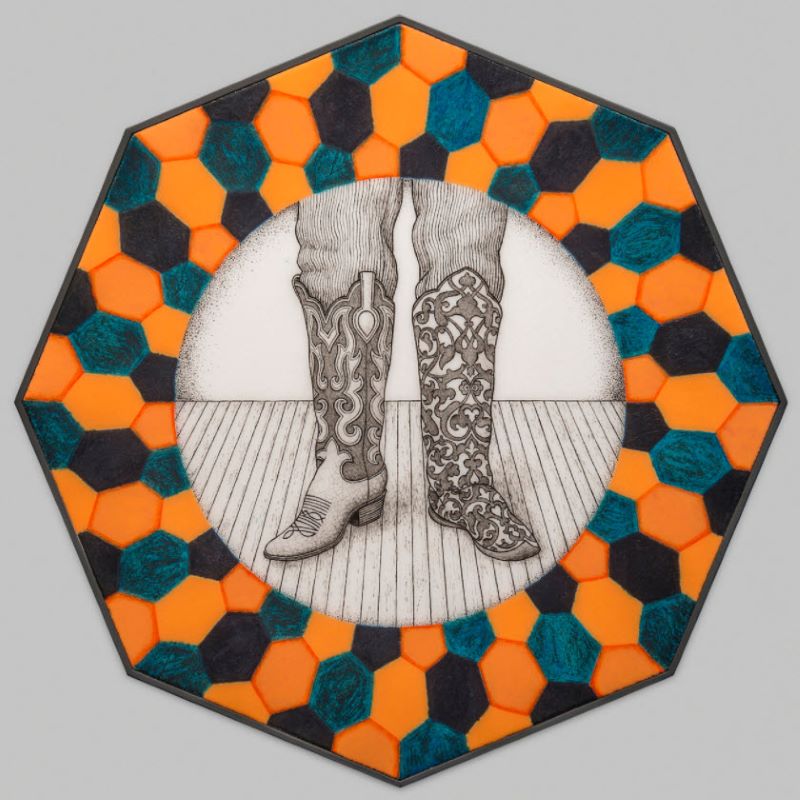
SB: For many of my wall tiles I glaze directly on cordierite kiln shelves. This gives me a very large, flat, durable ceramic surface to work on with glaze and overglaze enamel, like a canvas. I also glaze on clay tiles I make myself, especially when I want a shape more complex than a circle or hexagon.

Wall tile, photo by E. G. Schempf

JW: I also see some different materials (wood, steel). Are those materials used for hanging the pieces, or somehow integrated into the imagery on the pieces?

SB: I often make wood or steel frames for these tiles, they are essentially ceramic paintings or drawings.

JW: Do you use commercial decals?

SB: I haven’t used commercial decals on any of the tiles you see on my website, the colored borders are glazed by hand with a brush, and I do the line drawings with overglaze enamel and a steel-nib pen. Most of those pieces are fired many times with layers of glaze and enamel.

Wall tile

JW: Where did you first come up with the idea to create wearable ceramic pieces?

SB: I started making my ceramic garments 10 years ago at the Kansas City Art Institute. I have continued this body of work ever since. Each of these pieces usually takes 4-9 months to make, so it’s quite a slow process to work through all my ideas. Also, the ways that I think about this work have evolved over time and branched into a few different groups. There is so much to think about at the intersection of clothing, history, personal narrative, craft processes, and materials. It’s still so exciting for me.

Swimsuit To Wear While Looking For Hellbenders, photo by Myles Pettengill
Swimsuit To Wear While Looking For Hellbenders, photo by Loam

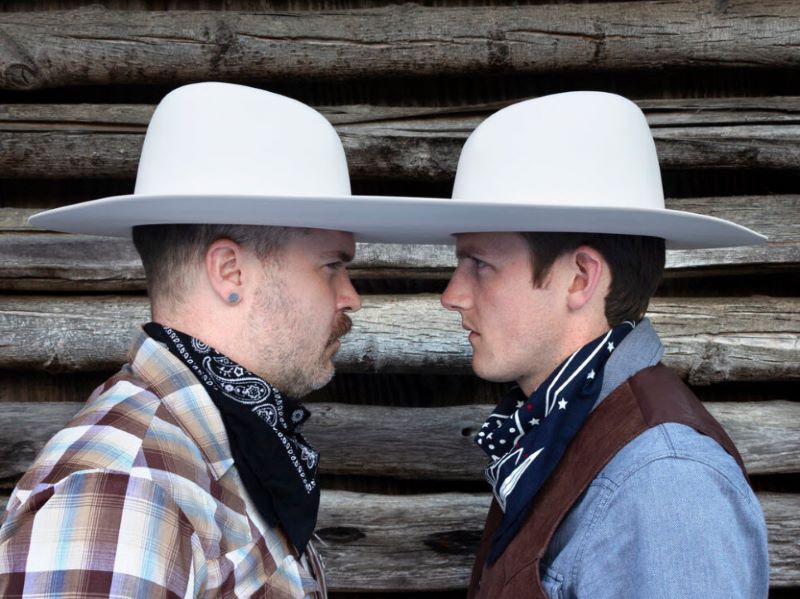
JW: I absolutely LOVE the “You Lookin At Me Pardner?” piece. Super fun. Can you tell me the background of this piece? Where did the idea come from? How did it evolve?

SB: I spent a lot of time out west in the past few years and was thinking about the cowboy as an American archetype and particularly as an icon of masculinity. The subject resonated with me because of growing up around Country music and culture, and because of my interest in Western fashion.

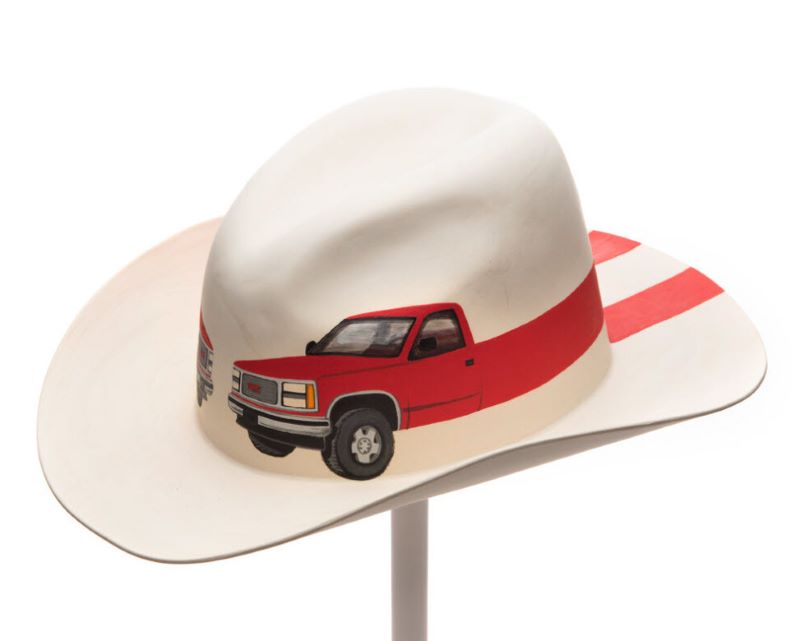
You Lookin’ At Me, Pardner? Photo by Loam

Here’s a culture steeped in machismo, but where a century of iconic figures wore high-heeled boots, tight jeans, bright colors, floral designs, and sometimes even fringe and rhinestones. There’s a fascinating history here, full of diverse influences and wild paradoxes. I took the cowboy hat as a symbol and started making this series called “Fragile Masculinity” where I playfully examine different facets of the manly cowboy ideal. In the double-crowned hat “You Lookin At Me Pardner?” I’m particularly thinking about old Western movies and male barroom posturing, where so much is conveyed by how somebody looks at you. This hat creates a face-to-face confrontation into which both wearers are locked.

JW: I see your partner is Annie Evelyn. In glancing at her furniture work, I see she’s also quite involved with textiles and fabric. Can you tell me a bit about your collaborative pieces?

SB: You are quite right to notice similarities between my work and Annie’s. It’s one of the things that first drew us to each other. We both explore the interplay between hard and soft materials, and surprising interactions between crafted objects and the body. We also have a shared interest in fashion, pattern, and geometry. So it felt pretty natural collaborating.

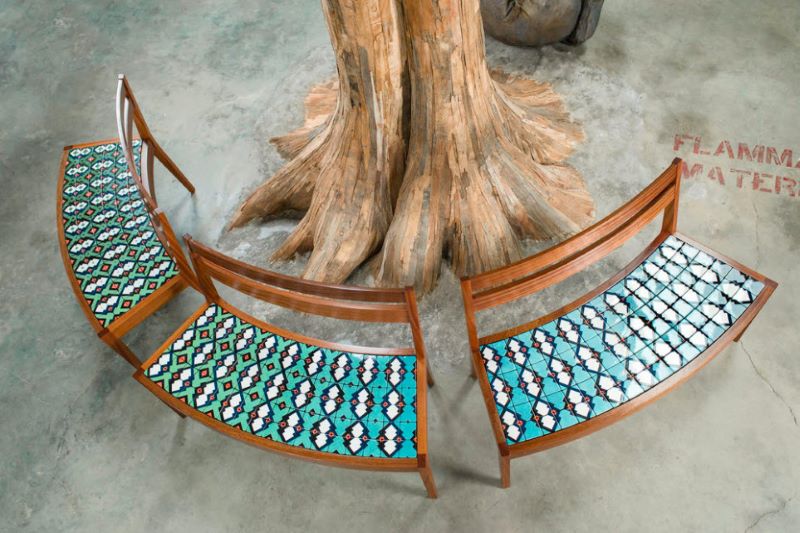
Bucher Benches, photos by Scott Cartwright

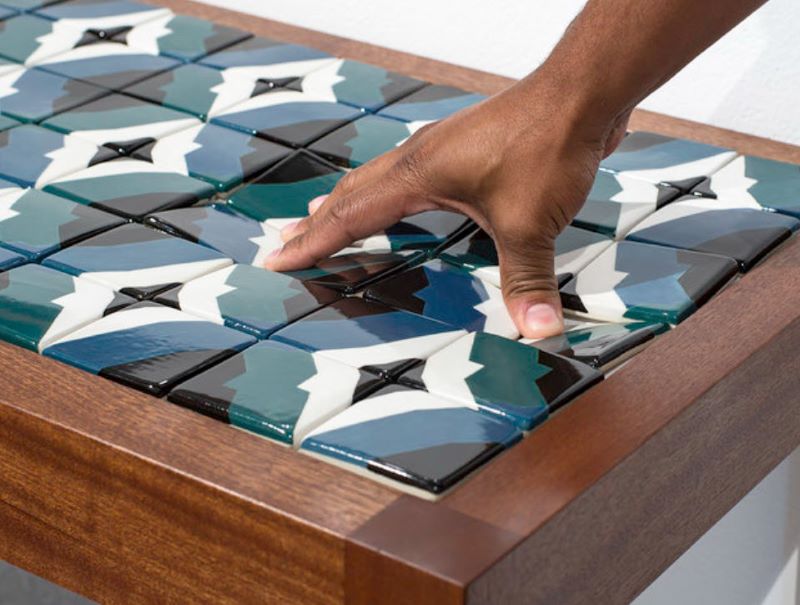
We had just taken a trip to Cuba and spent a lot of time looking at the colorful cement floor tiles in the buildings there. That was a starting point, we knew I would design square tiles with abstract motifs, but I wanted to push the patterns further. So I started to design patterns that changed incrementally across the rows of tile, and color gradients that changed with the patterns. Annie is an amazing woodworker and upholsterer, so she built hardwood frames and made the benches with hidden upholstery foam under the tiled seats, so they are squishy to sit on. It was really fun seeing these come together.

JW: You seem to live in a very creative community. Can you tell me anything about the artistic context you live in and around, and how that influences your work?

SB: I’ve been living in the mountains of North Carolina on and off for the last 7 years. I’m part of a big community of artists that live in the area around the Penland School of Craft, an hour north of Asheville. I fell in love with the area the first time I went to take a class at Penland, I later moved there to work for a local artist, I met my partner Annie there, and we bought a house a few years ago. I love the beautiful rivers and forests, but the people are what really tie me to the place. I am part of a communal studio, where I work alongside furniture, sculpture, and jewelry artists. We share equipment and skills and have plans for expanding to include more artists, facilities, exhibitions and event space. And ours is just one of dozens of area studios. If I make something too big to fit in my kiln, I can take it to a friend’s studio. I work with amazing photographers who help me do photo shoots for the images that accompany my work. Local metalworkers help me make display systems for my work. We live in the woods but can have the resources of a city by working together. It’s a dream for me.

JW: Finally, what about your plans for the future? Do you have some ideas for new work that you’re kicking around?

SB: There’s a lot in the works! I’m making more hats to continue my Fragile Masculinity series in some upcoming shows.

Pickup Lines, photo by Loam

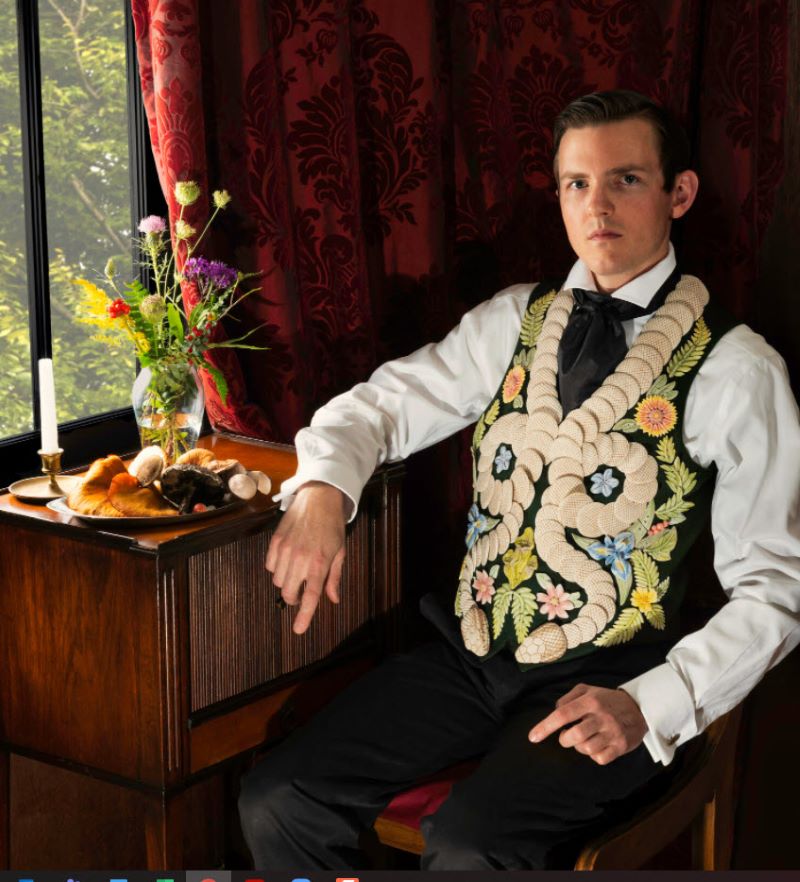
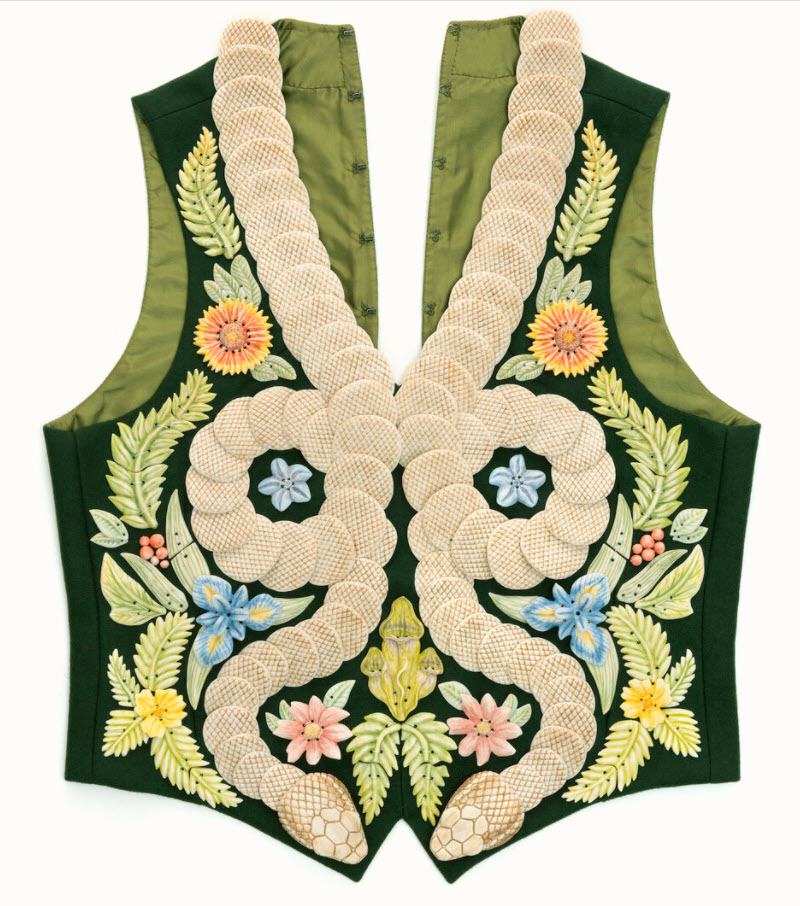
I am starting a garment that is a follow-up to my Waistcoat of Earthly Delights, with flora and fauna of a different habitat.

Waistcoat of Earthly Delights, photo by Loam

I’m interested in experimenting with materials like Velcro. But, maybe most exciting for me, I am learning to make shoes. I’ve wanted to learn shoemaking for many years, and I just finished a 6-week introductory class. I love the process and can’t wait to learn more and make this an ongoing part of my creative practice. And, before you ask, yes, I have lots of ideas for incorporating ceramic into shoemaking and leatherworking. It’s always a thrill for me to learn new craft processes, get new ideas, and be able to express my ideas in new ways. I hope I can keep doing that for the rest of my life.

Shae’s work can be seen on his website.

Gaya Ceramic

Gaya Ceramic is an extensive ceramic design, production and arts center complex located in Bali, Indonesia. Founded in 2001 by Michela Foppiani and Marcello Massoni as a small ceramics studio, over the years the founders have expanded the facility and built a global enterprise. Eight years after its establishment, Hillary Kane founded the separate but symbiotic entity Gaya Ceramic Arts Center, in conjunction with Michela and Marcello.

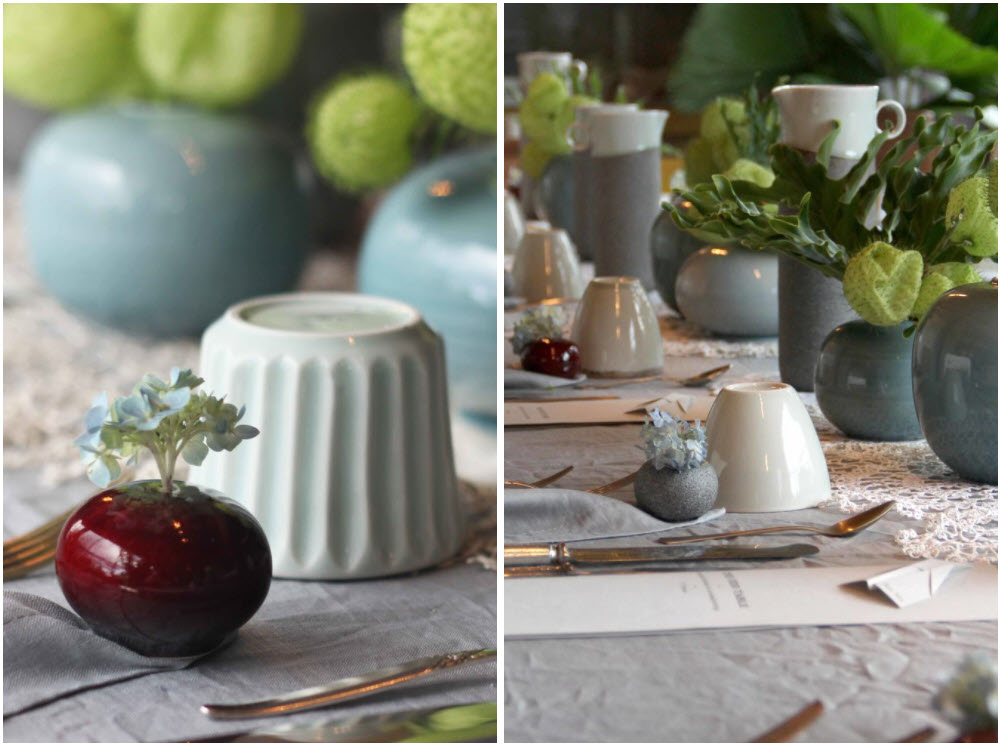
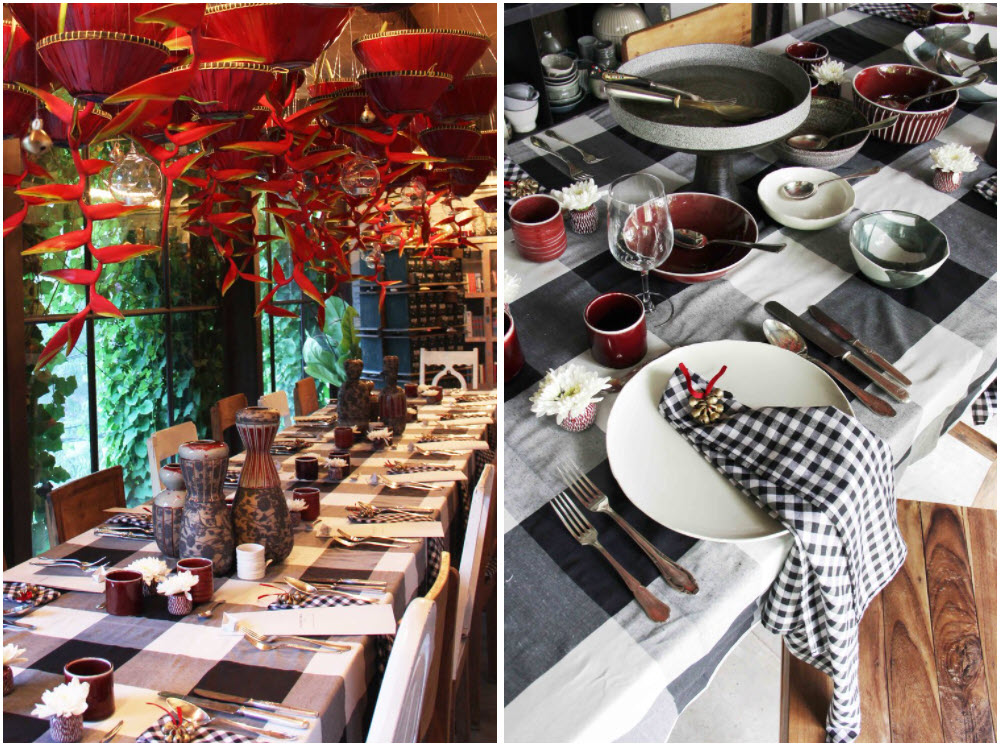
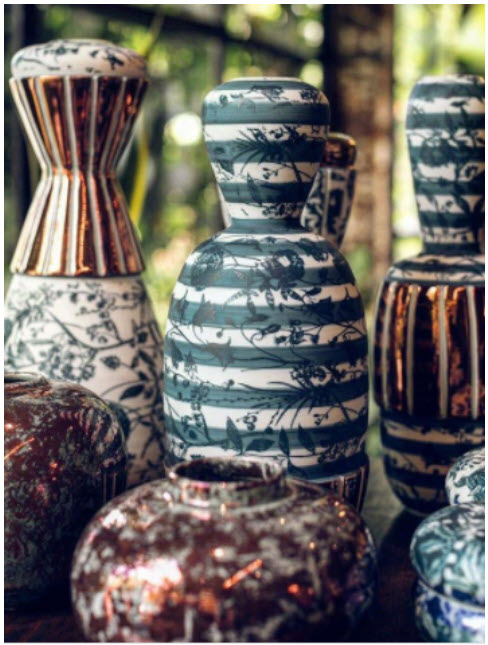
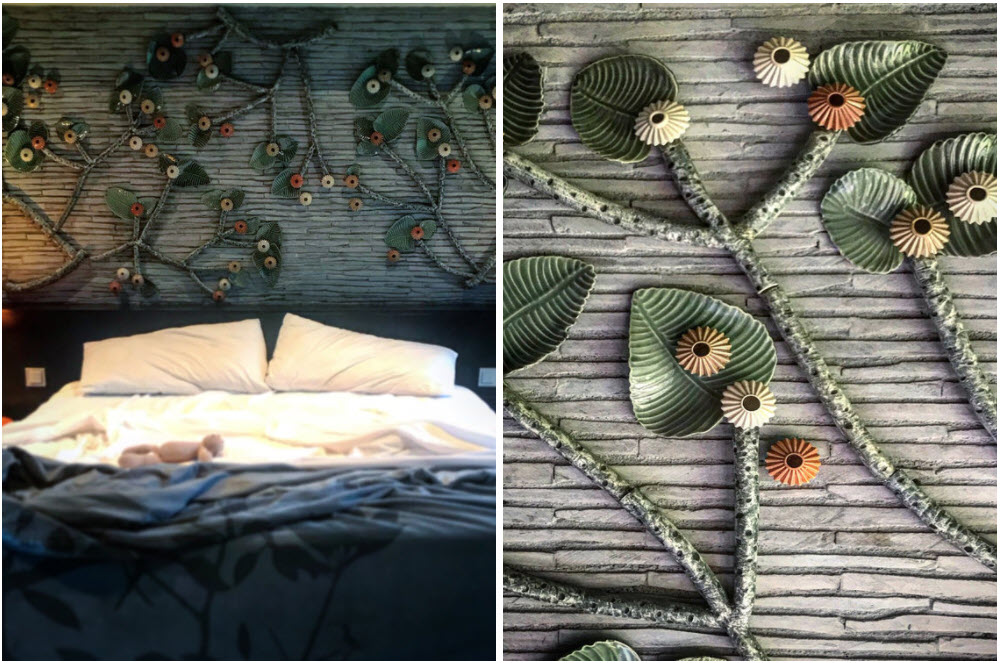
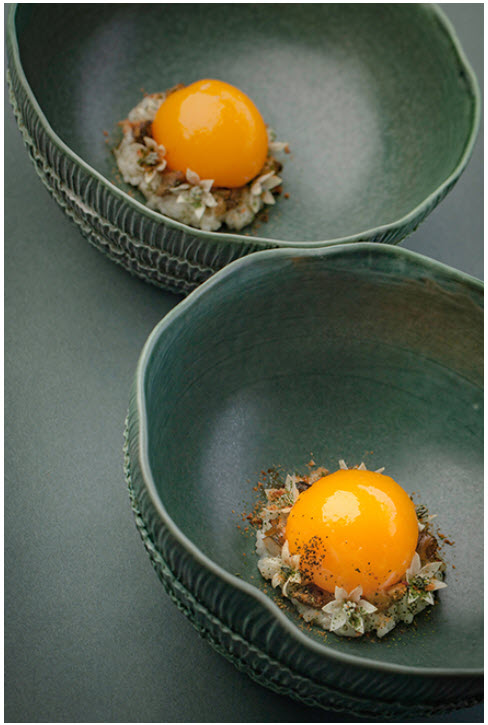
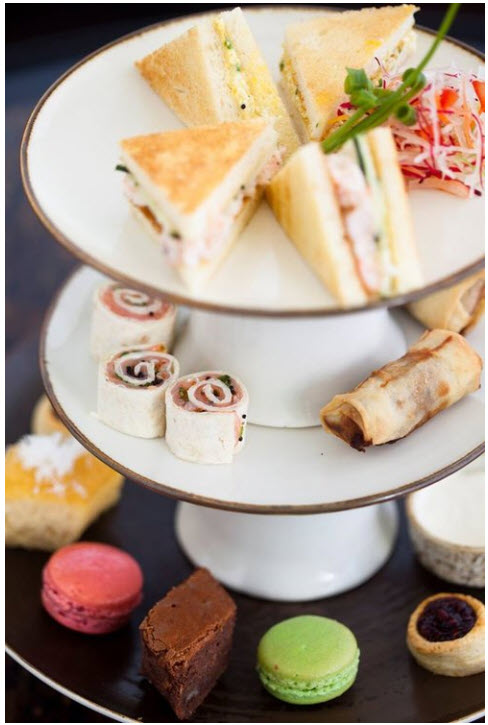
I must remark on the consistent, impressive level of quality on everything Gaya Ceramics does: their website, the ceramic work they profile on that website, and the training and instruction they offer through their Arts Center. I’ve included some examples of their work in this post. More can be seen on their website.

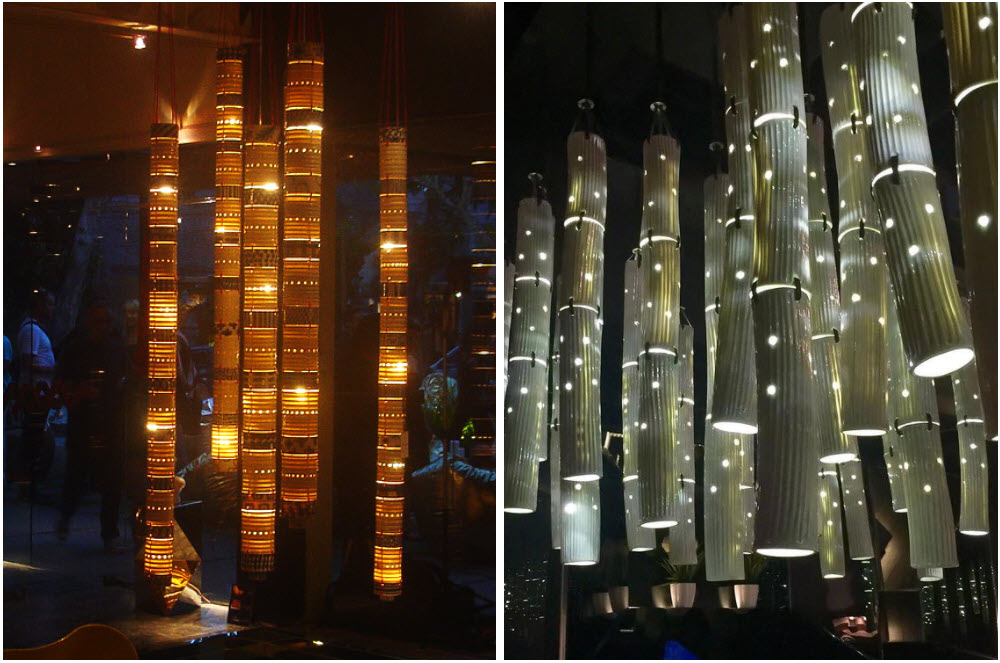
Gaya Ceramic offers ceramic “collections” (tableware, lighting, amenities, etc) and custom-made, bespoke items sold to top-end restaurants, hotels and other hospitality businesses.

From Gaya Ceramic Styling Collection
From Gaya Ceramics Amenities Collection

In addition to design and production facilities housed under the Gaya Ceramic Design Studio, the Gaya Ceramic Arts Center organization offers ceramic workshops and art residencies. The workshop instructors are outstanding practitioners from around the world.

I corresponded with Hillary Kane who founded the Arts Center (and who remains its Creative/Executive Director). I asked her about both sides of the business: the Design Studio and the Arts Center.

GAYA DESIGN STUDIO

JW: When Michela and Marcello started Gaya Ceramic in 2001, did they always plan a large-scale production studio? Or did this develop over time?

HK: They began with just the two of them and the two neighbors in Sayan (2 employees only!), thinking they would just replicate the small pottery they were running just themselves back in Italy.  It’s growth has been entirely organic and insistent.  They have now near 100 on their team!

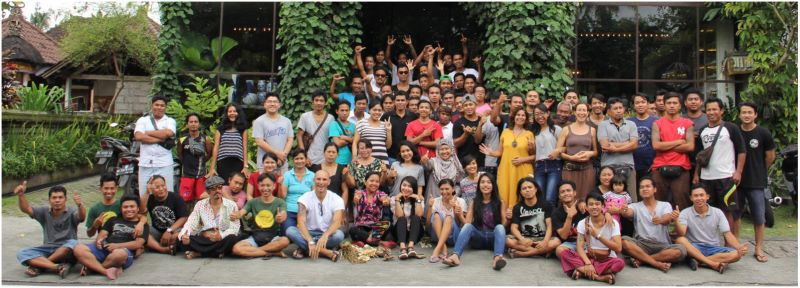
Employees of Gaya Ceramic

JW: What brought Michela and Marcello to Bali?

HK: Michela and Marcello came to Bali at the invitation of the original owner of Gaya Fusion, Stefano Grandi, an Italian entrepreneur and lover of the arts.  He had founded Gaya Fusion as an “Art Space”, a fine-dining Italian restaurant, and a few villas– but with a vision to have other branches to the concept.

They were invited to begin a ceramics studio and were in fact a direct part of Gaya Fusion for the first 7 years or so.  Then they separated as a different business entity, though of course kept the link through the name and branding.  Gaya Gelato was similarly born. 

I founded Gaya Ceramic Arts Center was an outgrowth from Gaya Ceramic and Design, but we stand as a separate business entity (though much more like a sister company).  A couple of years ago, Eva Champagne stepped in as the Managing Director, and I remain the Creative/Executive Director of the Arts Center. Unfortunately Gaya Fusion did not last and the property has been sold as of a few years ago.

From Gaya Ceramic Installations Collection

JW: Gaya Ceramic creates both its own collections as well as bespoke products for individual clients. Does one side of that equation dominate or is the work fairly equally divided between the two?

HK: The bespoke products really has led the way for their activities.  They create their own collections only for sale in their showroom.

From Gaya Ceramic Tableware Collection

JW: Who develops the designs for the design collections?

HK: Michela Foppiani is the Creative Director and thus she, along with her research and design team.

JW: Do you sell most of your collections through the internet or through the showroom?

HK: Most sales are relationships with clients, beginning with R&D and culminating in their custom order.  The showroom does well in retailing as well, and there are even clients who purchase online, though we do not have a specific online shop per se.

From Gaya Ceramic Lighting Collection

GAYA ARTS CENTER

JW: Was the Arts Center set up primarily to address a need for local ceramic arts training or was this envisioned primarily as a forum for international workshops?

HK: It was set up very deliberately as an international workshop center, aiming to attract artists, instructors and participants from all over the world (including of course any interest from on-the-ground individuals– ex-pats and/or Indonesians).

Partial List of International Workshops

A list of upcoming international workshops is located on the website.

JW: How has the Arts Center evolved over time?

HK: It has grown both in the number of international workshops it holds per year (usually around 10), to the caliber and expertise of the instructors and resident artists coming to teach.  Simultaneously, the population of on-the-ground interest has boomed, so our more local “fundamental” programs have also blossomed.

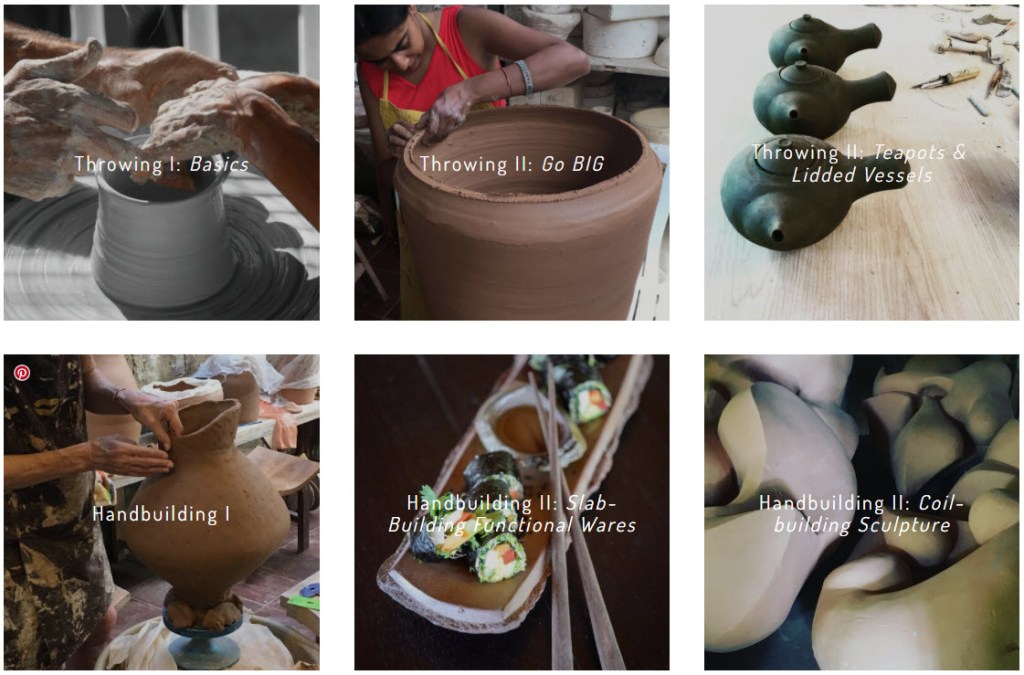
Partial List of Fundamentals Workshops

A complete listing of upcoming fundamentals workshops can be found here.

JW: You have some wonderful fundamental and international workshops. Is there a “logic” behind what workshops you put on and the people you bring in to teach them?

HK: For the international workshops, we try to have as much breadth in terms of making style as well as type of firing as possible within the roster for any given year.  We aim to attract artists who are really at the peak of their chosen expertise, both incredibly well-known names, and those perhaps less renown but likewise talented. 

The Fundamentals programs cater more to entry-level enthusiasts with a few more specified selections tailored to our local audience’s interests as we read them.  These programs have only just begun in the past year and a half because of the pandemic, but have been so popular that we will continue them in between our International Workshops.

JW: Can you give me a sense of what students can expect in one of your international workshops?

HK: The workshops are two weeks in length and incredibly immersive: we basically eat, sleep and live clay for a fortnight together.  Tremendous growth happens for everyone, regardless of the level of experience coming in.  The schedule is such that we have time to really develop in the making, as well as concluding with firing all of the work begun (*some exceptions for large scale figurative workshops).

We share lunches daily, excursions around the island for a day or two out of the studio program, several dinners, and usually much more.  Accommodation is individually selected, though we always help in giving suggestions.  Most everyone stays in close proximity to the studio itself.

Hillary shared this video with me. I think it gives a sense of the scope of Gaya Ceramic and the enchanting story of its origin, growth and development.

Valentina Zlatarova – Artist Profile

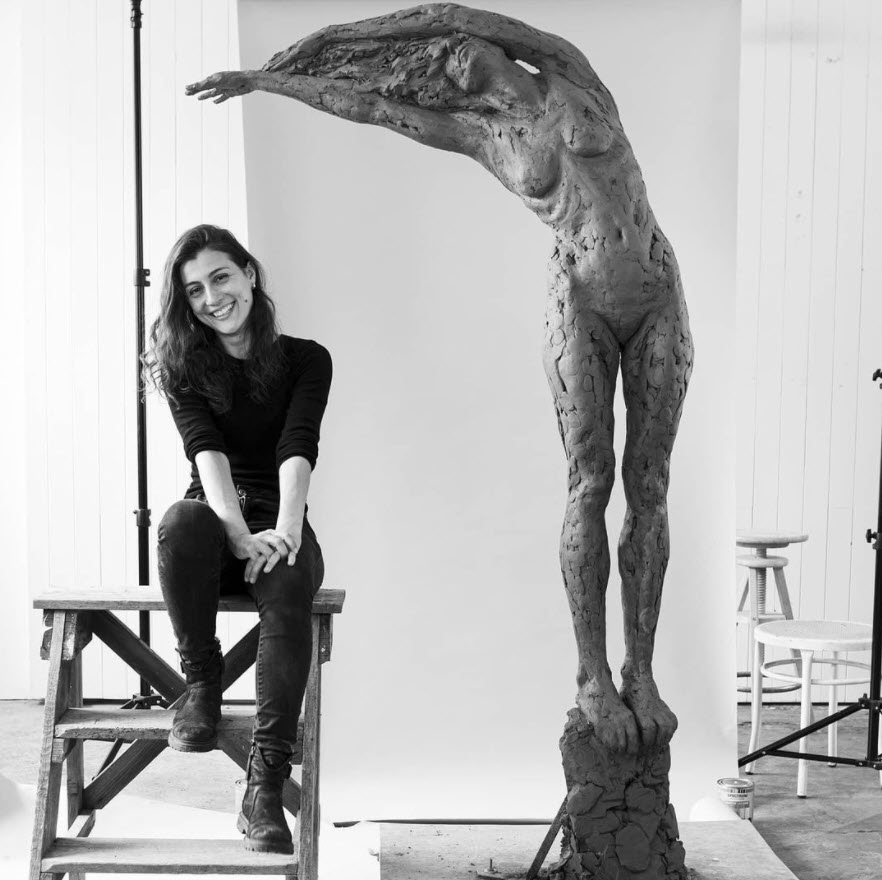
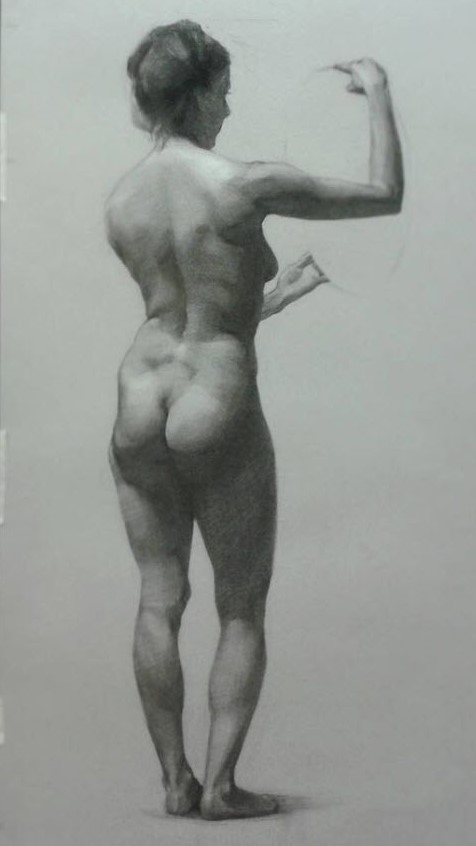
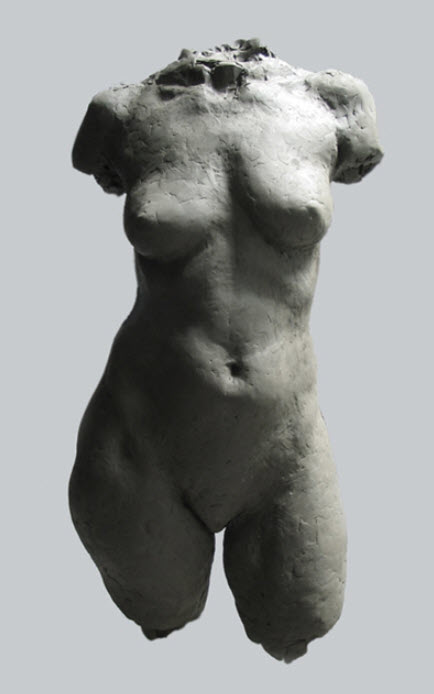
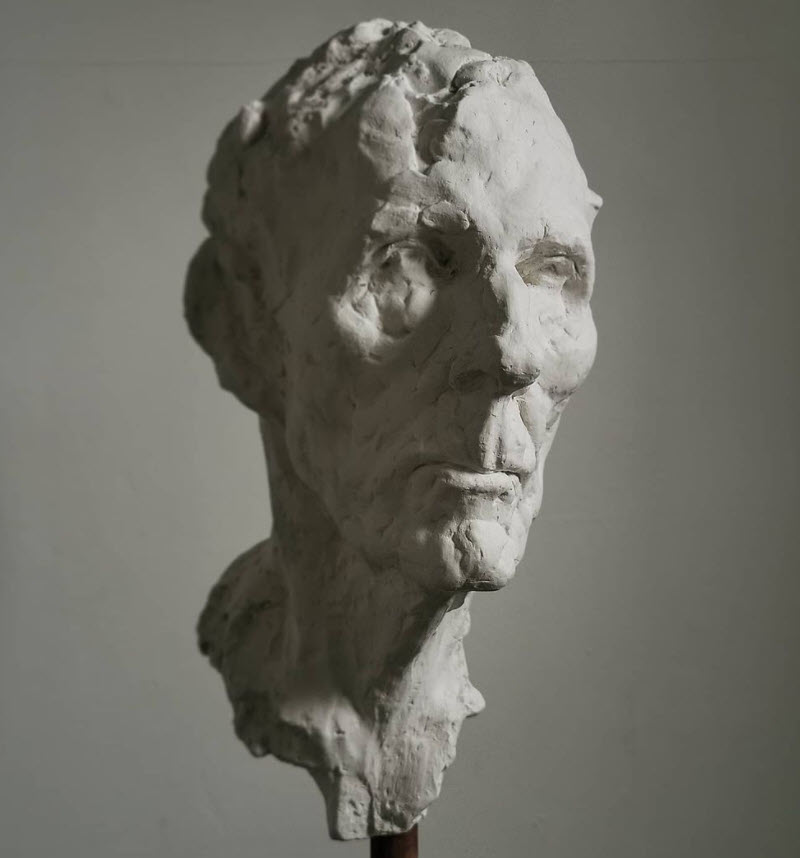
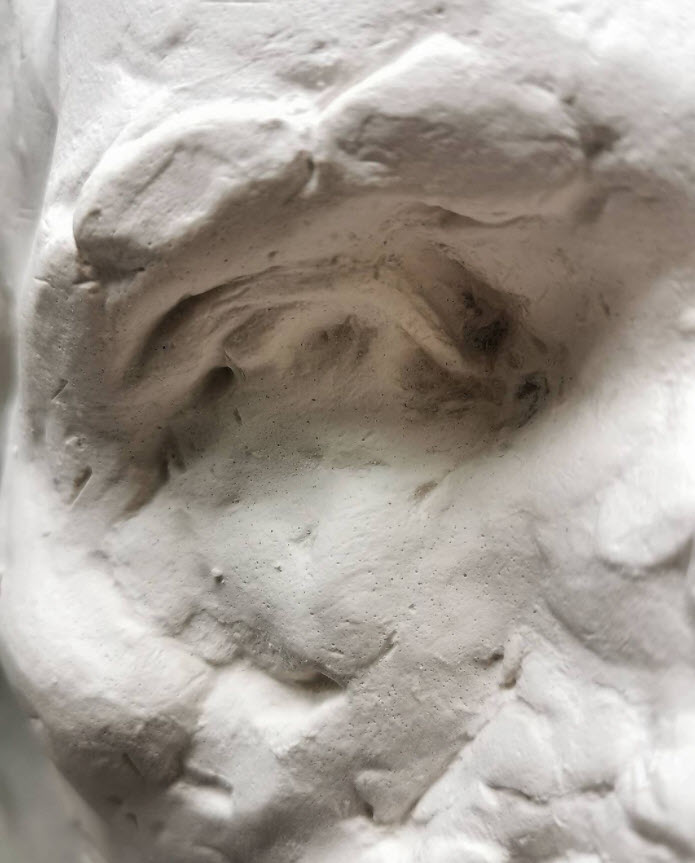
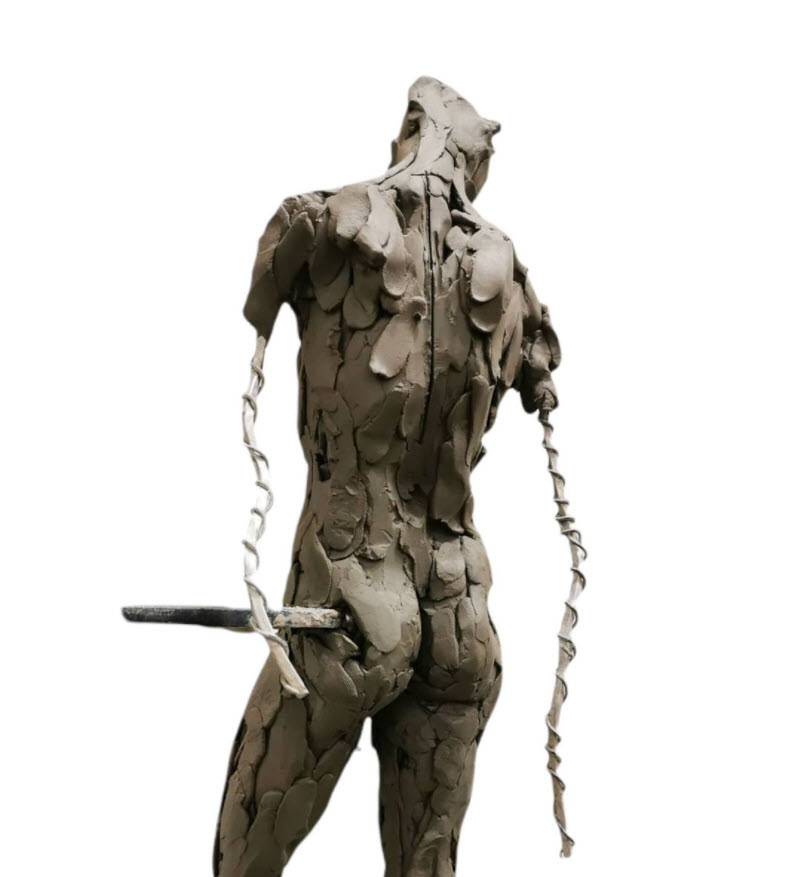
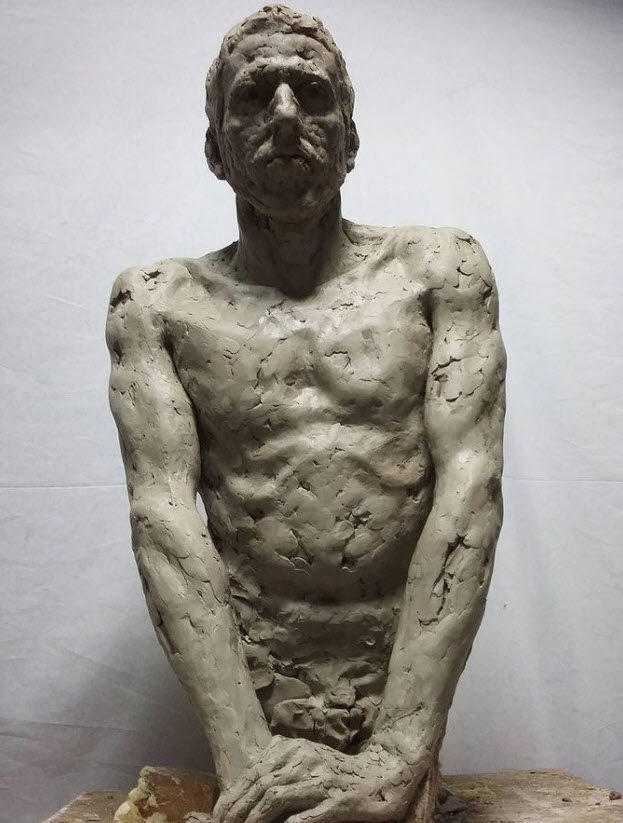
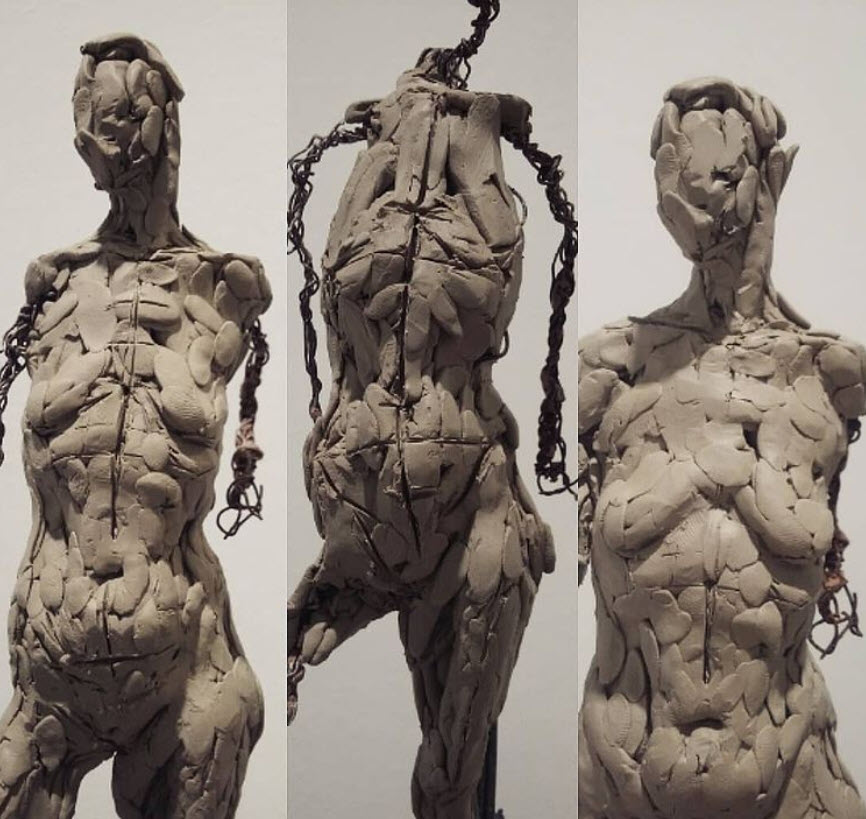
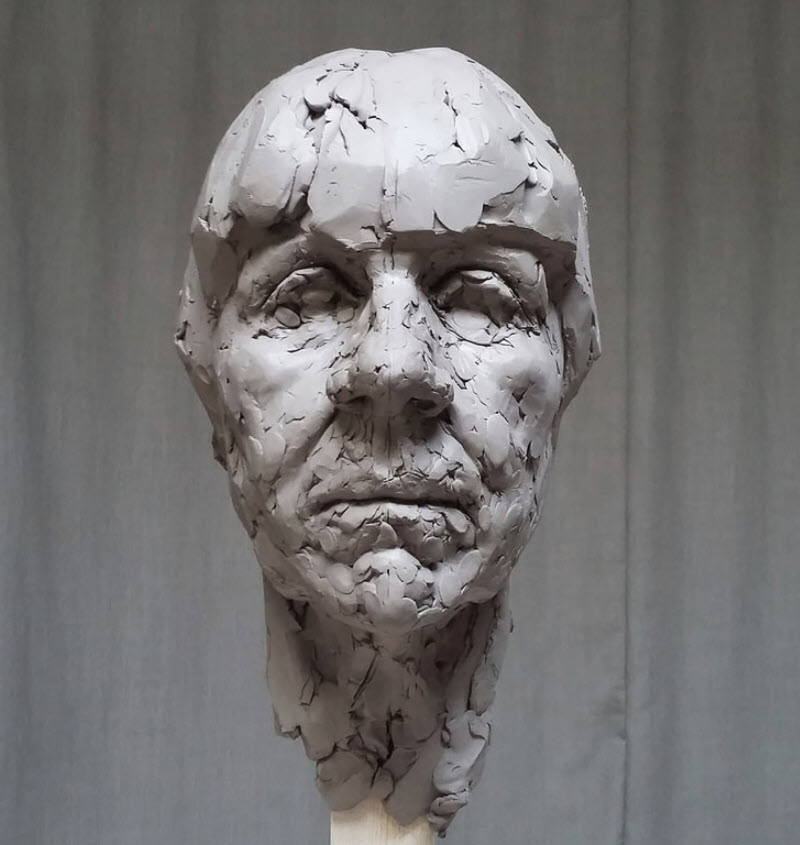
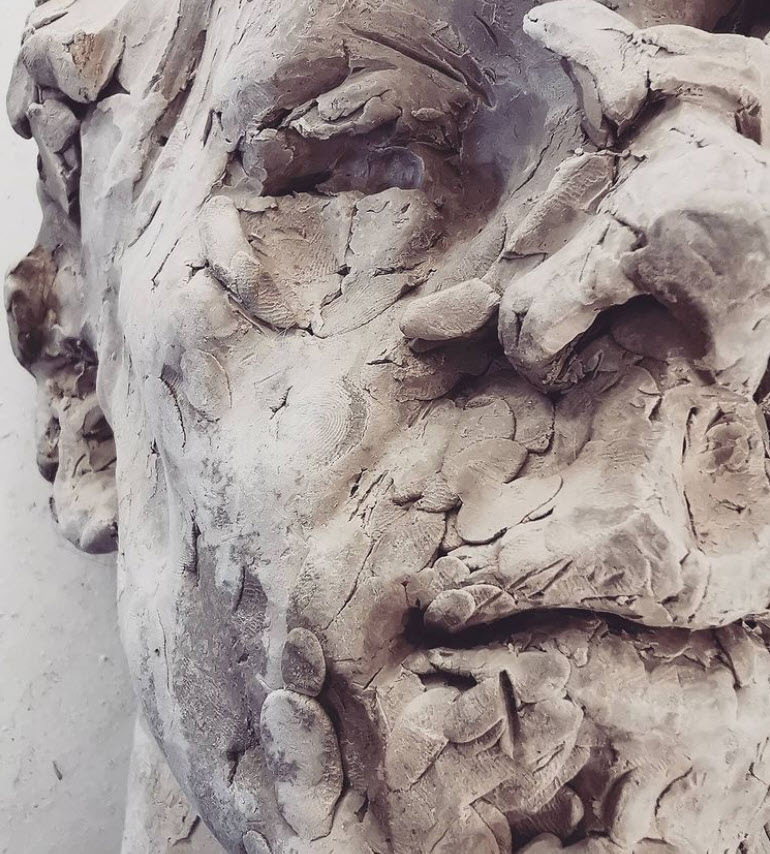
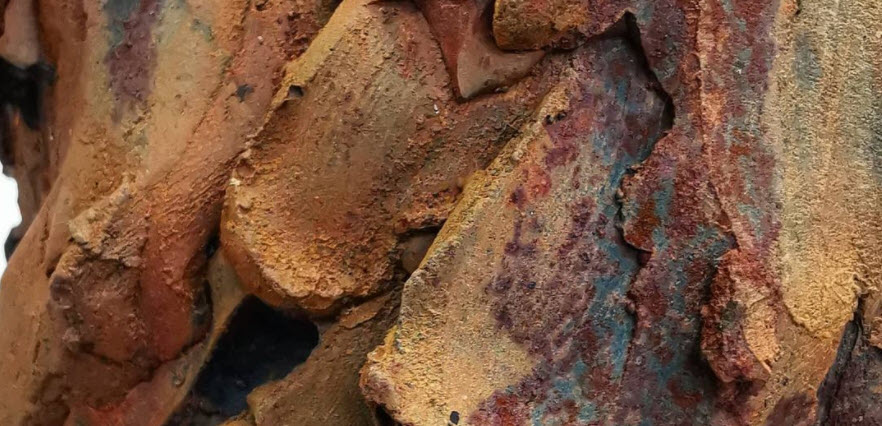
Valentina Zlatarova is a classically-trained sculptor working extensively in clay (although her work spans other media). What strikes me about Valentina’s work is the raw power of material coupled with the discipline of form. I’ve tried to present some close-up photos of several pieces so you can see the former, backing off a bit so you can appreciate the latter. We spoke about her training in Florence and the qualities of her creative work.

JW: Can you tell me about your artistic training at the Florence Academy of Art?

AZ: I went to art school when I was 13 and left for Florence right after graduation. I was thirsty for more in-depth figurative training and with days divided between sculpting and drawing from life, the FAA provided exactly that. The training there is intense and focused, it’s a program which teaches how to be a professional sculptor but also allowed me to meet like-minded people from all over the world.

There is a very special camaraderie between sculptors, one is rarely working alone and we’ve helped each other a lot. It was competitive but in a friendly way where we pushed each other to grow.

We worked with clay and plaster, starting with copies of classical casts and gradually moving to working from life. Our final project was a life-size figure in clay.

JW: What attracted you to that particular art academy?  What was it like to study there?

AZ: What attracted me to the school was actually the work of the Director of the program at the time- Robert Bodem. I came across his work and thought- THIS is what I want to learn. I couldn’t believe when I got accepted in the program, a single sculpture changed my life forever.

Studying in Florence was an incredible experience- being surrounded by art at every corner, pieces I have only read about in books and walking the streets that so many brilliant people have walked before, it was truly inspiring.

JW: When I look at the work on your website, I’m struck by the “directness” of your approach to clay as a material.  I can see how you add and subtract clay onto your sculpture, and I get a strong sense of the way you create your sculpture.  Is this what interested you in clay as a material – as opposed to other sculptural materials?

AZ: Yes, definitely. I actually started as a stone carver in high school but I have been drawn to clay since childhood.  I think clay is very forgiving but also carries a lot of rawness, which are qualities I love combining in my work.  It allows me to achieve a certain flow in my pieces like no other material I’ve worked with.

I also love using natural materials and am constantly trying to make my practice more sustainable.

JW: Can you tell me about your creative process?  For example, do you typically sketch out your work on paper before starting, or do you start directly with clay?  Do you create clay sketches before your final work?

AZ: I can describe my creative process as very organic, almost meditative. I rarely use sketches or draw on paper, I go into my pieces directly and do a lot of drawing on the clay. I have a pretty clear idea of what I would like to make as a concept, however once I start,  I let each project guide me and the final piece is a result of exploring.

I really enjoy the process of creating so I can hardly lock it in into a preconceived sketch- it’s always a surprise.

To me sculpture is a process, a moving thing rather than a static object.

JW: Where do you look for inspiration?

AZ: My biggest inspiration is nature- I like being outside but it could be anything really- often a photograph, a landscape, a piece of music or literature, dance …I am interested in rhythm and how things relate to each other, I’m interested in patterns.

Sculpture is my chosen field of expression but I think a creative mind is constantly active, constantly searching,  and constantly creating so inspiration is everywhere. 

You can see more of Valentina’s work on her website and her Instagram feed.

Sasanian Incantation Bowls

Love at first sight? Yes.

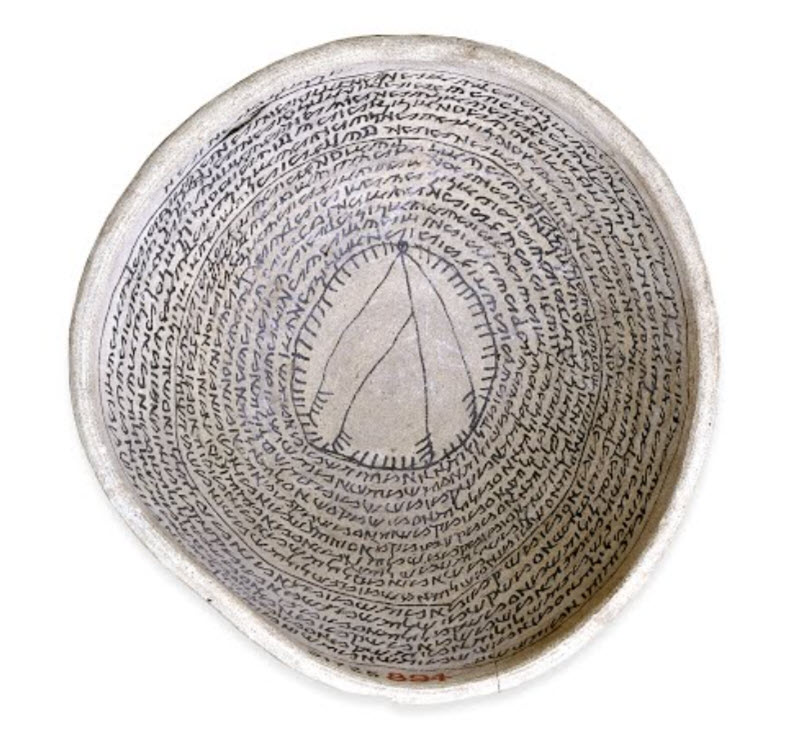
This particular ceramic bowl, currently in the collection of the British Museum, captivated me from day one. It’s unbalanced and awkwardly formed. It’s not colorful or elaborately decorated. It doesn’t display “fine craftsmanship.” It’s imperfect. It’s gorgeous.

British Museum, Asset number 36056001, Creative Commons license (CC BY-NC-SA 4.0)

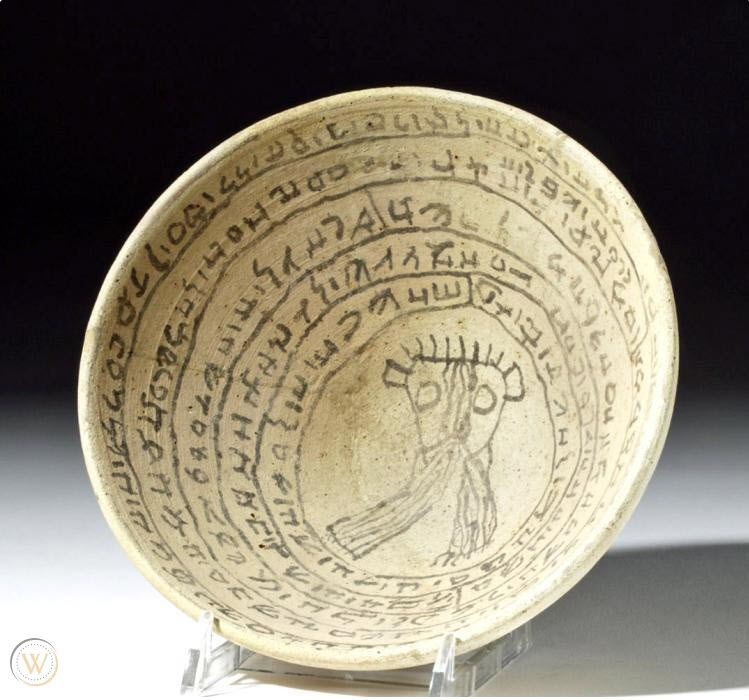
A Google Arts & Culture article tells us: “This is one of many Late Sasanian and post-Sasanian ceramic bowls and lids which were used in magical ceremonies intended to protect individuals and their relatives or belongings from evil spirits. Spells were written on these vessels in a variety of different scripts and occasionally, the bound spirit and/or magicians were also depicted on the inside of the vessel. The abstract stick-like figure in the centre of this bowl may be a demon.”

For me, the irregularity of this bowl speaks of a focus more important than formal perfection. A formalist would have ditched this bowl; he or she would have tossed it into a midden heap as a lost cause. But the maker here proceeded to invest hours into carefully inscribing his or her text – the incantation, the plea to spirits and/or magicians. We can’t understand the incantation now. This dialect of Aramaic has been lost to us. That, too, presents a certain mystery that attracts me to this piece. Prayers to the gods, the spirits, chants to the unknown and unknowable.

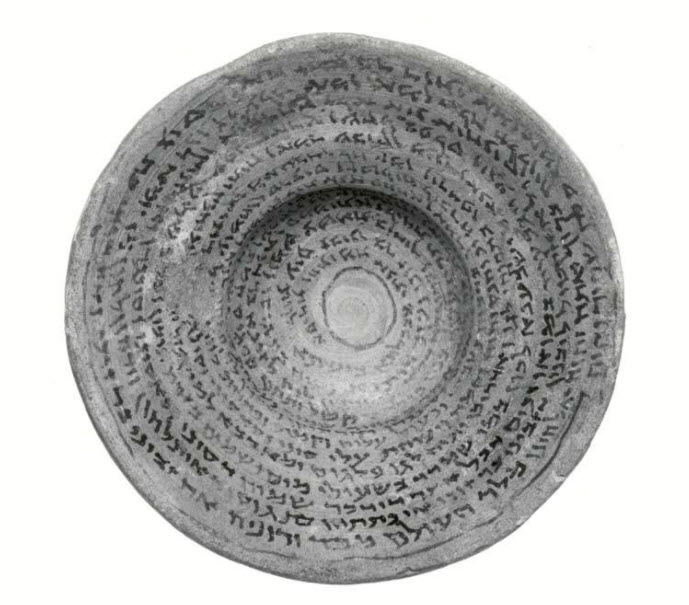
I was surprised to learn that this type of “magic bowl” was fairly common in Jewish communities in Mesopotamia, Syria, Palistine and into Egpyt during the 5th to 8th centuries AD. Bowls with spiraling Aramaic text have been found throughout this region and are now held in collections around the world. 

I’m not surprised to see others before me have been enchanted by these bowls. Alison Miner wrote a wonderful ode to a similar bowl in the Penn Museum Blog.

Penn Museum object B2945, image #152805. From Nippur (present-day Iraq).

Additional information on incantation bowls found in one particular area can be found online at “Nippur: The First Great Discovery” a post from the Archaeologists and Travelers in Ottoman Lands blog. The post notes various theories about the use of these incantation bowls. I’ll leave that to archaeologists. For me, I’ll just enjoy the hum of connection to a spiritual world that emanates from these ceramic bowls.

Tip Toland – Artist Portrait

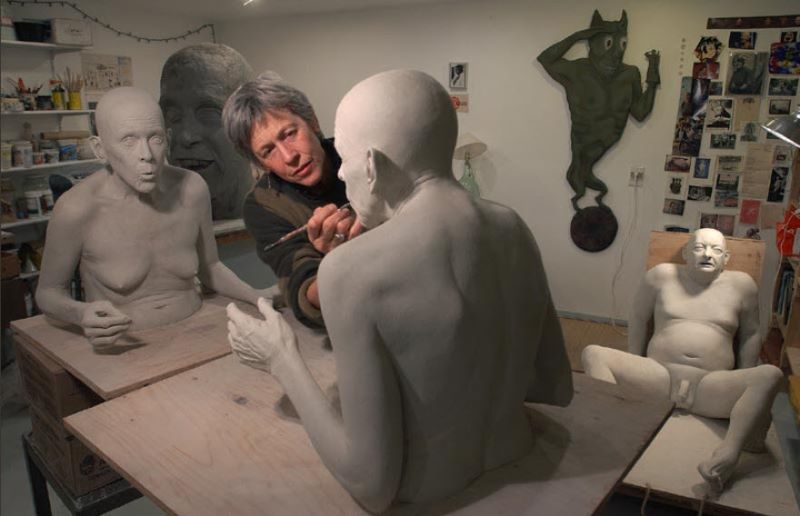
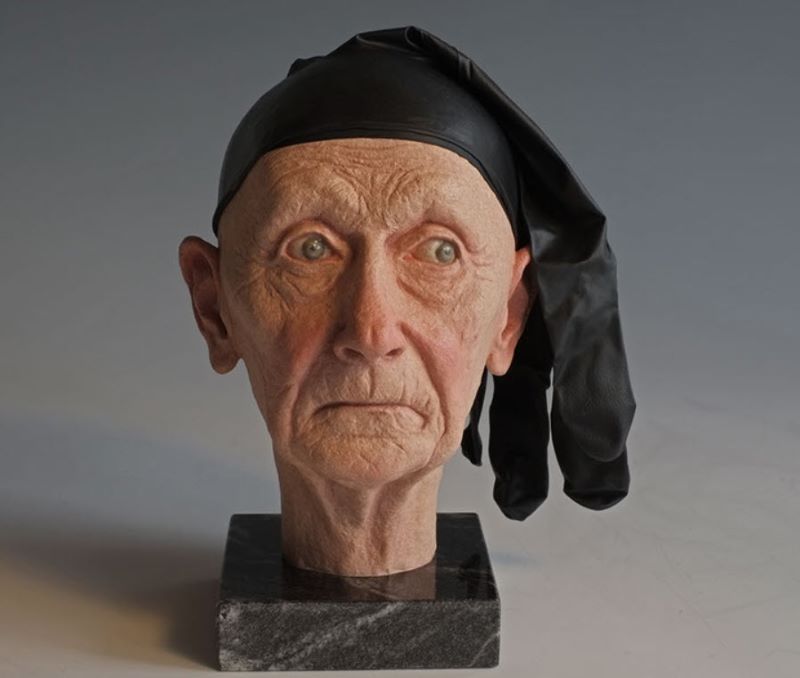
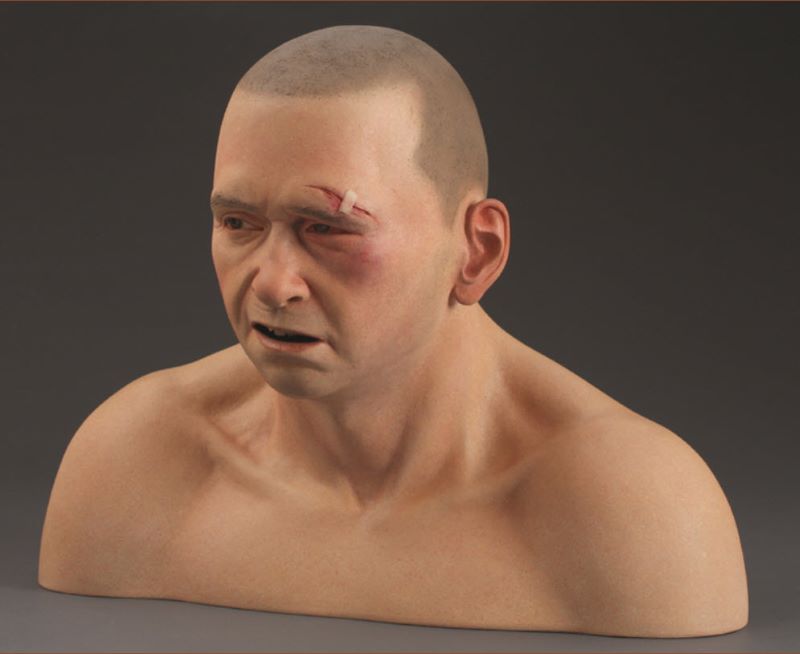
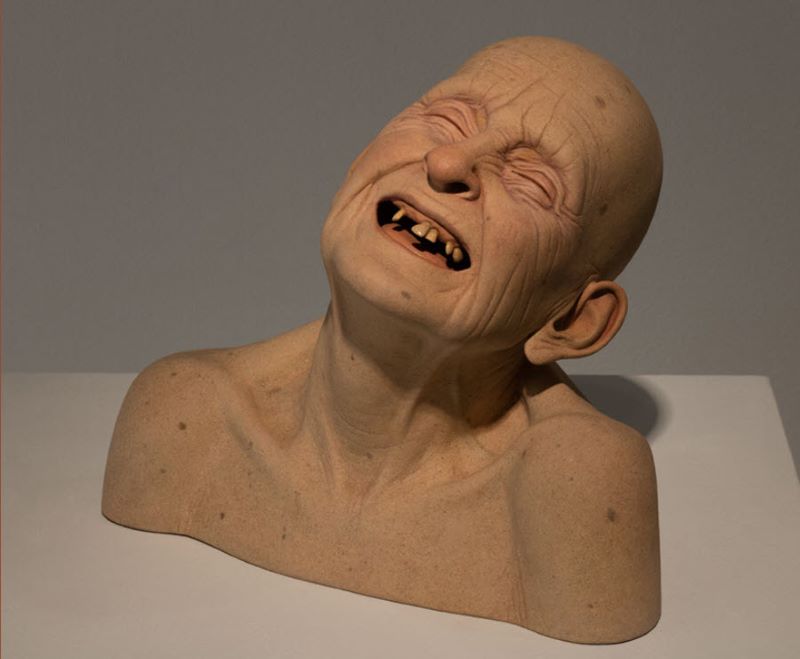
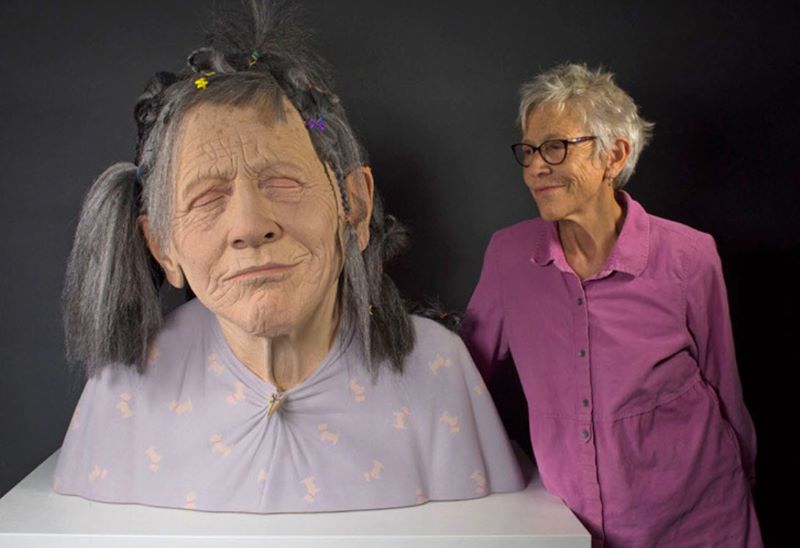
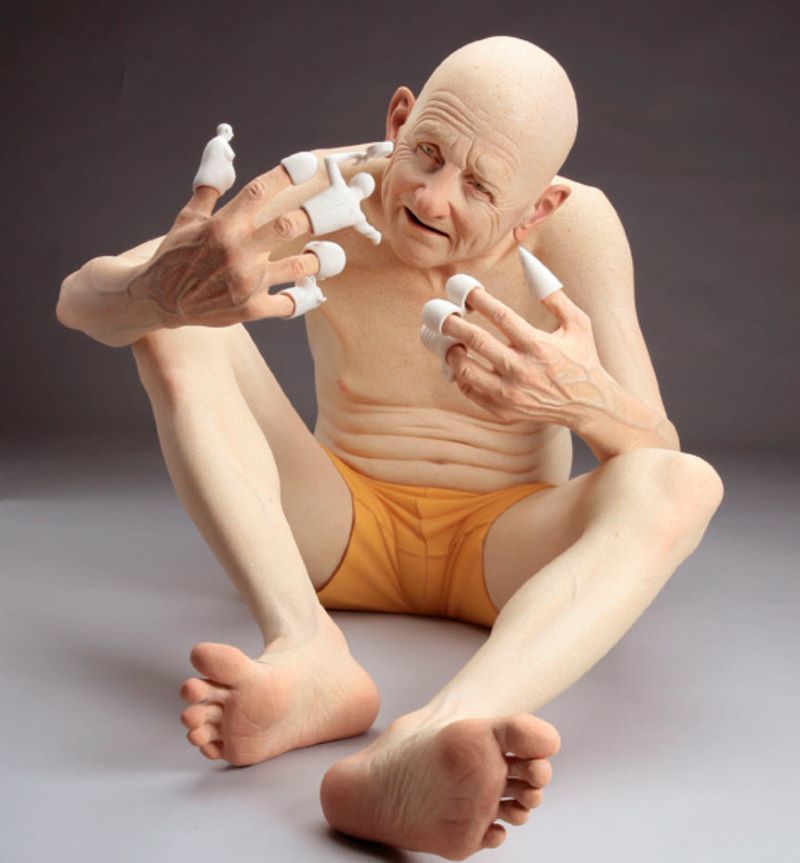
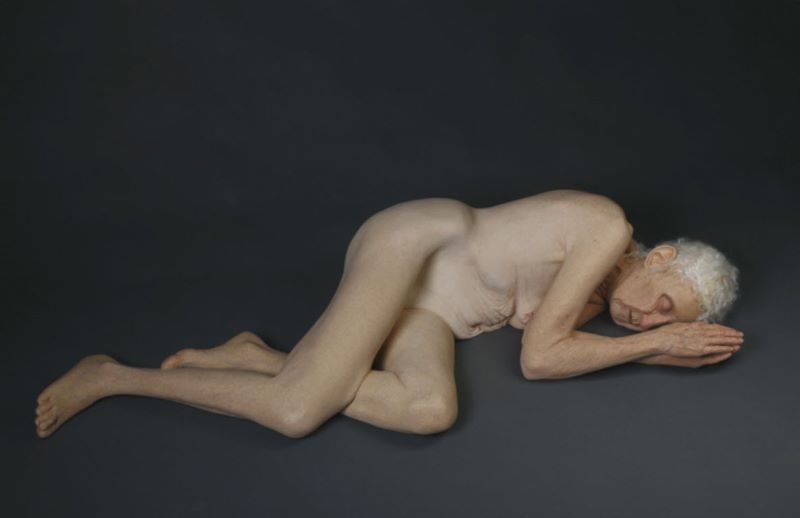
Tip Toland is a widely respected (and widely collected) ceramic sculptor who creates life-sized or larger portraits, many with some autobiographical elements. She is drawn to the uniqueness of human personality and expression. Her work draws you into a world quite unlike that of most creative artists.

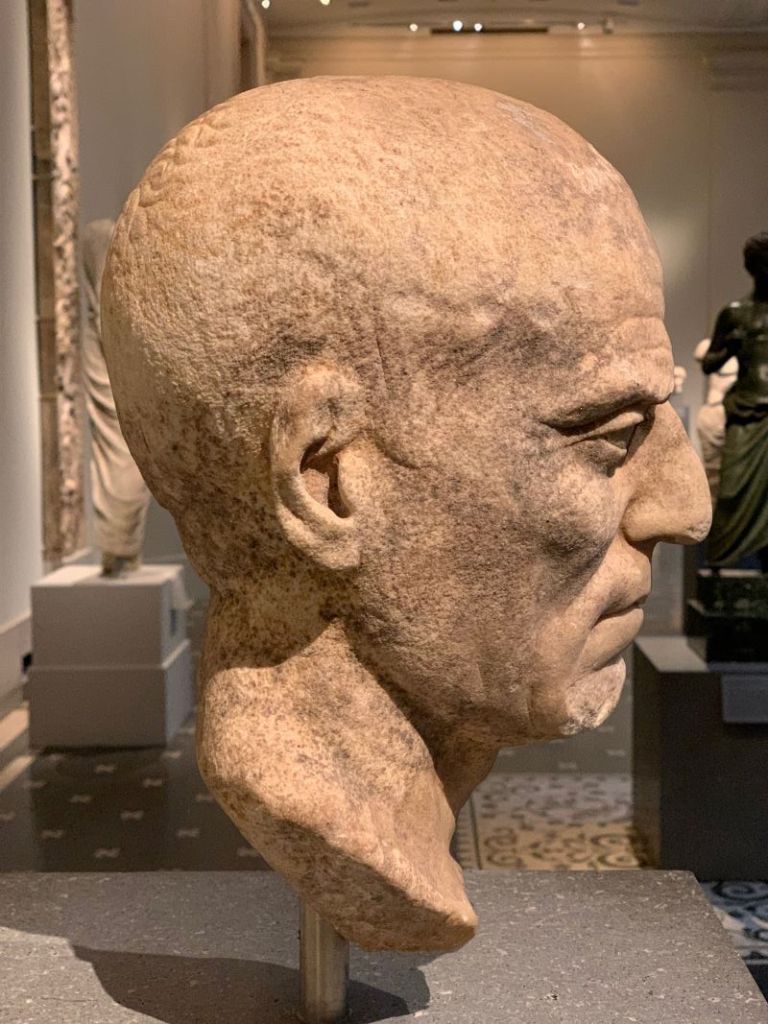
I’m strongly reminded of Roman Republican period marble busts when I look at Tip’s work, particularly her portrait busts. During that earlier era, sculptors represented men of the period in an “uncompromisingly realistic manner that accentuated their individual features and the effects of age” (as a placard beside this 1st century B.C.E. Roman head of a man in the Metropolitan Museum of Art’s collection states).

Marble Head of a Man, Metropolitan Museum of Art

Similarly, Tip’s subjects resonate with uncompromising realism – not just in facial or anatomical features, but down to the quality of their skin. You see Tip’s subjects as people, as individuals who have lived and suffered and withstood all that life has thrown at them. And the wrinkles, moles, signs of aging are testament to their human beauty.

JW: I detect a strong interest on your part in portraying people with unique physical and mental characteristics. Are you interested in this because the subject matter is challenging to replicate – or are you making statements about which physical or mental characteristics are worthy of capturing in artistic expression?  Or is there something else driving you toward sculpting the types of people you portray?

TT: I ‘m interested in peculiar faces… which have history embedded in them. People from the margins often. These are the folks I can identify with.

JW: How much of your work is autobiographical?

TT: I’d say 90% of the work I make is autobiographical. A lot are direct self portraits. But I choose characters which most can portray an aspect of myself.

JW: Your subject matter also seems designed to evoke strong emotional responses from viewers. I heard you say you don’t (or rarely) start out intending to shock or make viewers uncomfortable. But clearly there’s a theme of producing work that does trigger some discomfort. Why do you think that’s such a persistent element of your sculptural work?

TT: I have heard this too from multiple sources. Yet I honestly don’t try to make off-putting work. However I do want to confront the viewer to see the humanity in all of the characters and don’t try to pretty it up.

JW: You talk about your sculptures as if they have individual personalities – even individual characters – that speak to you as you’re working on them. Can you tell me how influential those “personalities” are in defining the ultimate look of your sculpture?

TT: When I work on my figures, even tho I have a strong idea of who they are and what they mean to me before starting,  they often morph into more and more their own characters during the time it takes to bring them about. 

Many of their characteristics are not finalized before starting out, like: the hair style and color, eye color, complexion, clothing etc. Those decisions can change a lot and often come from the characters themselves as they develop. “Wallflower” let me know in no uncertain terms that she was not going to wear green shoes…

JW: Do you work from live models?

TT: I almost always use live models and also photos from those models. On occasion I can only find photographs to work with, so I have to fill in information which is missing.

JW: Where do you find inspiration? Do you sketch out your work or do a lot of preparation for each piece? 

TT: I used to draw extensively. Then they became thumb nail sketches now I just sometimes write down the image which can come from Meditating or day dreaming.

JW: Is the video on your website (Sculpting a Clay Head) typical of your creative process?

TT: The video of Sculpting a head in Clay is a very step by step way of working. which is how I work. I know the process  so it doesn’t take me so long at least initially. When I work from a model the time comes in when I really need to get a likeness. Then the process slows way down to miniscule changes which can take what seems like forever.

For those seeking a more in depth video of Tip’s work, I highly recommend the following piece entitled “Empathy in Clay.”

More examples of Tip’s work are also posted on her website.
2021 Reflections

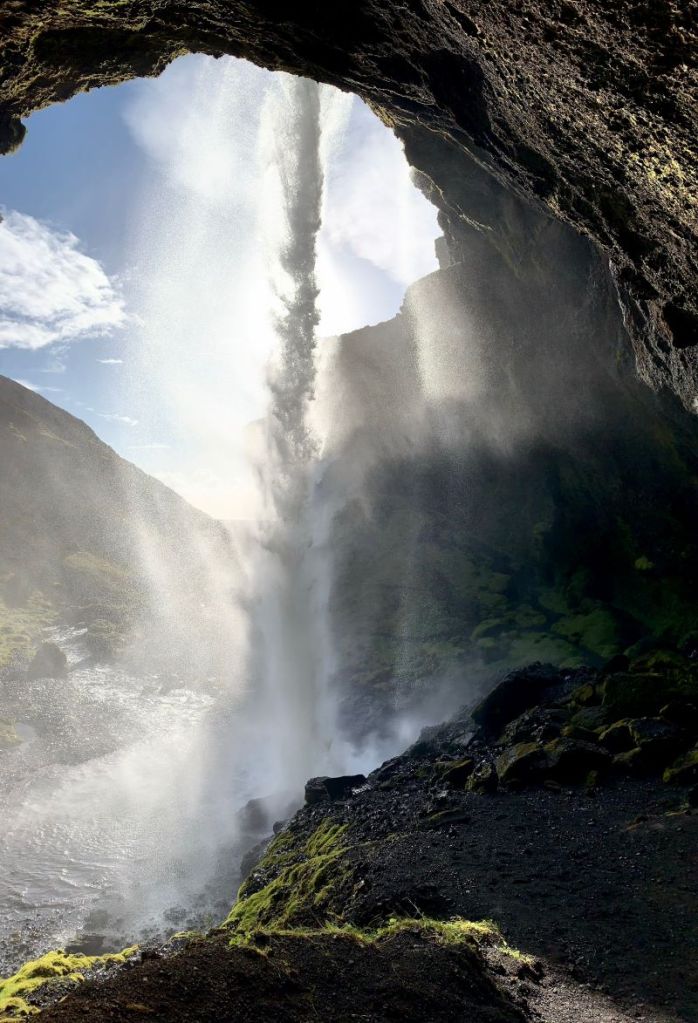
I took an international trip a few weeks ago and drove around the island of Iceland. It was great to get away, to see people living their lives in a different country through these difficult times.

I had long hours on the road to think about what I enjoy most about this blog. And frankly, I had time to reflect on whether I want to continue it.

I do.

I started this blog in June 2020 – when the jaws of the pandemic were really tightening into our flesh – to compensate for being isolated, to reach out to other artists, and to learn. By and large, it’s served its purpose. I’ve enjoyed connecting with artists around the world. I’ve been heartened by the way people have opened up to me and shared their stories, their backgrounds, their creative processes – you name it. I’ve learned a lot, and I hope you readers, too, have gained from this effort.
I do have access to information on the level of interest in different articles – how many people view different pages, where those people are located, etc. (So you know, I don’t sell or distribute this information to anyone.) It’s interesting to see which articles are most popular, which least popular. If I had different ambitions for this blog, I could use these statistics to refine the type of articles I write to boost readership. But I write articles about what interests me – artists, historical and social patterns, how ceramics weave through human history. I don’t want to alter those enquiries. I enjoy the research and writing, and enough people share my interests to make them worthwhile.

In any event, I hope you continue to enjoy this blog. Feel free to contact me with any requests for topics that interest you. I will definitely consider them.

Ian Garrett – Artist Profile

I fell in love with Ian Garrett’s work when I first saw it 6 months ago. Ian coil builds each pot, in itself a lengthy process but when you see the scale of some of his works, that in and of itself is stunning. Ian uses the simplist of tools, much like early peoples that he so admires. With these simple tools he integrates a lot of surface texture in his pots using the edge of a mussel shell. In his monochromatic work that texture is intertwined with areas of burnished clay, made by rubbing agate pebbles across the clay surface. His ability to control and separate these areas of high texture from smooth burnished areas of a pot are another reason to celebrate his work. Ian’s process is very methodical, any yet his designs are lyrical, fun and visually compelling. I love the combination – just love it.

JW: Will you describe your creative process and how that may have changed over time? 

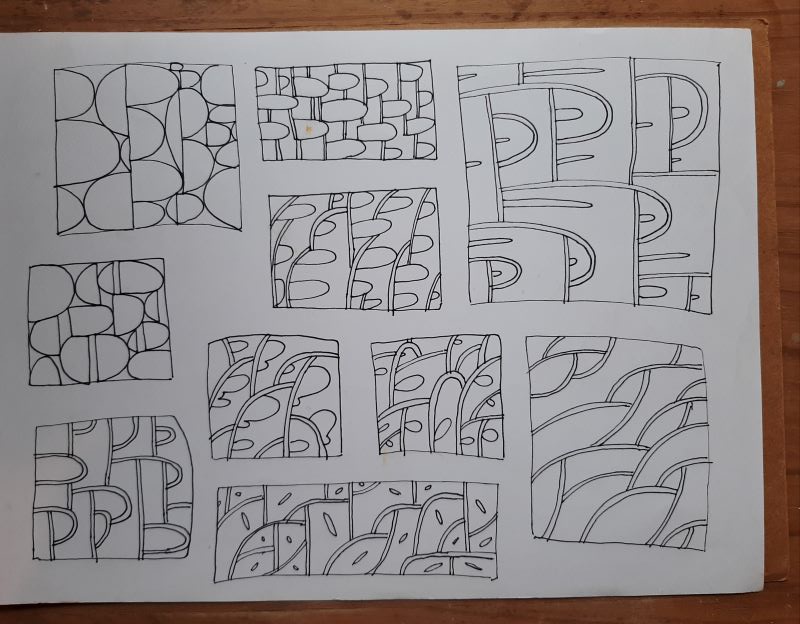
IG: My creative process begins with an idea for the size and shape vessel I wish to build next. All my work is coil-built. Coils with lots of pinching and scraping. I like to alternate between large and small pieces and a variety of shapes to keep my inspiration fresh. While the building process is underway I start to sketch pattern and motif ideas for the surface.

Ian Garrett: Sketch Ideas
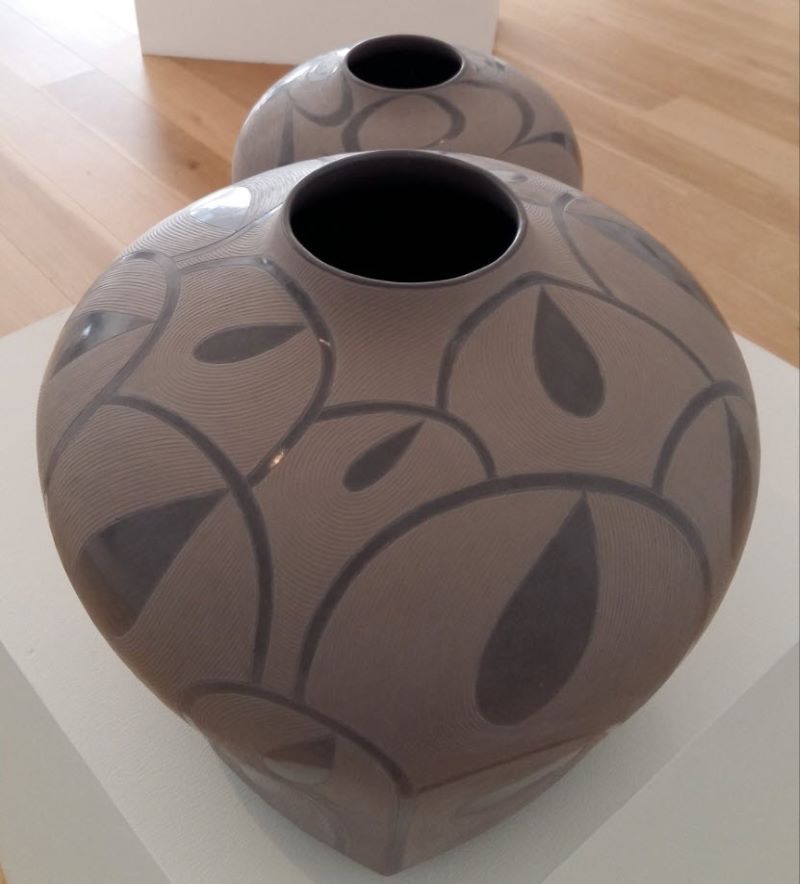
Ian Garrett’s sketch ideas transferred onto the ceramic surface

I try to draw intuitively, allowing ideas to flow out of my subconsciousness with no preconceived subject-matter in mind (titles for pieces only come at the end).  It usually takes a while to refine my ideas and settle on what lines, shapes and patterns to use.

My working process of applying colour and texture is extremely slow and laborious, so that ideas for future pieces (variations of pattern/motif etc) usually start to form in my mind at this stage. This has been the on-going work cycle throughout my career and hasn’t changed over time.

JW: Your work is sometimes very large. Almost monumental at times. When did you start making such large vessels?  What was the impetus to work on such a large scale?

IG: From the start of my career, c1997 to 2017, all of my work was either saggar-fired or pit-fired. I was therefore limited to working to a size that could survive the thermal shock of pit-firing or would fit inside my saggar/kiln. I found these constraints frustrating, as I was technically competent at building much larger pieces than I could fire. Since starting to work with coloured clays/slips I’m now firing in oxidation and can enjoy exploring work on a much bigger scale. 

JW: Your work tends to be monochromatic or at least limited to a few hues. Is there a reason that you limit your palette?

IG: I have about 50 different coloured slips, some natural clays and others that I’ve blended/ tinted with oxides. For each piece I select a specific “colour way”, choosing hues and tones to evoke a mood I wish to convey. Some harmoniously muted, calm or serene, some vibrant and joyous, others intriguing and unexpected. I take delight in exploiting optical mixing or the way colours appear to influence each other when placed side-by-side.  

JW: You employ a lot of texture – and the absence of texture – through intertwining patterns and burnished areas. Do you plan these patterns out beforehand, or do they come to you as you start working on a pot?

IG: Carefully planned out, as answered above in question 2. I like to play with the way one’s eye can switch between reading shapes as either positive or negative motifs/spaces.

I’ve recently also been using dark and light toned colours to do the same. My recent exhibition explored some of the connections I see between visual pattern and rhythmical patterns in music, which can also “shift” according to subjectively felt emphasis. 

JW: Have you always burnished your pots? What attracts you to that particular technique?

IG: Yes. Burnishing gives pots a very alluring visual and tactile appeal.  The inter-connected techniques of coil-building, burnishing and pit-firing were the very first ceramic technologies created and used by all cultures around the world. I love the sense of being connected to such an ancient and universal tradition. 

JW: You were interested in archaeology as a boy, particularly in pot sherds that you found near your home in the Eastern Cape region. How have those experiences – and perhaps even the objects you uncovered – influenced your ceramic work?

IG: My curiosity to learn how those ancient pots were made was the start of my ceramic journey and has continued to be an inspiration throughout my career. I find the longevity of ceramics fascinating, that one can pick up a sherd that was last held in a human hand hundreds or even thousand of years ago, and feel intimately connected to the person who made/used it. From thousands of years of being part of human culture, I think pots communicate things to us on a very deep level, ideas about food and drink as resources to be treasured and shared and concepts around nurture and the home. I also marvel at how “modern” so much ancient art appears to be, and how our desire to communicate visually in many was seems to come full circle. I find it thrilling that just down the coast from where I live is Blombos cave, where the earliest evidence of modern human behavior has been found in the form of a pattern engraved onto a piece of ochre! 

You can see more of Ian’s work on his Facebook page.

Roberto Lugo (NYTimes Article)

I found this article on Roberto Lugo in the New York Times this morning. I think it’s well done and covers his work well, including some videos of Roberto throwing some pots.

I’m not certain this will work as an insert into this blog because I’m accessing the article through my subscription. But it’s worth a try! If it works, enjoy. If not, please let me know in a comment. Thanks! Here’s a link to Roberto’s website.