Ryan LaBar – Artist Profile

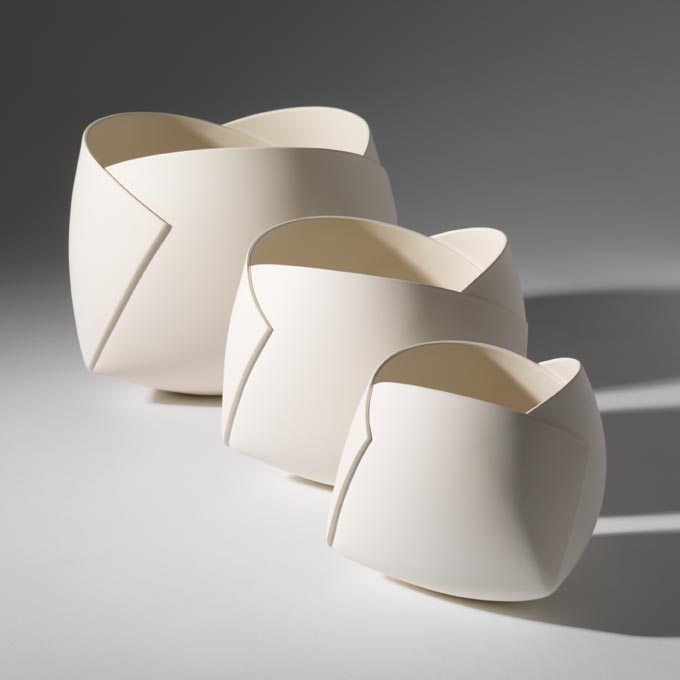
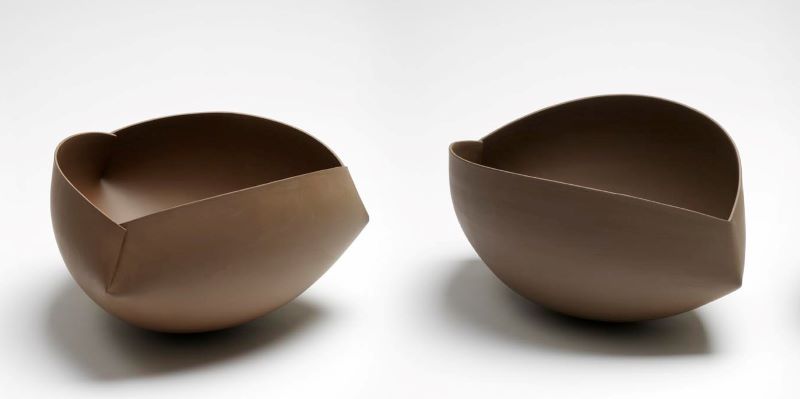
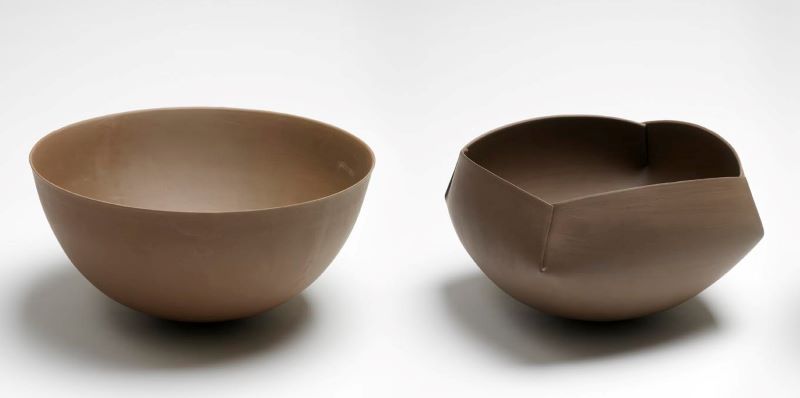
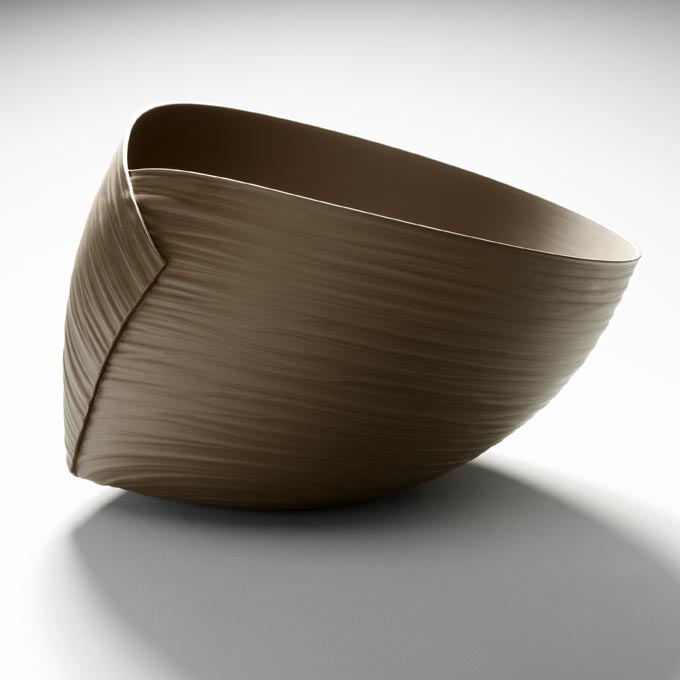
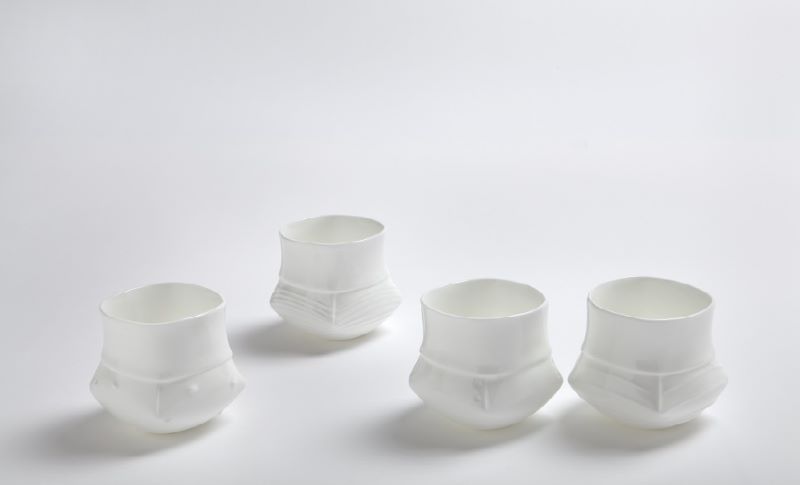
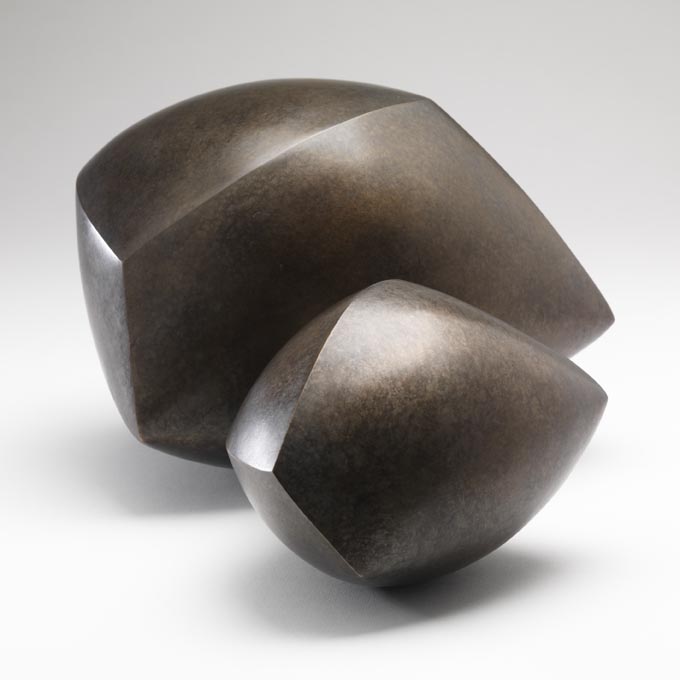
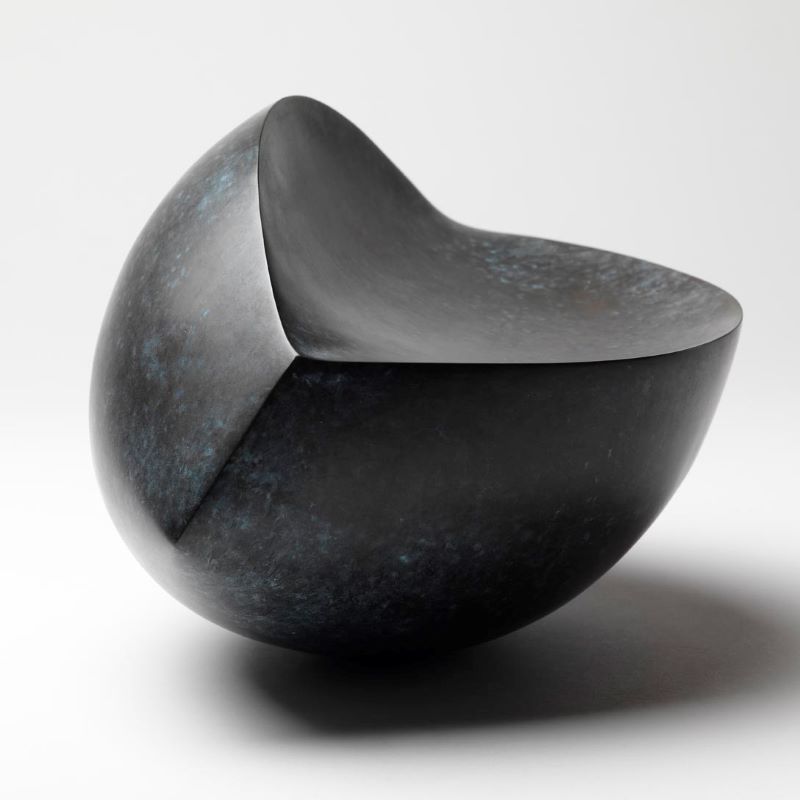
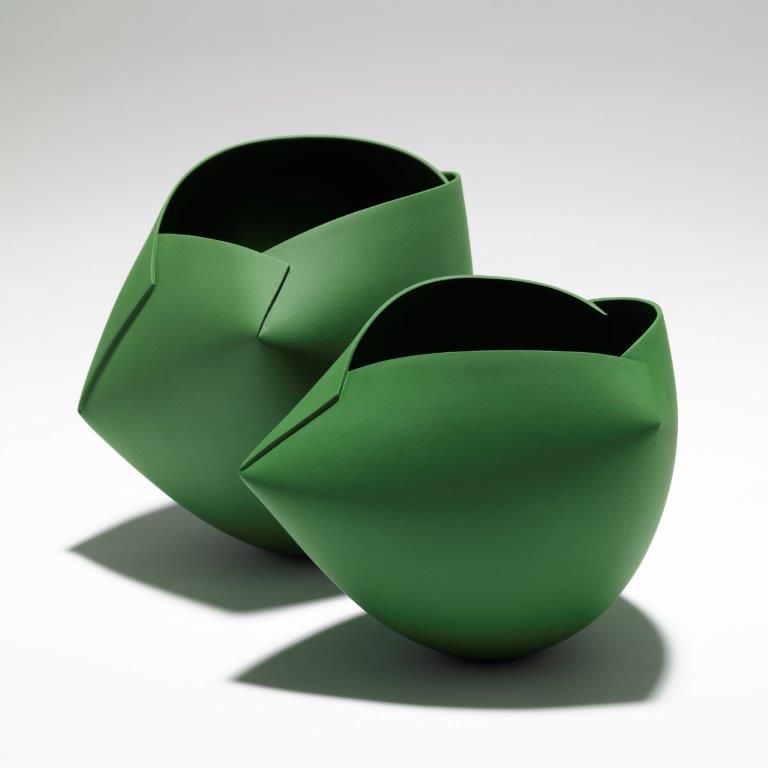
The sinuous forms and delicate colors of Ryan LaBar’s industrial-like sculptural work immdiately attracted my eye. Through a conversation, Ryan told me how he came to his process through coursework assignments while earning an MFA at the University of Nebraska at Lincoln. He also told me about his studio set in the thriving art community of Jingdezhen, China, where he has been a working sculptor since 2015.
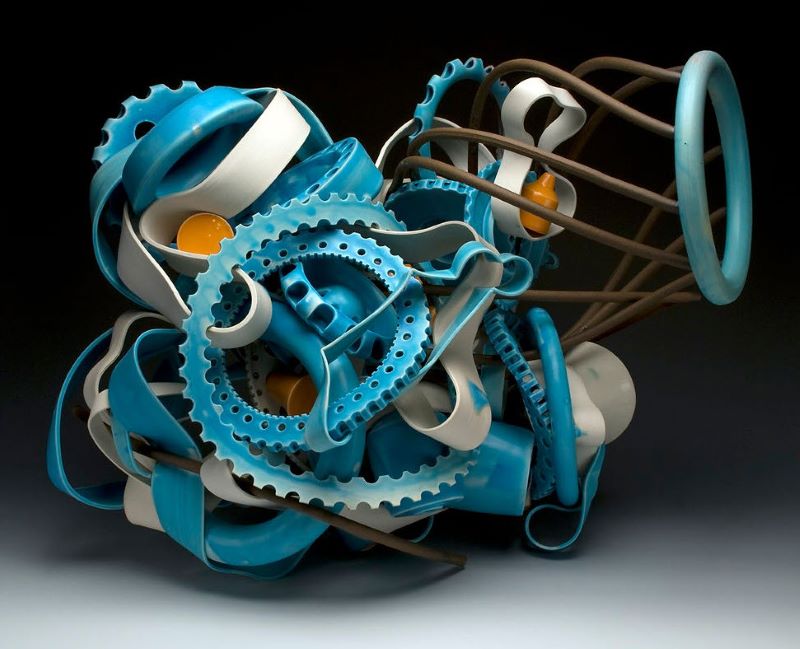
JW: You evolved from a maker of functional vessels into an abstract sculptor. Will you tell me more about that evolution?

RL: Evolution is the correct word, and I remember the day that was the spark to the fire of the new direction. I entered graduate school at UNL (University of Nebraska at Lincoln) with a portfolio of functional pottery and was excited to study under one of my favorite academic potters, Pete Pinnell. UNL has a 3-year program and I was nearly half way through my first year. There was a heavy John Dewey philosophy there and in short; I use an analogy of an artist on his horse. In the first year of the program the artist is knocked off the horse he came in on. The second year he walks alone, searches for another horse, or attempts to get back on his first horse. The third year is a manifestation of the second year’s path.

In that first semester, I was being knocked off the horse I road in on when my professors asked me to throw away all the pots in my studio. Defiantly, I didn’t throw them away, and instead, packed them up in a box set for storage. When I was packing the boxes, I was simply placing the dejected teapots on top of each other in a disorderly manner, I saw something in that pile and decided to not store them and instead, wire and fire them together in a pile. That was the spark to the fire that I continue to stoke daily, 12 years later.
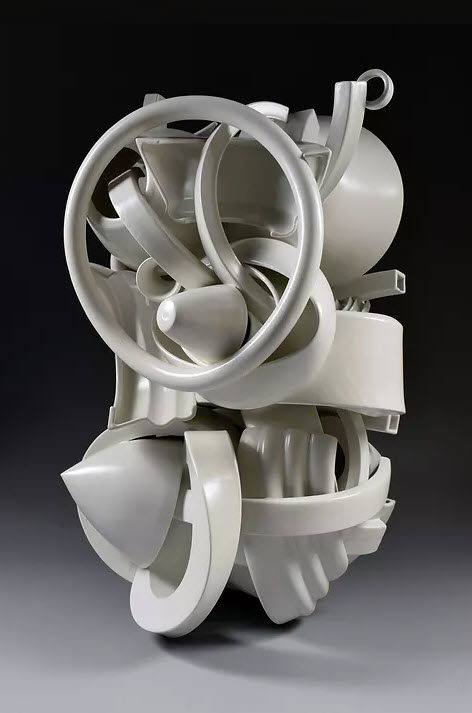
JW: What drove you toward abstraction?
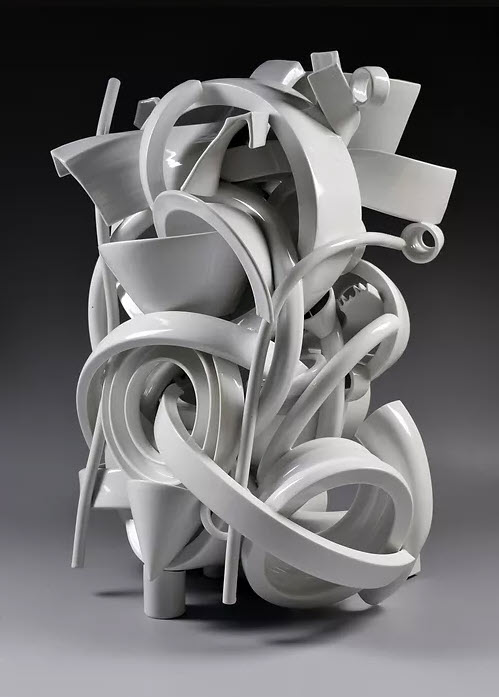
RL: In my opinion, abstraction allows more room for interpretation. Art elicits experience and in order to do so, it should transform the viewer into artist, transitioning the viewer into a creative space allowing for interpretation through experience. I am not saying only abstraction can do this, but it equals the playing field a bit more and rather than interpreting a story through recognizable narratives, it has more opportunity to carve out new interpretive and creative territories of experience.

For me, abstraction allows materiality, phenomenology, and process to speak louder. Content becomes interpretive for both audience and artist, equaling the playing field, as viewer becomes artist.

JW: From what I can tell, your process involves throwing circular bands, bending them into unique shapes and sometimes carving out geometric shapes from the clay bands. Then you assemble the finished clay “parts” into an assembled sculpture. How did you come up with this overall process?

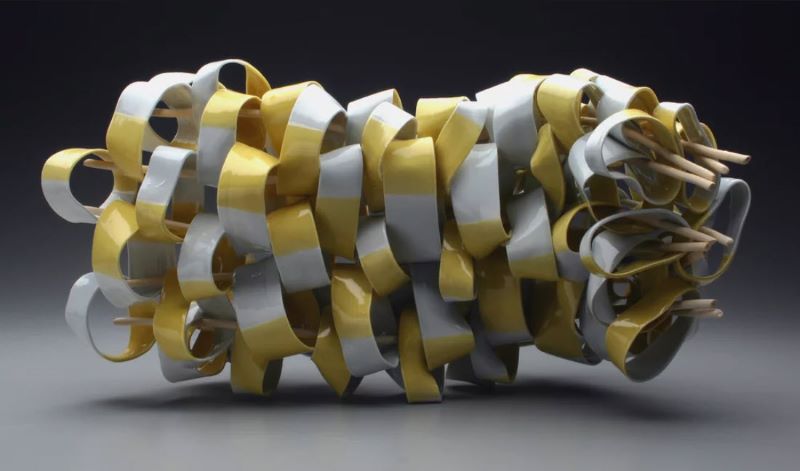
RL: Actually, most of my thrown parts are not bent after throwing them; however I do make a series of wall compositions of thrown and altered bands. I fire the almost honed parts to bisque temperature and build with those parts, supporting the base at certain points with various soft brick constructions. The parts interlock and when subjected to heat, bend, warp and connect through pyroplasticty and the melting of glaze. This process came about as an evolution of trial and error, and I liken it to learning a language.
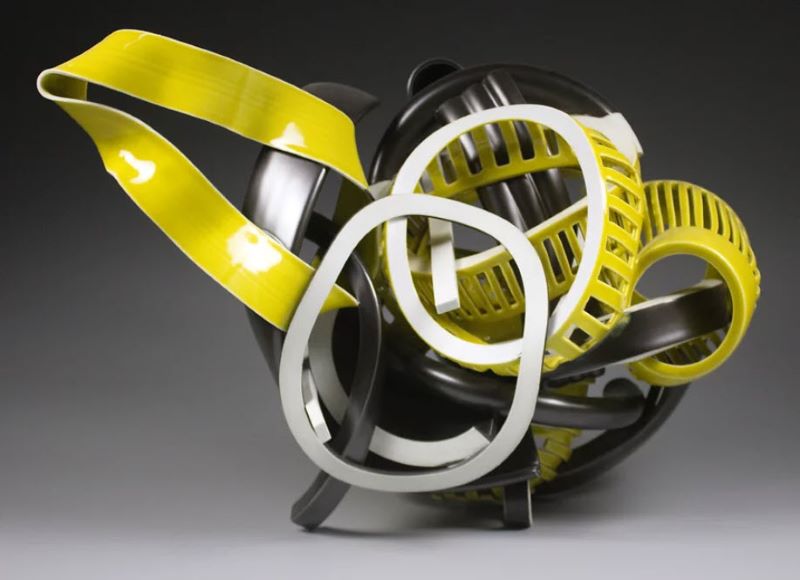
In pottery, the firing process is somewhat hidden and its action is muted. Any movement in clay or glaze was often considered a fault, where material’s voice was silenced as the object was sent to a seconds pile. I was interested in glaze flow, material softening and bending in the kiln, and decided to let the kiln finish the works and become sculpture.

JW: Have you always worked on a large scale, or has that changed over time?

RL: Actually, I don’t predominantly work on a large scale. I wish I could, but logistics of moving the work prevents such undertakings. I prefer to be in control of all my process from beginning to end, which means, I make work that I can handle by myself. When I have access to larger kilns and assistants, I really like to build large, as scale can create more moments of intimacy.

JW: How carefully do you work out your sculptural designs? Are all these interlinked shapes planned in advance, or is your process fairly spontaneous and intuitive as you work?

RL: Again, I will defer to my process like the development of a language. I create a library of parts. The library contains parts that provide separate duties. Some parts are connectors, some are foundational supports, and others can be used only compositionally. I like to amass a large library of parts before I begin to build my sculptures.

I build somewhat spontaneously, or I prefer to say, intuitively. I liken my process to that of a painter who subconsciously reacts, laying down color and then stepping back to consciously interpret the layer. I will build a sculpture of stacked and interlaced bisque parts and then tweak it at the end to ensure that the imagined movement and connections will orchestrate in a desirable manner. I will then color code each part and deconstruct the sculpture one piece at a time, taking pictures throughout the deconstruction. Then I will glaze according to code and reassemble follow the map of pictures.

I also sit down at the wheel and make parts in a somewhat random and intuitive manner. My library of parts can dictate what I make. If I am out of small cylinders, I make a batch of small cylinders…I never weigh out clay or preplan parts. I let process guide me. It’s a dialogue, a back and forth, between the clay and I. I work best when I am somewhat distracted, listening to a tv show for example, flowing with the direction the clay and my hands want to go. Too much intention is dangerous.
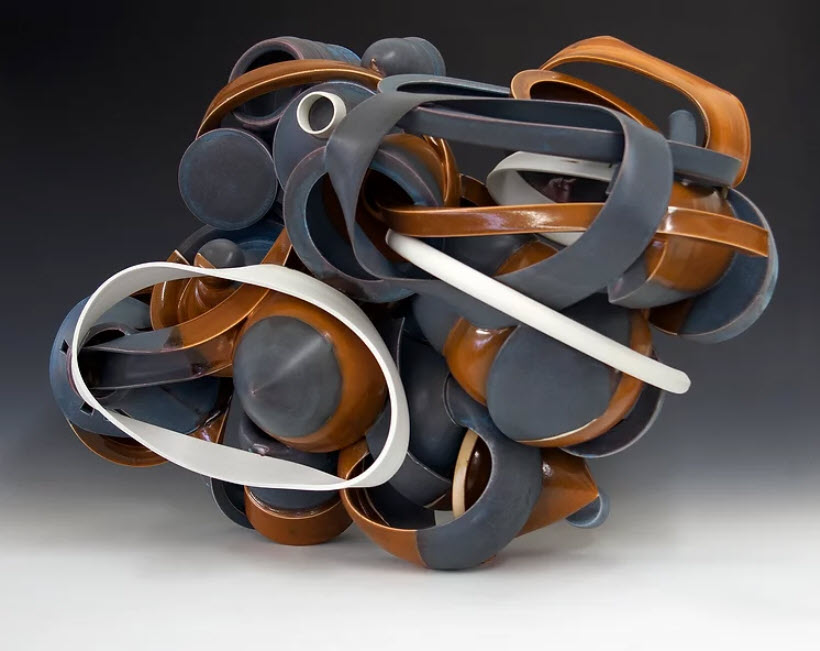
JW: I’m guessing there is some interplay between building your particular vision of a piece and, in firing, the destruction (or at least modification) of that vision as the clay softens and changes shape. Do you find yourself tugged toward one side of that equation or another?

RL: More control / less control? This is a good question and I have to say that there is a balance of courting expectation while leaving room for happenstance. Leaning towards one way or the other will create a sculpture that looks too tight and controlled on one side or too loose and discordant on the other side.

I believe every true creative process carries a space where the creator must let go of conscious control to let the system unfold naturally to become what it is to become. Magic happens in this space. It’s the space where the composer lets the orchestra play the music or the director lets the actors become the story. The artist must leave room for moments of a natural unfolding, and to me, this is the dance and unification of parts under under high heat within the kiln.

JW: I’ve seen color make appearances in some, but certainly not all, of your series. What drives those decisions?

RL: Color, like form, shadow and space, can guide composition. Sculpture has 360 degrees of compositional viewpoints, as opposed to one with a painting. I must consider all angles and their transitions. This is a constant consideration that requires some compromise. Again, it’s a balance. I may be drawn to a color or certain glaze effect on its own and desire to explore it as a contributor to my sculpture’s composition. I guess it depends on the day and mood too.
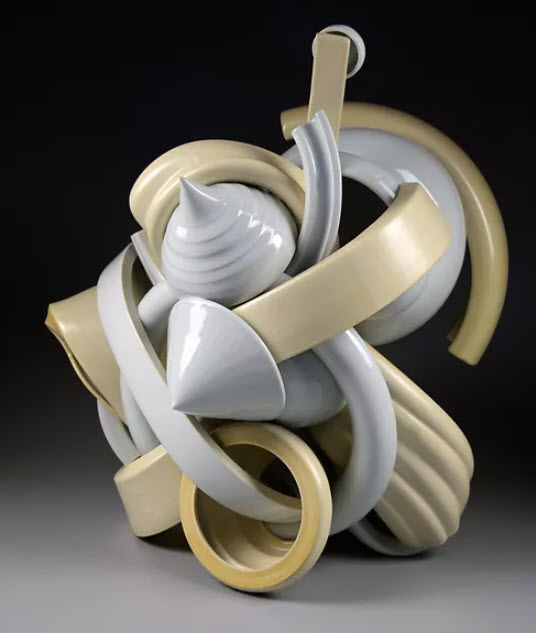
JW: I understand that you relocated to Jingdezhen, China, in 2014 and set up Lab Artz, your studio and innovation center. Will you tell me more about what you’ve set up there? Are you able to do things in Jingdezhen that you may not be able to do elsewhere?

RL: I was invited to Jingdezhen to make work in the fall of 2015. I was at a new art center and was one of the first artists there. The center wasn’t fully operational at the time, so I couldn’t fire during my first visit. I had to return early 2016 to compose and fire all my parts, and at that time, I had created a large library of parts. I ended up making many sculptures through a longer than expected duration of time. Because I stayed longer, I was introduced, via Instagram of all places, to some hopeful young entrepreneurs who wanted to build a workshop space for tourists. I partnered with them and designed and built Lab Artz.
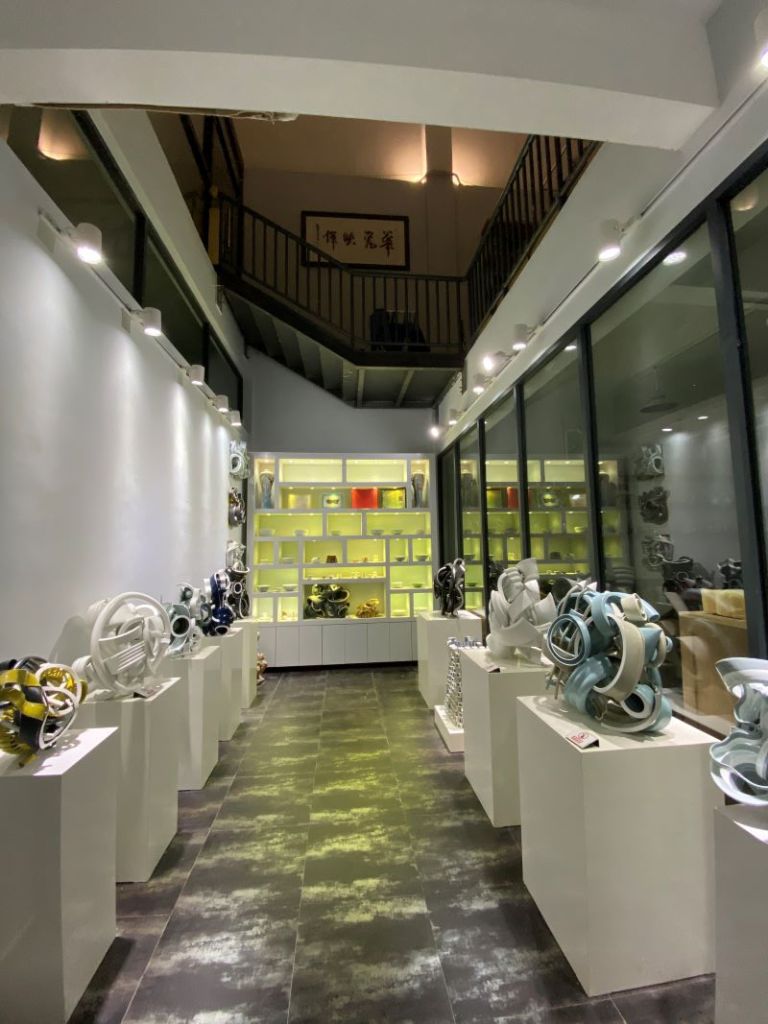
Lab Artz, interior gallery space
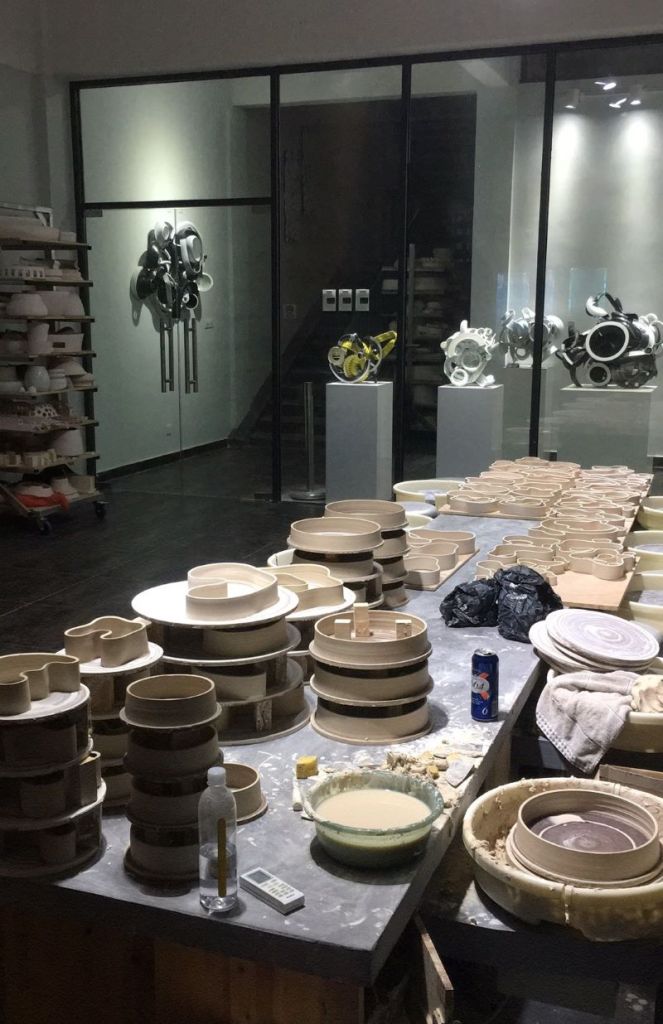
Lab Artz, production space (with gallery space in distance)
Lab Artz, interior production space

For the first three years we worked together, and I ended up buying them out in year four, at which time, Lab Artz became my personal studio. My studio is at the heart of Taoxichuan, which has been described as a ceramic Disneyland. I believe it’s the largest art park in the world, as it is still growing (there is phase two construction outside my back door as I type). The campus is filled with studios, galleries, restaurants, hotels, and education centers. A new state of the art glass studio has recently been finished, along with a new materials workshop. You have to come here to see it, as it still blows my mind to this day.
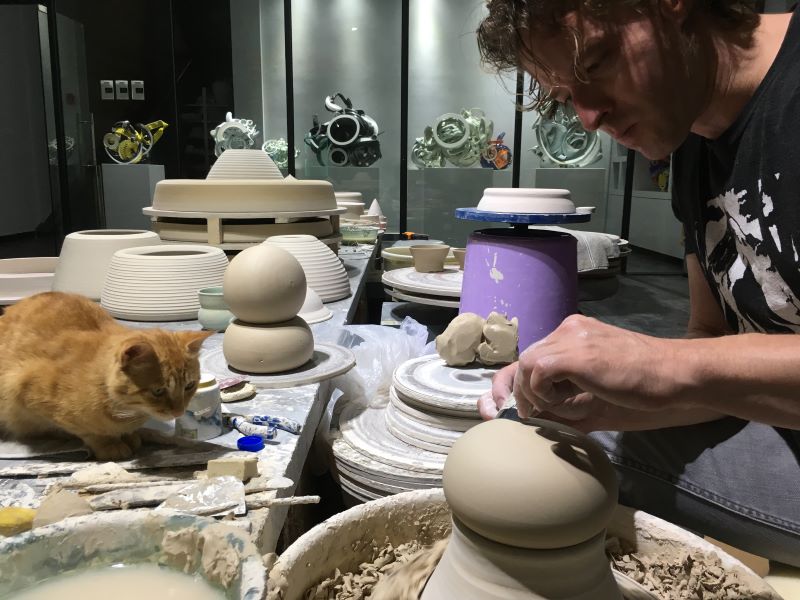
Lab Artz, production space

Jingdezhen is the porcelain city. It’s where it all began. The second language is porcelain. I have access to all things clay and for anyone working in porcelain, it’s a mecca. China also has energy and can do attitude. There is a deep connection and appreciation for ceramics. The market for my work has been supportive, as I have placed my work in many collections and site-specific projects. The cost of living is next to nothing and the international community (pre covid) has been stimulating. I recommend anyone who has a love of clay to visit Jingdezhen…Let’s hope the world opens up soon.

===-===-===

You can see more of Ryan’s work on his website. Spend some time here – it’s a wonderful place to get lost.
I’m also linking you to a video of Ryan, showing some of his work process:

Salado Polychrome Pottery

Andy Ward has produced an interesting documentary on the origins of Salado Polychrome pottery, originating from his research into replicating the techniques and materials used by Native American peoples to make pottery throughout what is now the American Southwest (Arizona & New Mexico, primarily).

As Andy explains in this video, the stylistic origins of Salado Polychrome came about when local peoples placed a white or buff-colored slip onto coil-and-scrape bowls and then used organic pigments from local plants to decorate the slipped pot with red and black designs. The pots were fired above ground allowing oxidation to preserve the pigments. The resulting pots have compelling 3-colored, intertwined designs: white, black and red.
As a tickler to the video, I’m including an image of one Salado Polychrome “olla” (water container) that is more fully described in the Arizona State Museum’s online exhibit:
Tonto Polychrome Olla, ca. 1340-1450 C.E., (ASM Catalog No. 2011-272-1), Photo: Arizona State Museum

Additional examples and information about Salado Polychrome pottery can be found in a website article prepared by the National Park Service.

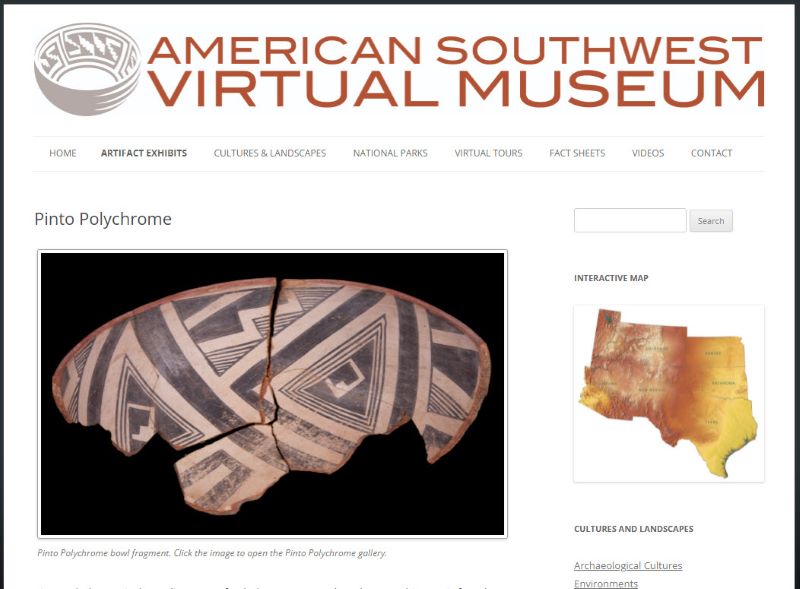
Extensive additional information on many sub-classifications of Salado Polychrome pottery can be found on the American Southwest Virtual Museum (an example of which is shown below):

Functional Pottery in the Home

Redfin, the real estate company, reached out to me for tips and ideas on how to incorporate functional pottery into a home setting.

Here was my tip:

“The wonderful thing about using pottery to accent your home is your wide access to high-quality ceramic objects at affordable prices. You can incorporate some of the best, most innovative ceramics produced around the world for a fraction of the cost of other artistic media such as paintings or sculpture. Ceramics as an art form is undergoing a modern renaissance: artists are pushing boundaries in terms of shape, texture, scale, glazes and even ceramic materials. Bring all those attributes into the palm of your hand with a bowl or mug or vase – items you can use and intimately appreciate on a daily basis.”

You can view the full article on Redfin’s blog.

Alejandra Almuelle – Artist Profile

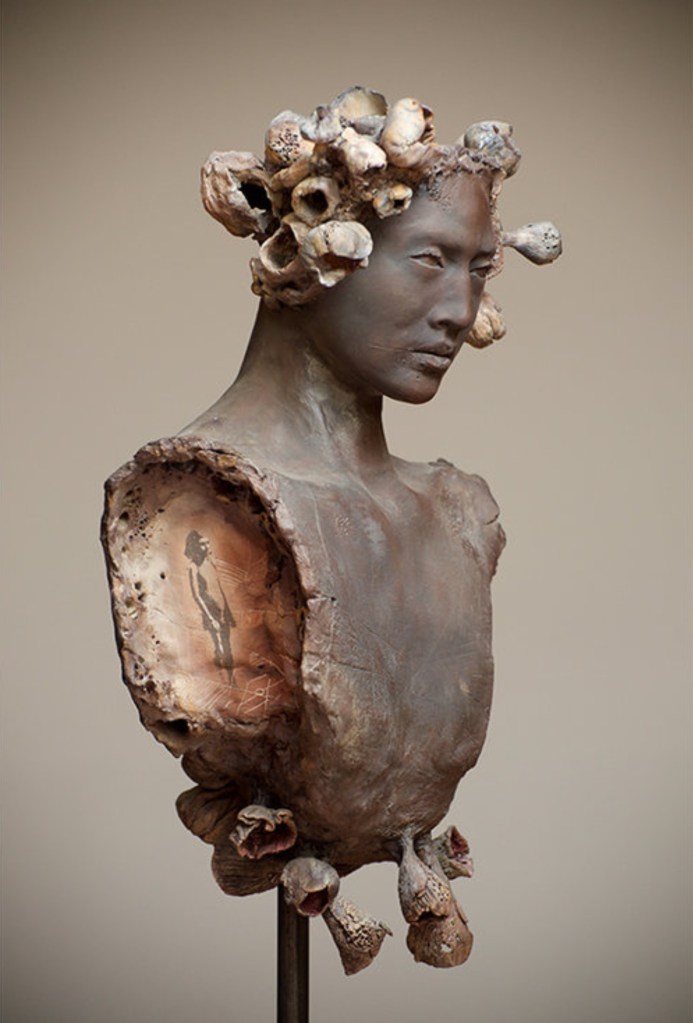
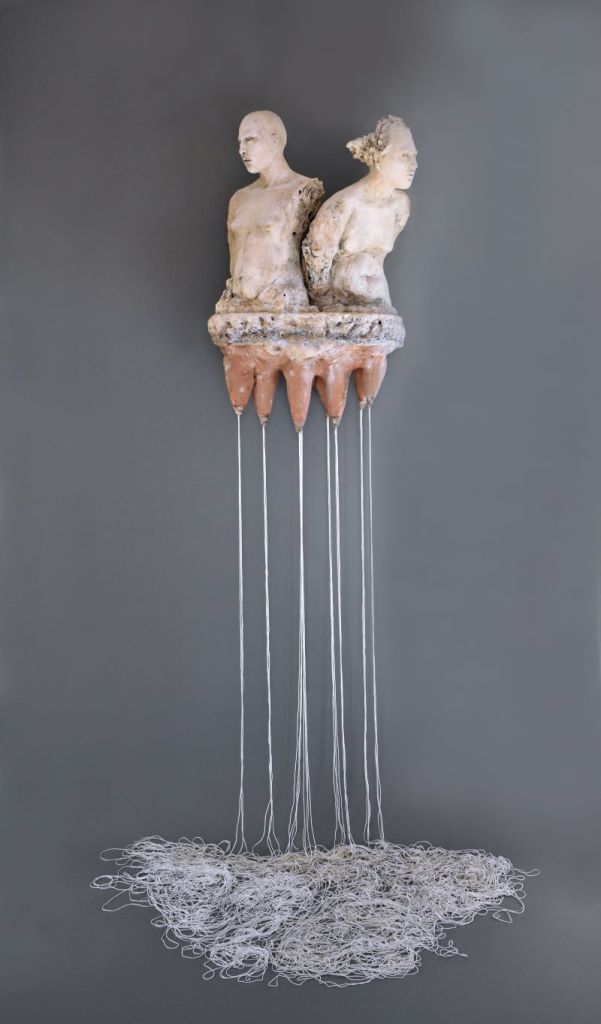
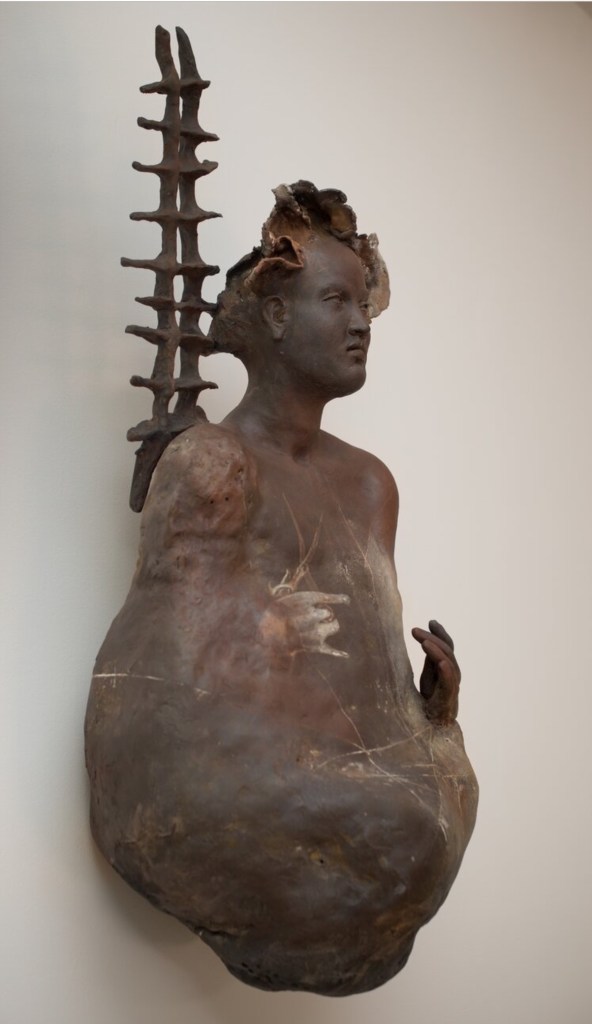
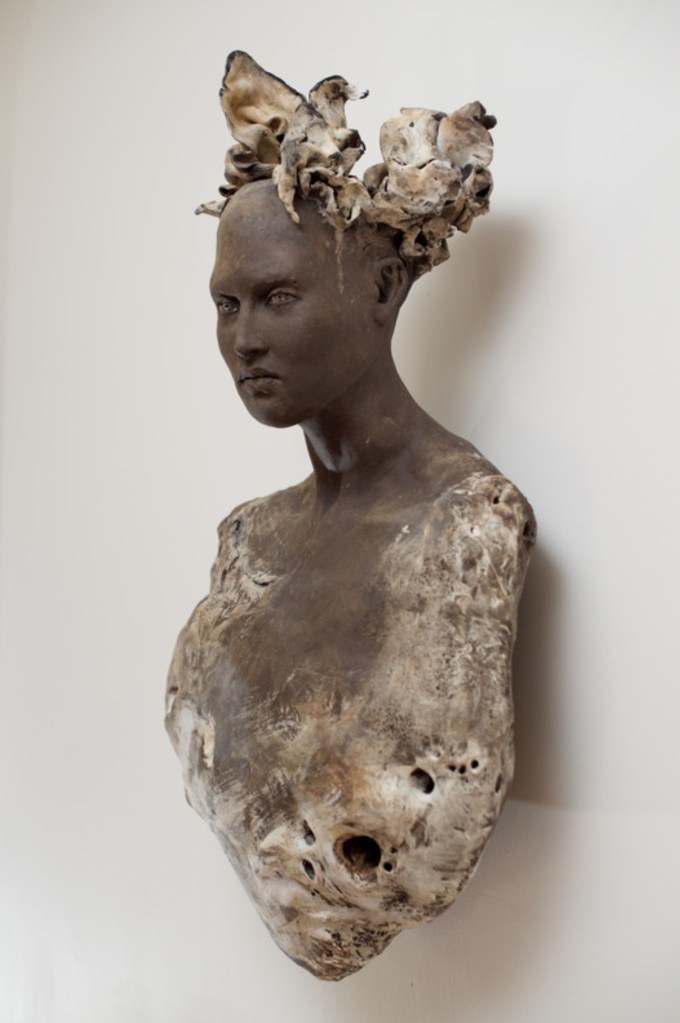
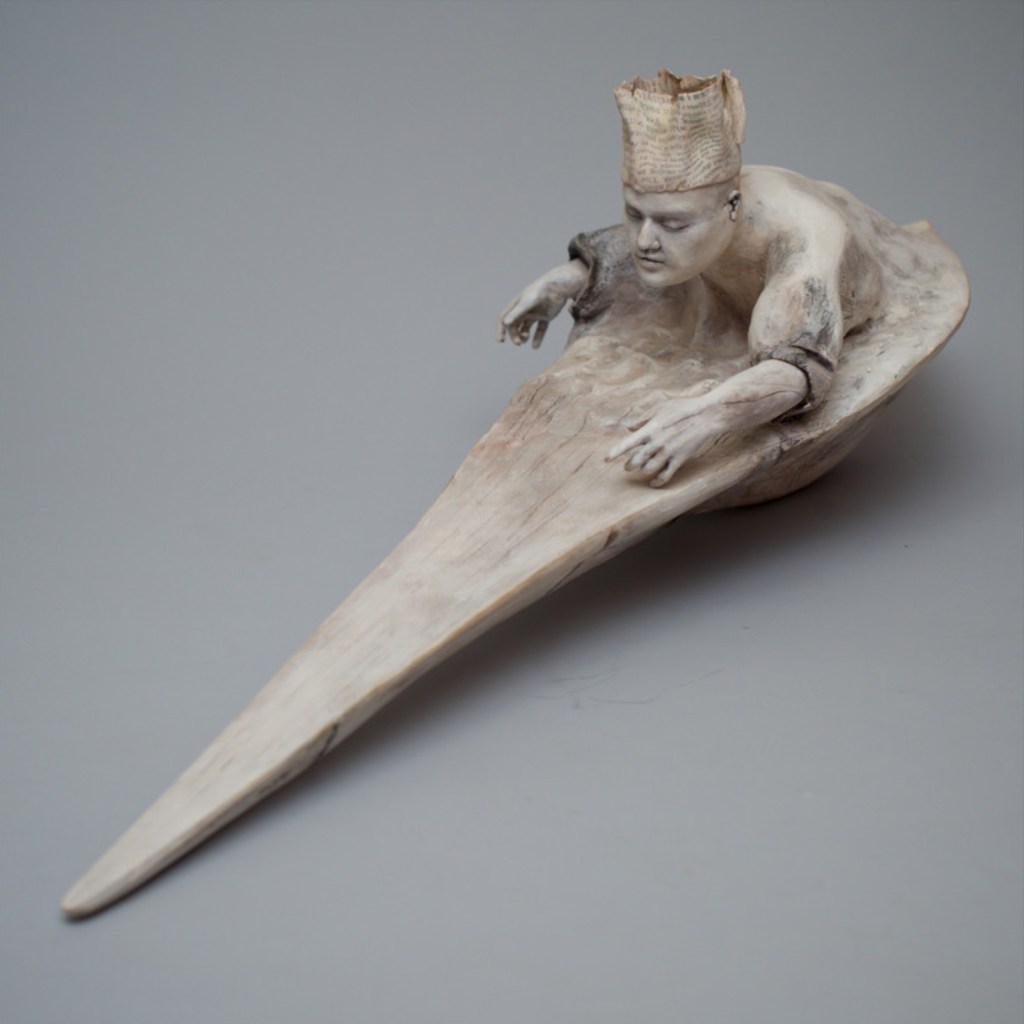
Alejandra Almuelle’s figurative sculpture reveals the human form arising out of organic, elemental, formless shapes of matter, often infused with dark and brooding undertones. There is a consistent suggestion of organic matter, and often a sense of history as well: Andean facial features, classical Greek and Roman materials. Creation. The passage of time. Decay.

Originally from Peru, Alejandra absorbed much of the rich ceramic tradition of Andean peoples. She speaks of some of these memories as a foundation for her artistic work. Alejandra subsequently relocated to Austin, Texas in the United States where she currently resides.

JW: Will you tell me a little about your background and what first attracted you to ceramics?

AA: I grew up in Peru where I was exposed to ceramic making. Clay is widely available and each region has their own signature style. I remember in particular the clay pots made in Puno, in the southern part of the Andes. They are made to cook with fire so the bottoms are convex. There was something about the roundness of the shape, the balance of the handles on each side and the edge of the opening turning outwards that left a deep impression in me as a small child.

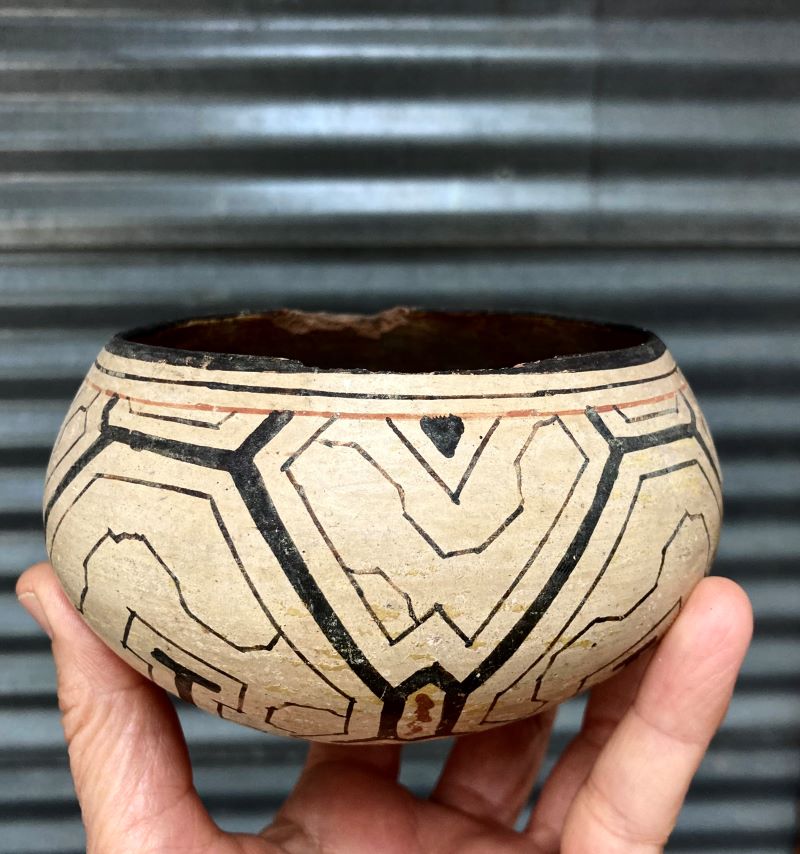
Later on as a teen in Lima, I was blown away by the Shipibo ceramics from the central region of the Peruvian Amazon jungle. I bought a bowl that is still with me today. In my work I can see the influence of the Pre-Columbian ceramic aesthetic overlapping with the Catholic iconography I was exposed to growing up there.

JW: One article on your website mentioned that your work used to involve a lot of Sgrafitto. That sounds different from your current work. Will you tell me how your work has evolved over time?

AA: Drawing has been a central component on treating the surface of my functional work. I apply underglaze with an airbrush, this creates a thin layer that can be marked and scratch very easily.

However I also like to try different clay bodies, from earthenware, to stoneware to porcelain. This challenges me to explore different surface treatments and apply elements from sculpture to my functional work and viceversa.

JW: Will you tell me about your creative process? Where do you look for inspiration? Do you sketch out your ideas (either on paper or in clay) before working on your large-scale pieces?

AA: The focus of my work is the human form. The body fascinates me. It not only carries our genetic memory, but it is the biological archive of experience.

We are historically shaped and conditioned by the environment and by the same socioeconomic structures we have participated in creating. I am interested in exploring, through form, the interplay between the body and the world.

Everything can be a source for inspiration; something I read or listen to will trigger a thought or an image. Then if I am curious enough I will let myself explore in that direction.

I do sketch and right ideas for future work. One thing I like to do is create projects with deadlines. This keeps me engaged and committed.

JW: You tend to work in series, exploring an idea thoroughly before moving on. Do you work on multiple pieces in the series simultaneously?

AA: I do work in series. I work 1 and 2 pieces at a time. If the pieces are of small format, let’s say,12 inches high, I do 5 to 10 at a time.

JW: Your pieces look like they take a long time to create. How do you deal with the challenge of long periods of solitary work? Has the Coronavirus pandemic affected you?

AA: When I am producing work for a solo show, I like to focus only in my studio. It could get hard sometimes but I like to listen to music, podcasts, audio books. Curating what I listen also informs the work I create at a given moment.

Even though I do work well in solitude, the pandemic has eroded the spontaneous gatherings and the general sense of just being with people. We are communal beings. As artists, there so much more than what happens in the studio that makes the work we do.

More of Alejandra’s work may be viewed on her website.

Ann Van Hoey – Artist Profile

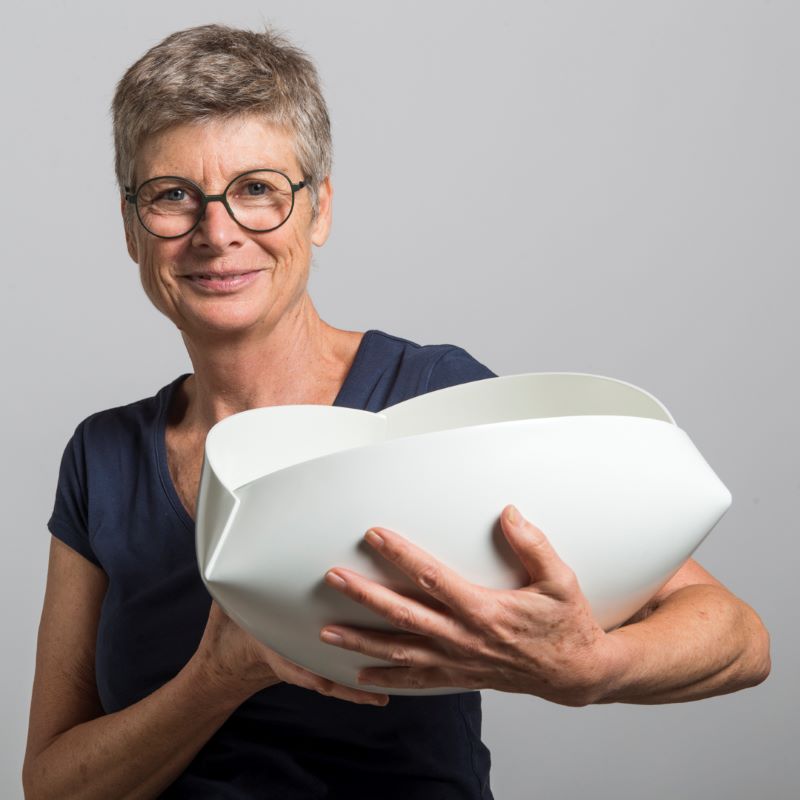
Ann Van Hoey is an accomplished artist who began her ceramic career later in life (at age 50). She has enjoyed remarkable success, and when you take a look at her work you’ll understand why. Ann has a deep respect for material. She also has a remarkable way of fusing simplicity with complexity, and extracting grace and beauty from the combination.

JW:  You became a ceramic artist later in life.  Can you tell me about your decision to make that “leap”? 

AVH: I was a rather scientific person, interested in math and science at school. At university I studied something called economical engineering, but never used my diploma. The rest of my family were sales representatives for furniture companies, and I also started as a sales rep for furniture companies. I did that for almost 20 years, and then did some other commercial jobs. Just after university, I had taken a ceramic class in a night school. That’s where my love for ceramics started, although it was a full diploma program in ceramics and I didn’t finish the course. In my late 40s I went back to the school and completed the diploma course in ceramics. Around the age of 50, I found I wasn’t very happy with my professional life, so I decided to make my hobby my profession. 

Ann Van Hoey: Series of bowls in white French earthenware, sold by J.Lohmann Gallery at SOFA New York in 2012.

JW: Based on your experience, do you have any advice for people who may be interested in transitioning into a ceramics career later in life? 

AVH: At school I focused on throwing because I said to myself, “You’re not an artist, so you better make something you can use.” So I set up a studio, bought a kiln and a throwing wheel, and began my new career trying to throw table ware. I went very enthusiastically to my studio every morning. But it was not very easy for several reasons. First, it’s difficult to distinguish yourself in this area. Second, I underestimated how difficult it would be to work alone all the time. And third, with my economics background I found myself thinking about the costs of materials and labor in making an individual object to make this a viable career. It was all very “counter-creative.” After a few months I stopped going to the studio – it almost turned into a failure. Then my husband said, “Come on, go back to the studio. Enjoy yourself making your pieces like before. Don’t count, and aim as high as possible.”

He also told me, “At 50, you’re much too old to have a little exhibition here in our town this year, and then perhaps next year in the little town next to us. You have to aim as high as possible right now because you don’t have time to build this up gradually.” Normally, I’m not like that. My training is to see if I can do something on a small scale, and if that works then try the next thing, and so on. I don’t like to show off. But I said, “Okay, I’ll try.” It was really liberating.  

Ann Van Hoey, Geometric Study. “This installation of 5 bowls in dark French earthenware clay was my breakthrough. I won several International Prizes with this work.”

I left the idea of making table ware and started making larger vessels not really for use. I decided to apply to the biggest international ceramic competitions such as the World Ceramic Biennale in Icheon (South-Korea), the International Ceramics Competition in Mino (Japan) and the Taiwan Ceramics Biennale to name the Asian ones. In Europe I applied, amongst others, to the International Biennial of Contemporary Ceramics in Vallauris (France) and in Faenza (Italy). To my big surprise I was accepted at all the competitions and even won several awards.  Then the galleries came. It was the start of a fantastic adventure. 

JW: You must have known your work was very good to make this jump into “the big leagues.” 

AVH: The moment that I began to believe in myself was a turning point. It didn’t happen immediately. I still have doubts. But at a certain moment I thought, “Gosh, I have something here. I really have something.” From that point forward, I decided to do things professionally. I use a professional photographer. I have someone help me write about my work in a professional manner. Fortunately I have a good husband for that! But before that moment I couldn’t convince him. My confidence and belief in myself convinced him to help me write about my work. 

JW: Switching to your work itself, you originally created work that focused on the material of clay itself and how it can be shaped – no glazes, engobes or decoration. What was your source of inspiration for such simple forms? 

AVH: When I was in ceramics school I discovered this dark earthenware clay from the south of France. I love the material itself after it’s been fired. I decided I wanted to work in that earthenware. I know in the United States when you talk about earthenware it’s a little…. I don’t know. But I truly love this clay. 

Ann Van Hoey: Geometric Study (1 of 5)

JW: Do you think there are different perceptions of clay in different cultures? 

AVH: I had the impression when I was in the United States when I spoke about the type of clay I used and the temperature I fire at, well, they said [dismissively], “Oh, well then it’s really low-fire.” I felt a little bit, well, I don’t know. And, for instance, in Asia I have the impression that if it’s not porcelain, well, it’s not worth anything. It has to be porcelain. But I really love this earthenware clay. You can’t fire it at higher temperatures. It has a beautiful, smoother look than stoneware.  

Ann Van Hoey: vessel; 2010; earthenware; H18x29x25cm.; slab building and molding

Now I’m working with stoneware. I just had a show at Lucy Lacoste Gallery near Boston where much of my work is stoneware finished with an engobe.

JW: Do you sketch out and plan your designs before building them in clay? I see references to mathematics and geometry in your work. Or is your creative process more spontaneous? 

AVH: Yes, in the first year I was measuring everything. It was purely mathematical. Now I’ve left that a little bit and my process is more intuitive. I know now when I make a certain type of cut or work on a particular shape or alteration, I know what I can achieve. I’m more working in the moment and not measuring everything anymore.  

JW: Do you see your work changing in any new direction? 

AVH: Well, it has changed some. My evolution is slow, but there has been an evolution in my work. I am simplifying my shapes.

I always make a basic shape in a mold (spherical or elliptical mold). For that I work with paper templates and thin clay slabs. When I have the perfect shape in clay, I cut triangles and then alter the form by folding in order to obtain a new strong shape.

Now, when I cut out the triangles, instead of folding them I leave the edges alone. 

Ann Van Hoey: Ceramics: De vasis et coloribus, 2021, stoneware H21x27x25cm.
Ann Van Hoey: Ceramics: De vasis et coloribus, 2021, stoneware H25x25x21cm.

For my last solo show, all those pieces sold very well. Also, now instead folding the triangles over each other I’m starting to butt them together, as in this photograph. 

JW: I also see a few pieces with texture. 

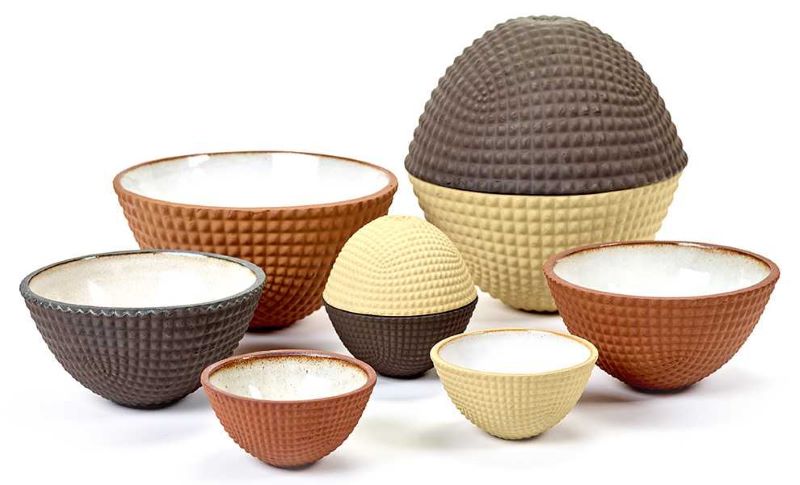
AVH: The textured bowl you may be looking at on my website was part of a social project called A+A. I designed a collection of textured stoneware bowls, which were then used to make plaster molds. People who aren’t able to work in traditional job settings, such as people who have had a stroke or injury or that type of thing, use the molds to produce bowls. Since I have worked with Serax, I introduced that company to the A+A project participants. Serax packages and markets the bowls and the people making the bowls are thrilled to see their work in museums and galleries and design shops. They also make money in the venture. 

I also work as an industrial designer for Serax, a major ceramics firm, designing table ware.  I just finished a big project for Serax and the products will be available in 2023. Serax also operates in the United States, so hopefully my table ware will be available there. 

I’m also interested in bringing texture into my personal work. 

JW: Are you doing work in other media? 

AVH: I’m currently testing some new work in leather for a big design company from Madrid, called Loewe. They came across my work because in 2018 I was in the selection of the Loewe Craft Prize, organized by their foundation. This craft prize is really worth applying for. The first prize is Eur 50,000 (apx $60,000) – which is much more than most prizes.

Loewe has contacted me and asked if I would be interested in creating some objects in leather. The idea is very agreeable and adventurous. 

JW: I also see some bronze work. Is that a new direction you are pursuing?  What does bronze offer that clay does not? 

AVH: I like my work in bronze but it’s difficult to sell it in ceramics galleries. Up to now, galleries have contacted me. I haven’t searched for gallery representation. Perhaps I should for the bronze work.

Ann Van Hoey: 2016; Bronstijd; object; bronze; H18x24x20cm.+ H12x16x13cm.

This past summer something interesting happened. I was in 2 group shows. I sold a lot of these bronze sculptures. A company contacted me and told me they absolutely want some of my bronze sculptures for the new Henge showroom in Milan. I didn’t know the company but they are a large Italian furniture firm. So I’m excited to explore this area. 

More of Ann’s work can be seen on her website.

Mimbres Site Virtual Tour

Throughout the past century, Mimbres pottery has been looted from burial sites across southern New Mexico, given the intense interest in the markings and decoration frequently found on pots. The plunder of Mimbres burial sites by pot hunters gave rise to various laws designed to protect sites for archaeological research. Oftentimes, archaeologists got to sites only after pot hunters had dug up or even bulldozed the location.

On Feb 5, 2022, the Arizona Archaeological and Historical Society will offer a virtual tour of one Mimbres archaeological site called the “Mattocks Site”. The Mattocks Site was first excavated in 1929-30, and then again in the 1970s. Two two people involved with the second excavation and remaining site preservation will discuss Mimbres culture and history, the site excavation itself, and subsequent efforts to preserve the site.

The virtual tour is free and open to the public, but pre-registration is required. The virtual tour will take place from 11:30AM – 12:45PM MST. Click here for more registration information.

Tiles from Design Museum of Barcelona

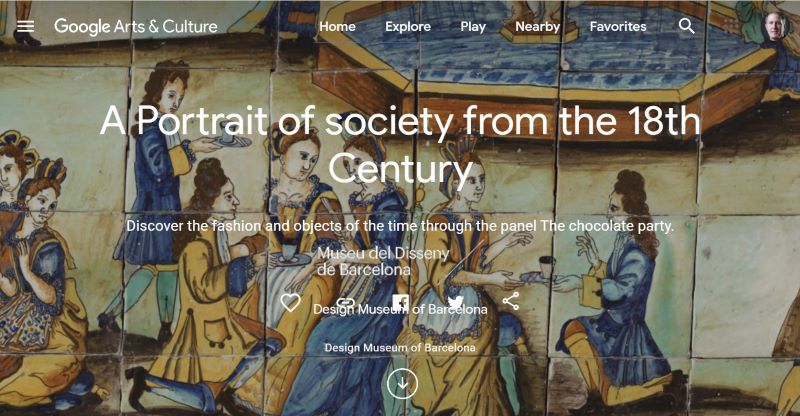
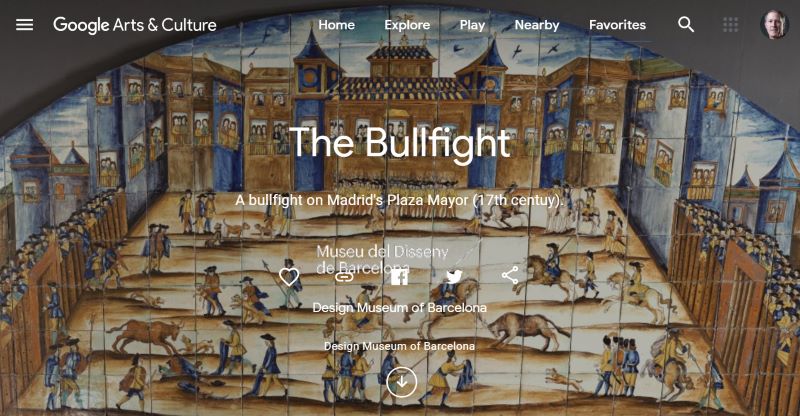
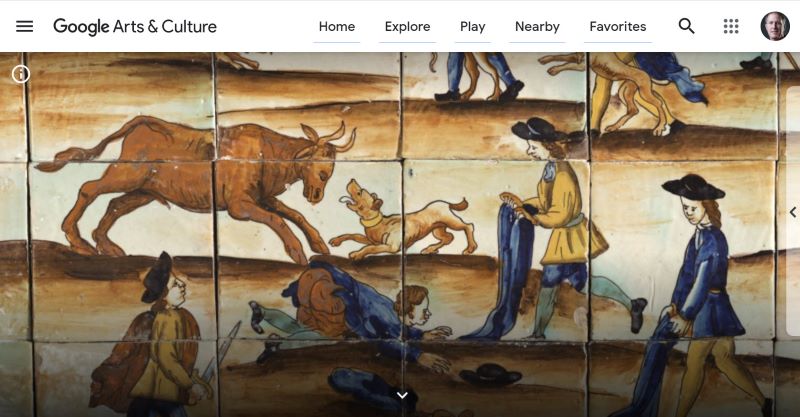
The Design Museum of Barcelona has created three stories on Google Arts and Culture relating to a set of tin-glazed earthenware tiles in their collection.

The architectural tiles in the museum’s collection once decorated a pavilion in the palace of the Count of Castellar. Scenes depicted on the tiles represent pastimes of the nobility around the time of their creation in 1710.

One painted tile scene is “The Chocolate Party.” The museum has created two explanatory stories about this tile scene: “The Chocolate Party” and “A Portrait of Society From The 18th Century.” Both stories highlight some of the fashions and customs of the time, and walk the viewer into details depicted in the panel.

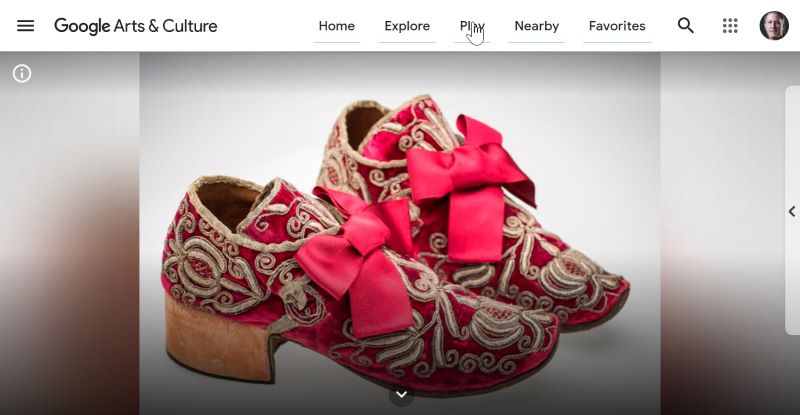
I prefer “A Portrait of Society From the 18th Century” as it also shows examples of clothing, shoes and items like fans from their collection.

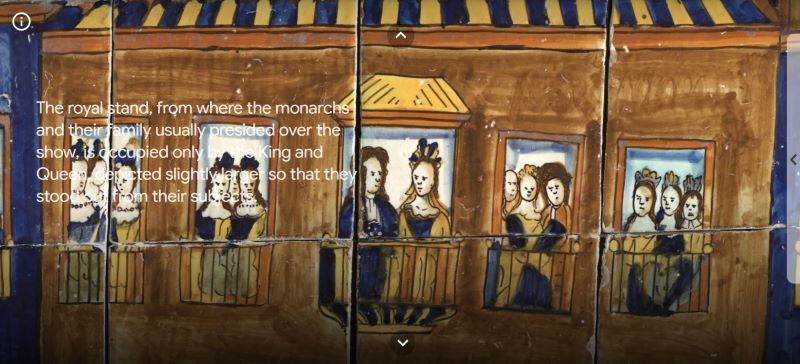
The third story relates to a different panel entitled “The Bullfight.” The story discusses the multifunctional purpose of bullrings, which served as marketplaces, parades, wedding venues, and more.

Similarly, the story drills into different elements of the painted scene to allow the viewer to learn more about the topic both visually and via text.

Cleveland Museum of Art

I recently discovered that the Cleveland Museum of Art is a participant in the Open Access Initiative through which they, along with other major art museums such as the Metropolitan Museum of Art and the Smithsonian Museum, allow free, unrestricted use of images of many (but not all, particularly more modern pieces) of their collection items. That prompted me to poke around the Cleveland Museum of Art’s online collection of ceramics. It was well worth the effort.

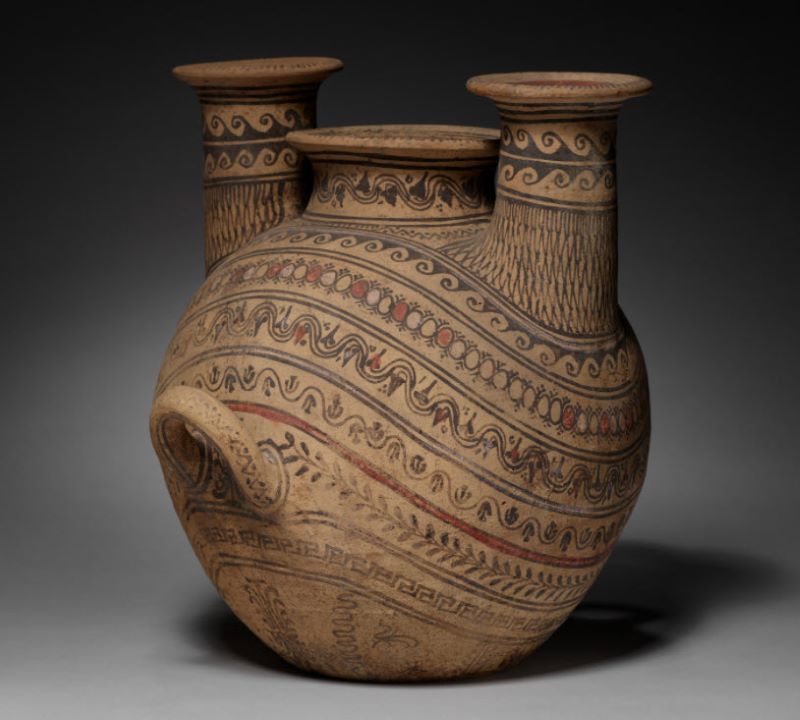
Two-Spouted Strainer Askos (Flask), 300-200 BC, Southern Italian

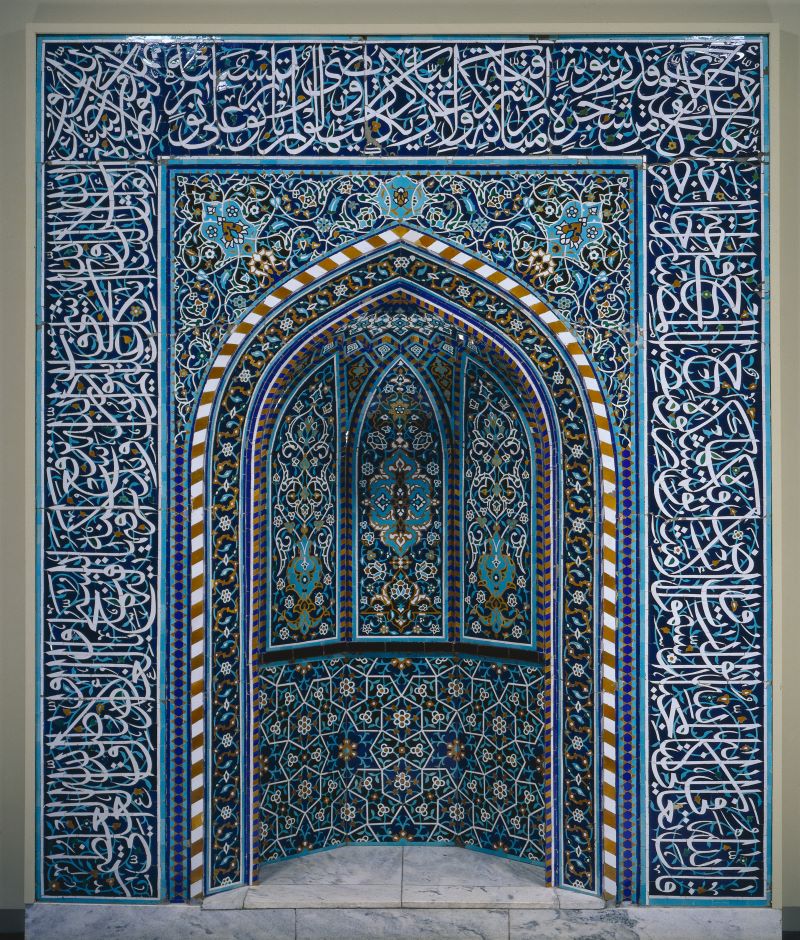
Because I was writing an article on early luster ware bowls, I first searched for ceramics from the Islamic art collection and hit 64 results. I clicked on the first item (a Mihrab from Iran), shown below, and then explored the accompanying material.

Prayer Niche (Mihrab), c. 1500s or mid-1900s, in the style of the Safavid period

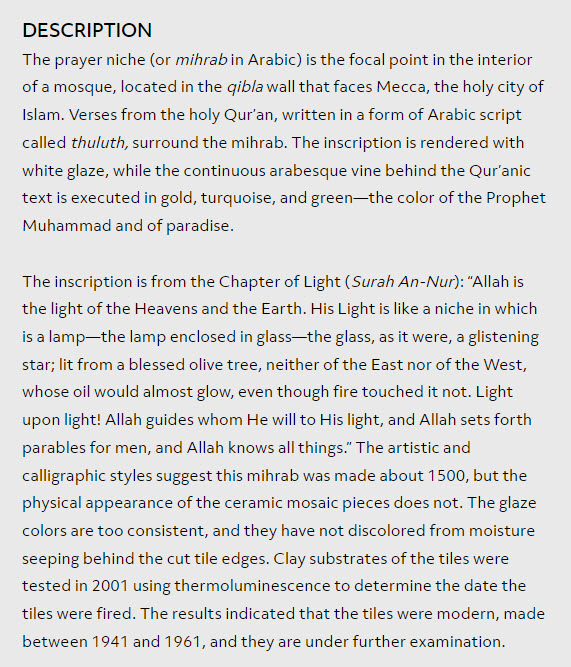
Because I know very little about mihrabs, I was pleased to see a lengthy text description of the object, which I’ve displayed to the right.

From the description I learned that mihrabs are prayer niches found inside mosques, located on the wall that faces Mecca.

The description goes on to explain elements of this particular mihrab such as a translation of the text found on tiles.

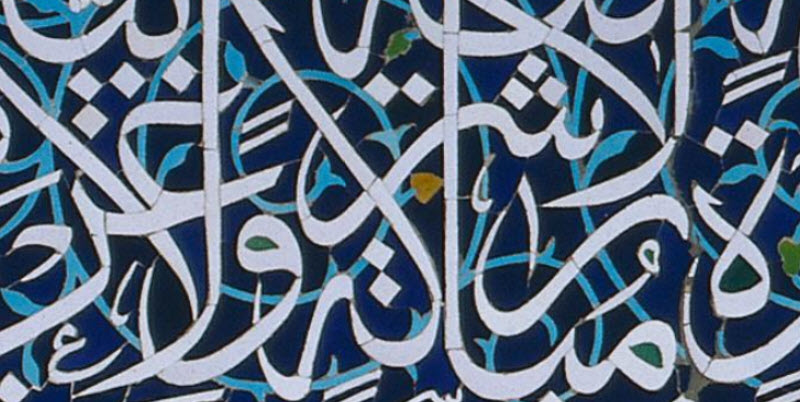
The image quality of the photography is impressive. The site allows you to zoom into objects.

Prayer Niche (Mihrab), detail

For this particular item, I found several videos, one describing the function of a mihrab, a second describing the design and decoration of this mihrab (see below), a third discussing Arabic calligraphy, and the fourth discussing Islam in Cleveland.

There is extensive information on inscriptions, provenance, citations, exhibition history, etc. You are able to view and download images of the objects. In this case there weren’t different views, but I did find that when viewing other objects (for example, a view of a bowl from above, the side, and bottom).

I’m just beginning to explore the full scope of the museum’s collection, but I quickly see a variety of work from different ages and regions. I’ll highlight a few below – but I suggest you go online and explore the Cleveland Museum of Art’s online collection yourself.

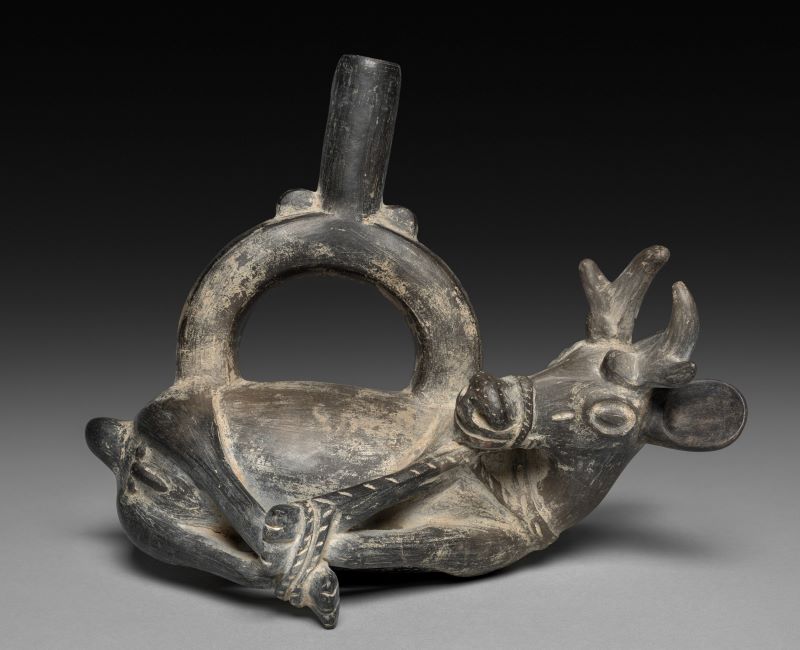
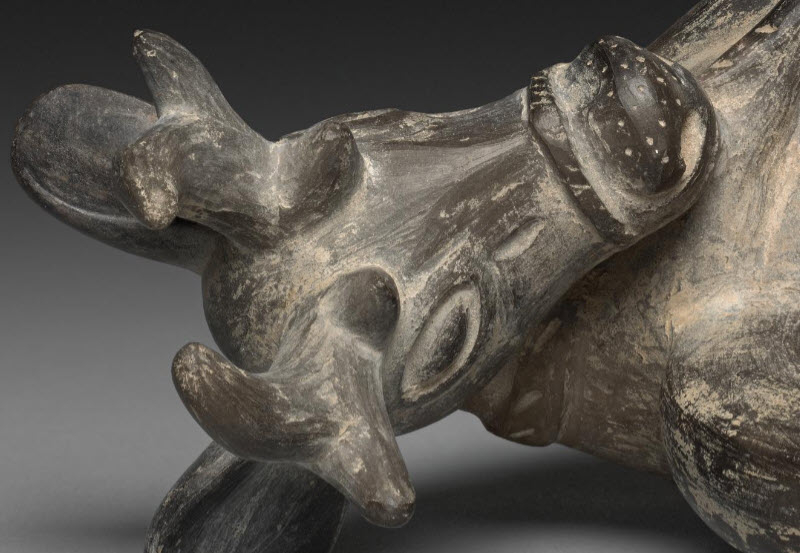
Bound Deer Effigy Vessel, 1000–1460s, Chimú Empire of Peru’s north coast
Bound Deer Effigy Vessel, 1000–1460s, Chimú Empire of Peru’s north coast, alternate view, detail
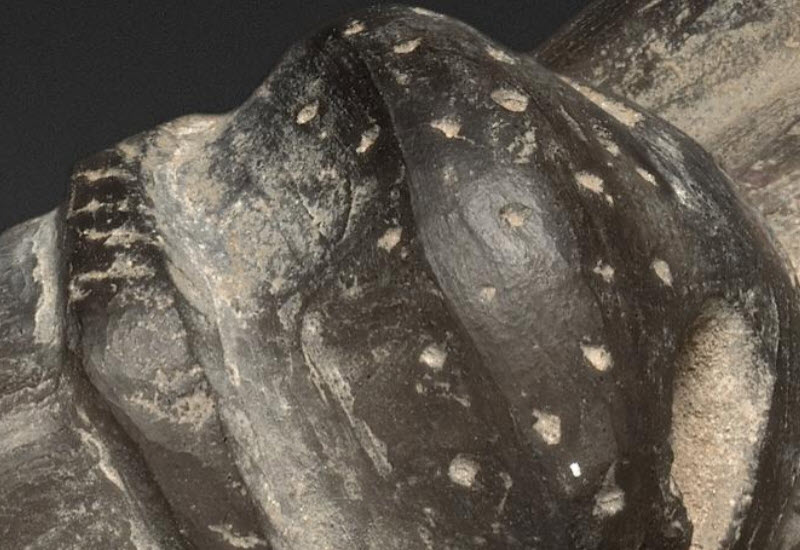
Bound Deer Effigy Vessel, 1000–1460s, Chimú Empire of Peru’s north coast, alternate view, further detail
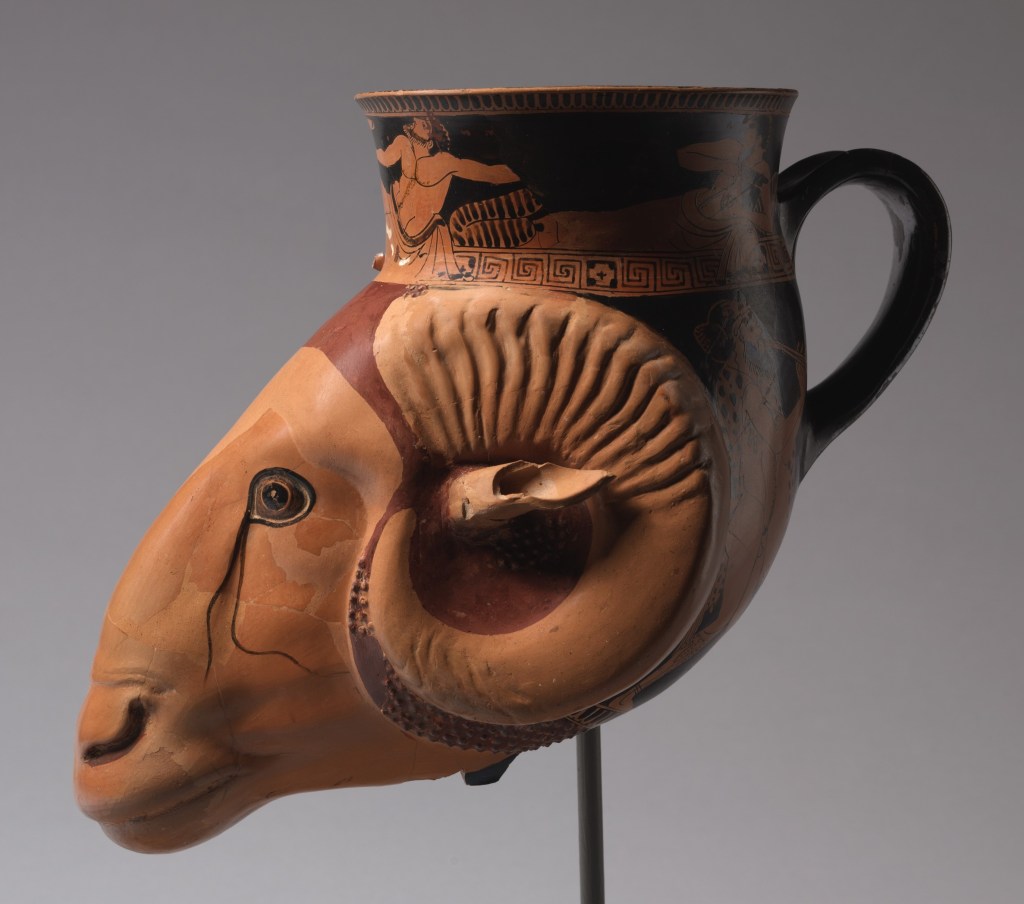
Red-Figure Ram-Head Rhyton (Drinking Vessel): Symposiasts; Satyr and Maenad, attributed to Brygos Painter
(Greek, Attic, active c. 490-470 BC)
Charger Depicting a Boar Hunt, c. 1575, Italy (Urbino)
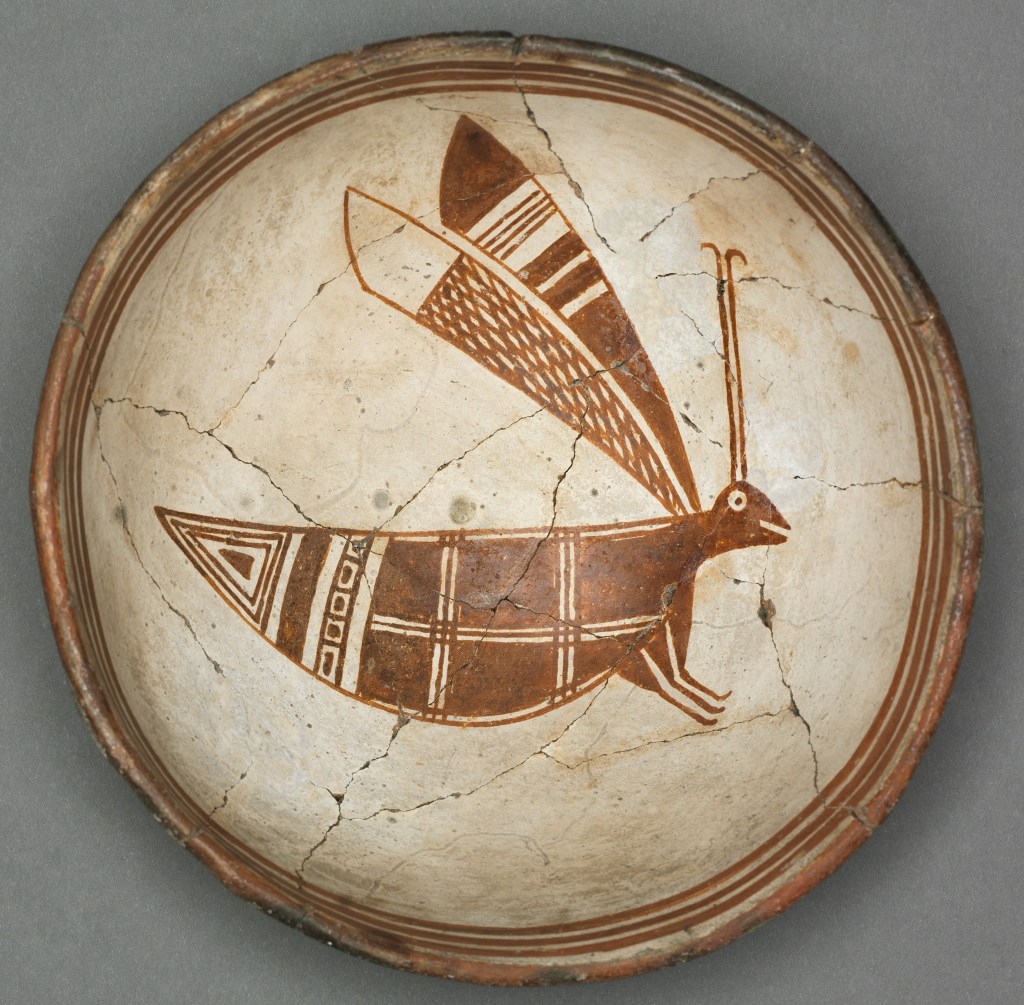
Mimbres bowl with grasshopper, c 1000-1150

Kim Murton – Artist Profile

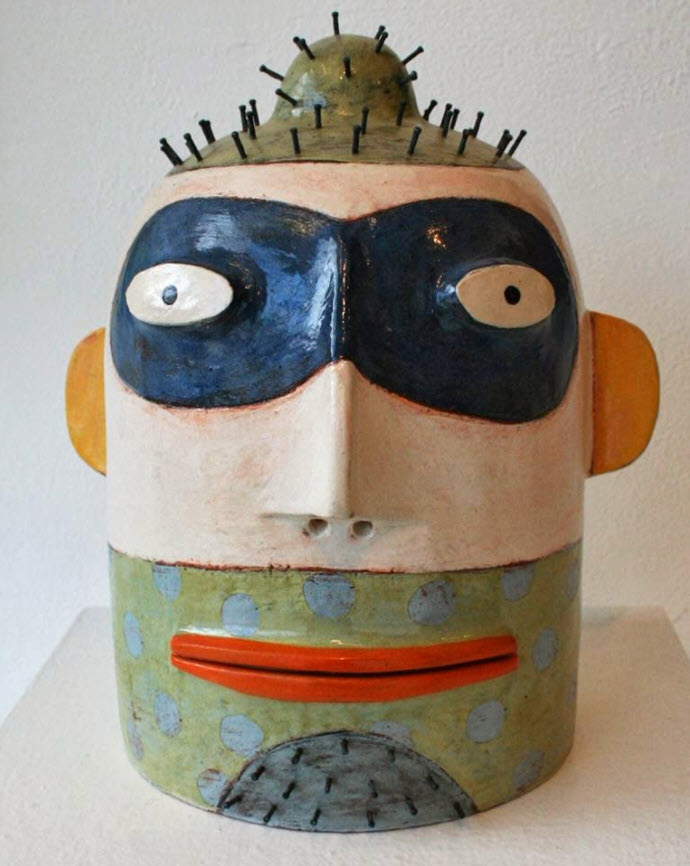
Kim Murton became a professional ceramic artist after working in New York as an animation artist, and her work reflects her earlier career as well as her history of exploring different artistic media – both physical and digital. Along with her ceramic work, Kim continues to draw, illustrate and produce textile designs. In our interview, Kim told me her artistic inclinations have spanned different media for different reasons, which I found very interesting.

JW: You started doing ceramics, but then moved into different creative fields such as animation, illustration, and textile design. You’ve published a drawing a day since 2009. You’ve settled in on ceramics but you still explore other media. What is driving all this? 

KM: I’ve always been back and forth between mediums and there’s always been a connection. In school I started as a ceramics major. Right down the hall was the animation department. I decided to try a Claymation project. I was lazy and didn’t research it and it was a disaster. There are techniques to do Claymation correctly and I just started putting things together my own way. Under the lights everything melted and turned to goo. It was a mess.

But I’ve always been able to draw, so I started scratching on film – drawing on that medium – and found that I loved it. 

I switched majors and started doing film. I transferred to NYC in the 1980s and after graduation I got a job in animation. I worked for 7 years at what turned out to be an amazing animation studio (Ink Tank Studio), starting as a foot messenger and working my way up to assistant animator. Along the way I did a lot of cel painting (we still used cels at that time). The animated spots were designed by RO Blechman as well as other popular established illustrators. I was too intimidated at the time to try to do illustration, but I always wanted to. 

[See some of Kim’s animation loops here: Breathe and Falling to Pieces.]

Later, I moved to Boulder, Colorado, and worked with a stonemason, doing bricklaying and stonework. I found a local ceramics studio and started teaching ceramics to kids and basically got back into clay again. I was pretty off the grid back then, I would go back and forth between Boulder and New York, picking up some free lance animation work since it’s a pretty tight artistic community. Eventually, I moved to Portland where I briefly worked in animation. I missed clay and discovered the Oregon School of Arts and Crafts, where I found a community and started painting on plates, selling my work in the school gallery and working at the cafe connected with the school.

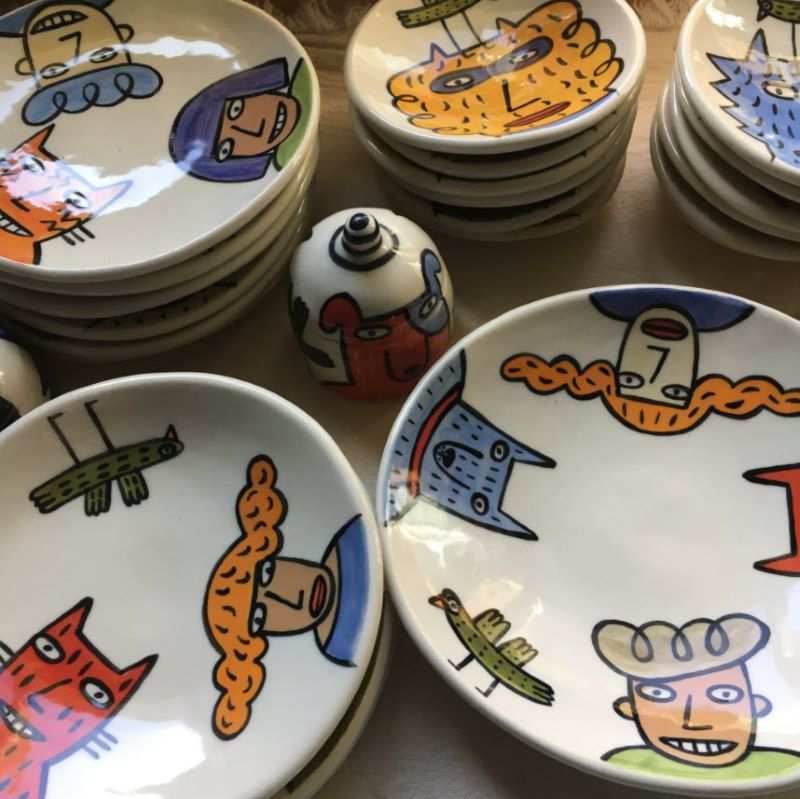
That was about 25 years ago. I felt at that point my drawings didn’t have enough legitimacy unless they were drawn on a plate and had some utility value. I didn’t have confidence. That ended up being a money-maker. People liked buying them and I started putting work in galleries. Coincidentally, it was the exact same skills as cel painting because underglaze is very similar to cell paint, and the black line inking around colored areas that I do is exactly what you do in cell animation. So that was an easy transition.

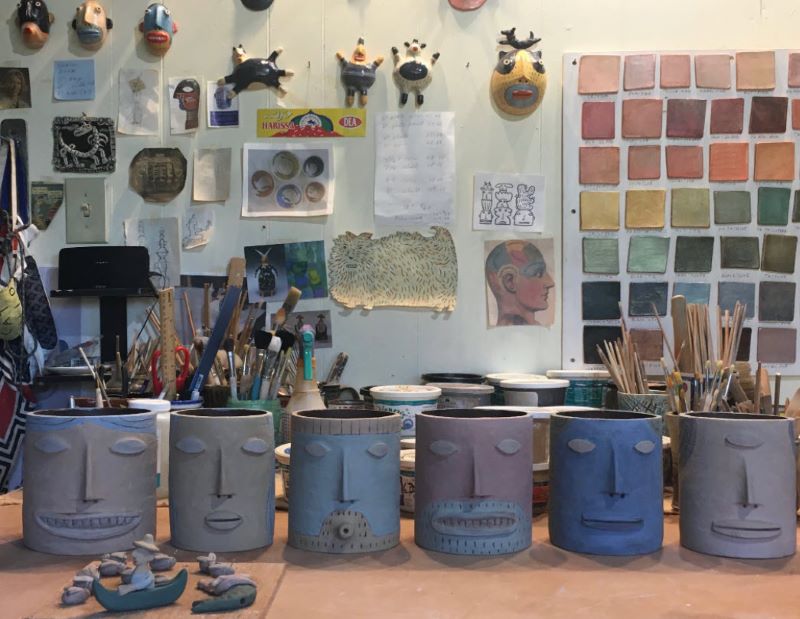
Later, when my husband and I had a child, I found that I couldn’t maintain my focus while drawing on ceramics. I’m not even sure why. When you have a baby you’re constantly interrupted, and it turns out that I could make these little clay heads while being interrupted. So that’s a lot of what I do now. 

[Although this Oregon Public Broadcasting video is 10 years old, you may find it interesting to watch Kim create some ceramic pieces and discuss her creative process. The video section on Kim runs between 4:53 and 12:25.]

JW: You still work in other mediums, right? 

KM: Yes. I started doing these clay heads and then the whole computer era kicked in, starting with a site called Flickr, where artists could share their images with each other. I had this little group of friends, mostly in England, and we’d do this 5 minute drawing prompt every day, look at each other’s work, and it became a group that was very supportive. I started drawing more and gaining confidence. Around 2009, everyone was joining Facebook, and I started doing the drawing a day thing. Because I had Facebook friends back in New York, from my animation days, an art director at the New York Times saw my drawings and hired me to do a series of illustrations for editorial pieces.

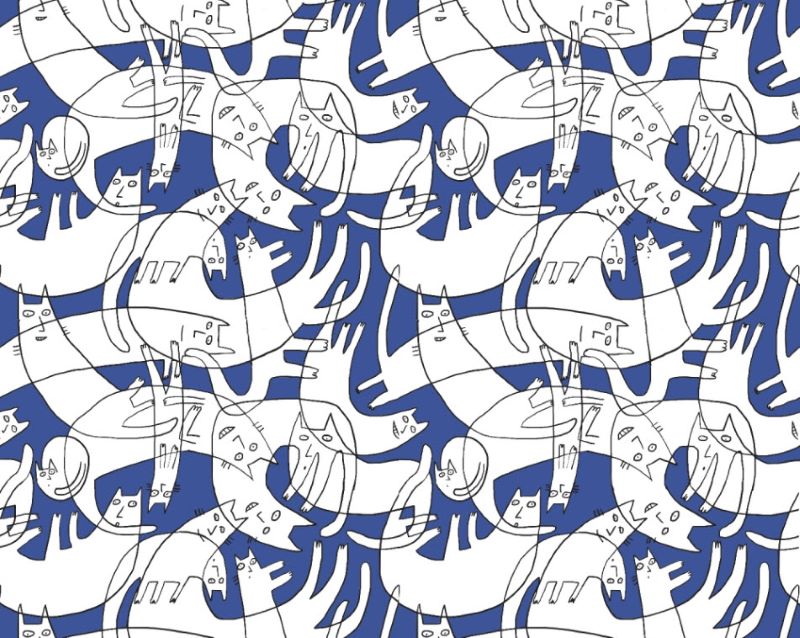
That’s how I got into doing designs for fabrics. I saw this Spoonful site that prints designs onto fabric and I moved into that, along with my ceramic work.

The illustration thing is what I’d really love to do at this point. When I get an illustration project I drop everything else and focus on that. Because of my animation background I work very fast, which is good for illustration projects.  

JW: So you’ve moved between media over your life. I have to say, your work lends itself to that migration. I can definitely see a consistency in your work, and that “look” seems to lend itself to working in different media like ceramics, animation, illustration and design.  

KM: I know, people say that and it’s so strange. I’ll never stop doing ceramics. I would like to concentrate on making really big pieces. People buy them, but they take longer to sell. I love the rush of illustration, having like 2 days to come up with an idea and then 1 more day to finalize the drawing. And the pay is good.  At this point ceramics is where I’m making most money, and illustration is more of a side thing. I’d like to flop that. I want to continue my ceramics, but do more larger work than production work.

JW: Can you tell me more about your process? 

KM: I typically work about 4-6 hours per day, maybe a bit more when it’s really busy, 6 days a week. I do things in multiples. That probably comes from my animation days. The “figuring it out stage” – like figuring out a new form – is hard for me. But once I do that I’ll repeat and repeat and repeat it until I get bored with it. I like that intermediary point, where I’ve gotten over the technical issues of creating something and I can still be creative with it. Then it gets to a point where it’s no longer that creative, and it’s time to come up with something else.

See more of Kim’s work on her website (which contains links to her ceramics, illustration, drawings and textiles).

Luster Bowls from Iraq

I’m not going to yak on about these items. I’ll just present them in their simple beauty, and marvel that numerous museums have made such items available for us to see and share online — as the next wave of Covid envelops the world in late 2021.

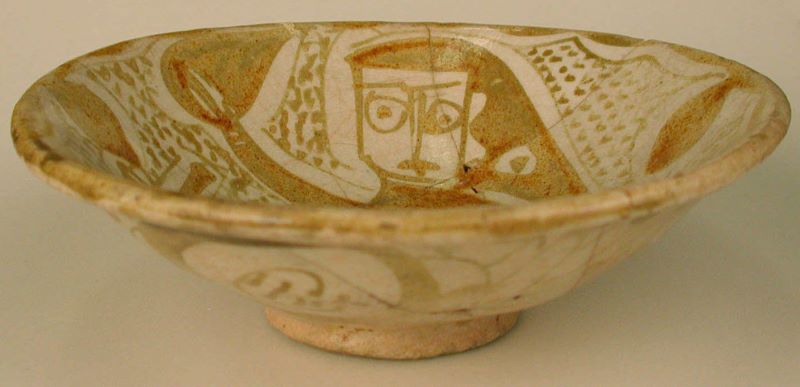
 Imported Luster Bowl (side view), 10th Century, from Iraq (found in Nishapur, Iran), Metropolitan Museum of Art

(Beginning in 2017, several major museums began sharing images and basic data of public-domain artwork in their collections under the Open Access Initiative. Participating museums include the Met, the Cooper Hewitt, the Cleveland Museum of Art, the Art Institute of Chicago, the National Gallery and the Smithsonian Museum.)

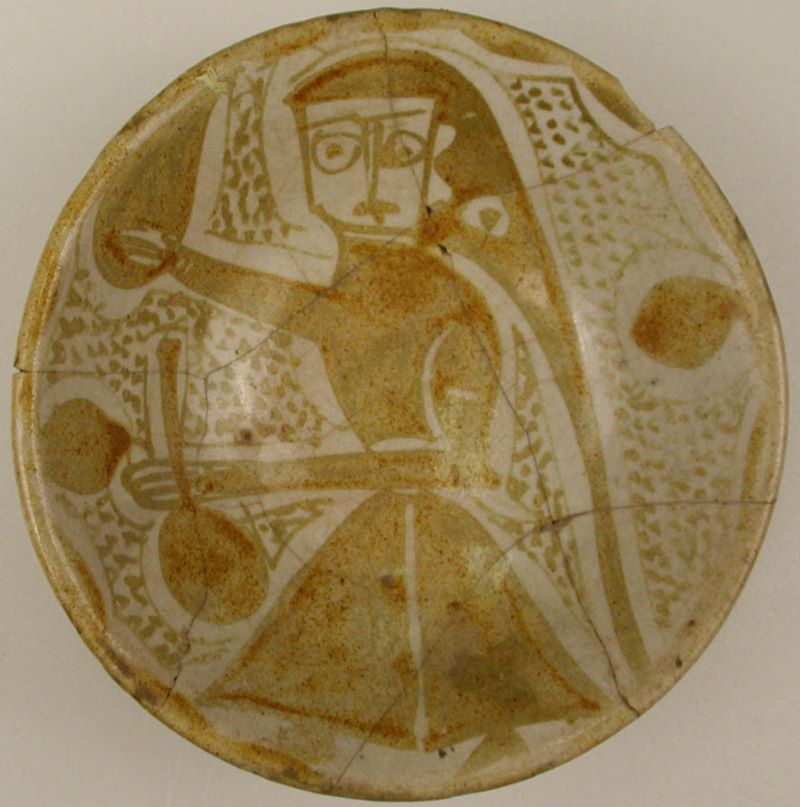
This 10th century luster bowl shown above was made in Iraq, but discovered at Tepe Madrasa in Nishapur, Iran, in 1939. The Metropolitan Museum of Art notes “its true metallic sheen—derived from a technique not known to Nishapuri potters—confirms that it was made in Iraq, and its single color dates it to the tenth century. Together with other examples, this bowl is evidence of the active trade between the two regions once Nishapur was incorporated into the Abbasid empire in the eighth century.”

Apart from its historic context, I love the confident, fluid brushstrokes of this piece, combining delicate lines with broad areas of pigment on the buff surface. I also enjoy the gesture of the strokes. I can picture the artist perched on a low stool, bowl in his (or her) lap, dipping a brush into metallic pigment and quickly, deftly, sketching out this design.

 Imported Luster Bowl (top view), 10th Century, from Iraq (found in Nishapur, Iran), Metropolitan Museum of Art

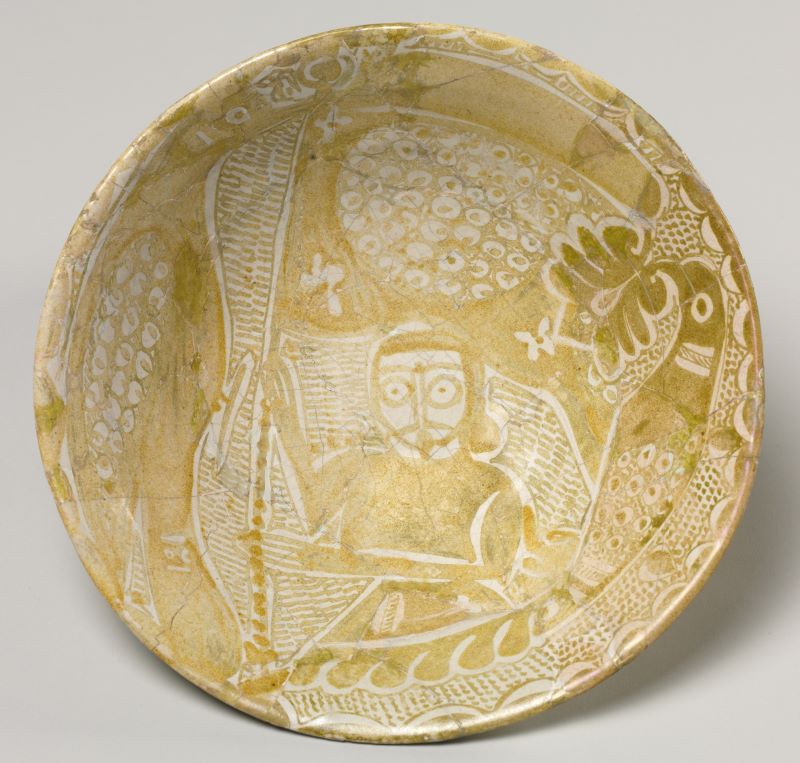
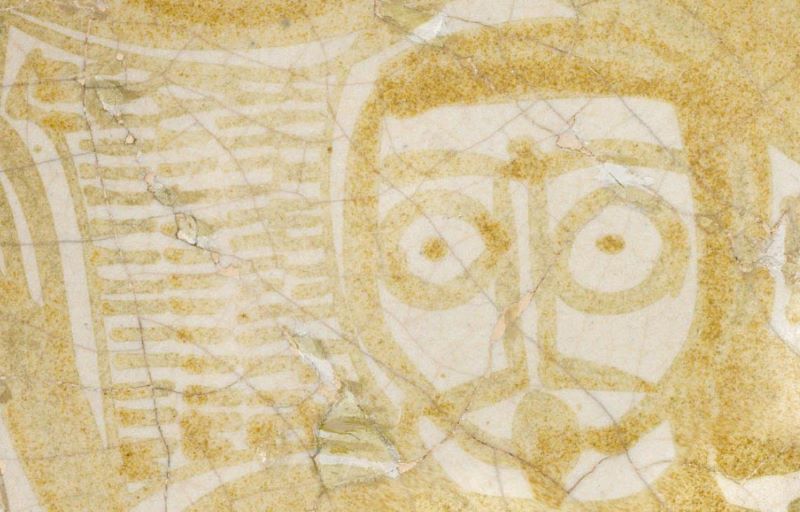
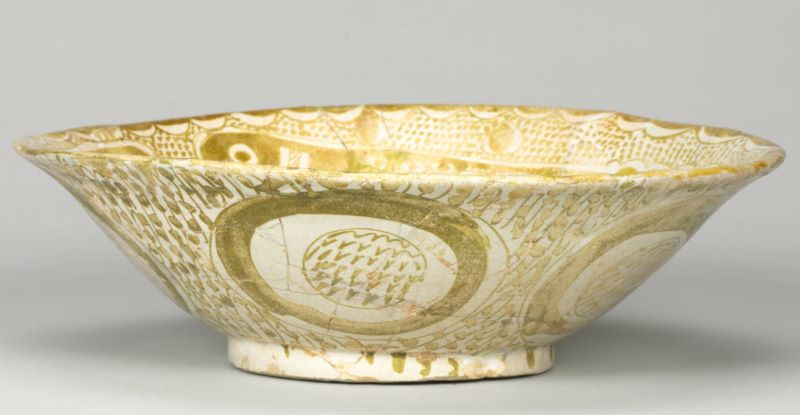
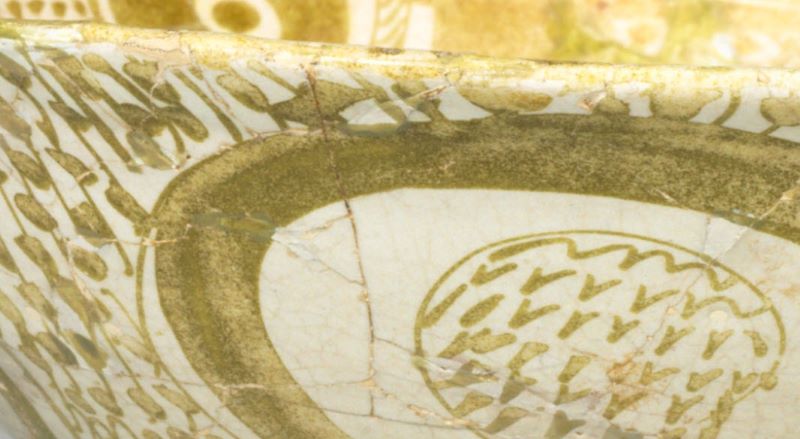
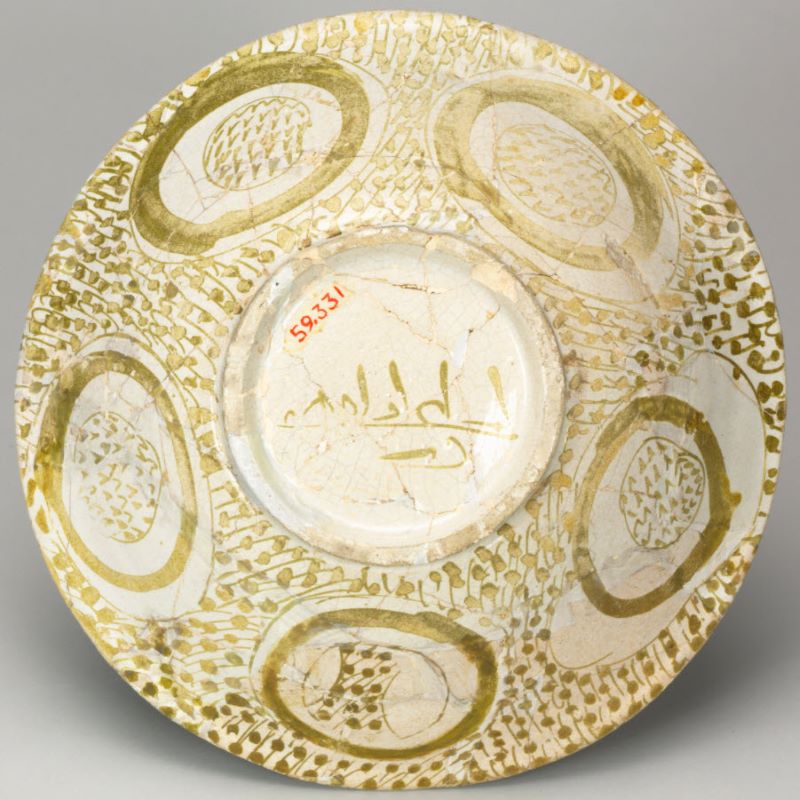
Here is a second example, this item from the Cleveland Museum of Art entitled “Luster Bowl with Man Holding a Banner” and dated around the 10th century. I will include some close-ups because the images of the object are so sharp you can really drill into detail on the museum website. THANK YOU to the Cleveland Museum of Art for the high level of photography they share with all of us!

Luster Bowl (top view), 10th Century, from Iraq (probably Baghdad), Cleveland Museum of Art
Luster Bowl (detail of top), 10th Century, from Iraq (probably Baghdad), Cleveland Museum of Art
Luster Bowl (side view), 10th Century, from Iraq (probably Baghdad), Cleveland Museum of Art
Luster Bowl (detail of side), 10th Century, from Iraq (probably Baghdad), Cleveland Museum of Art
Luster Bowl (bottom), 10th Century, from Iraq (probably Baghdad), Cleveland Museum of Art

Stay safe, everyone.